How Wedding Cake Flowers Elevate the Dessert Table
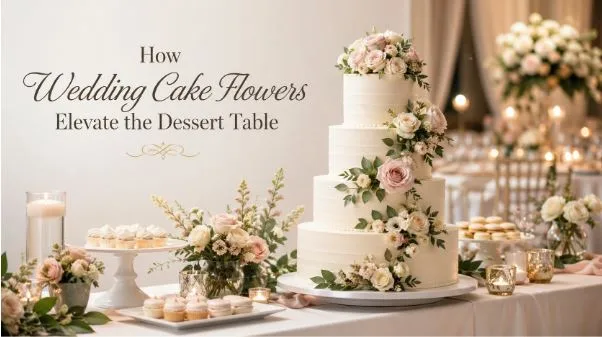
Wedding cake flowers are often treated as a small finishing touch, but they can change how the entire dessert table feels. A simple cake on an empty table may look unfinished. The same cake, styled with the right flowers, linens, candles, and background details, can become one of the most photographed parts of the reception.
That is why cake flowers should not be treated only as decoration for the cake itself. They help connect the dessert table to the rest of the wedding design, from the bridal bouquet and centerpieces to the color palette used throughout the venue.
Start With the Cake Table, Not Just the Cake
Many couples choose the cake flavor, frosting texture, and number of tiers first, then think about the table later. But in photos, the cake is rarely seen alone. The tablecloth, cake stand, candles, signage, backdrop, and surrounding floral details all become part of the same frame.
Before deciding how many flowers to use, look at the whole cake table. A three-tier white cake may need only a small top cluster and a few base accents. A simple single-tier cake on a larger dessert table may need a stronger side arrangement or floral wreath to avoid looking lost.
Good cake flowers should not hide the cake design. They should guide attention toward the cake while making the table feel connected to the rest of the wedding.
Use Wedding Cake Flowers to Connect the Palette
One of the most useful roles of wedding cake flowers is color repetition. The cake does not need to match the bridal bouquet, bridesmaid flowers, and centerpieces exactly, but it should borrow enough of the same tones to feel intentional.
For example, if the wedding palette includes ivory, sage green, and soft blush, the cake may only need a few white blooms, muted greenery, and a small blush accent. That is enough to make the cake table feel connected without overdecorating the cake.
This matters even more for couples working with a smaller floral budget. Instead of filling every table with large arrangements, they can repeat the main floral colors in the cake display, sweetheart table, and a few visible areas. The result feels coordinated without spreading the budget too thin.
Where a Flower Insert for Cake Works Best
Placement matters more than the number of flowers. A top cluster, side cascade, base accent, or floral wreath topper can create very different effects. The right choice depends on the cake height, frosting texture, table setup, and the angle from which the cake will be photographed.
If the cake already has detailed piping, painted decoration, or textured frosting, the flowers should stay restrained. Too many blooms can cover the work of the cake designer. On a very simple cake, however, a small group of flowers can add shape, color, and height.
A small cluster near the top tier, a soft side cascade, or a few base accents can make the cake feel styled without hiding the frosting, shape, or cake-cutting angle. For couples considering a ready-made option, such as Rinlong flower insert for cake, the useful question is where the flowers will sit on the cake, not how many pieces can be added. The best cake flowers should guide the eye toward the dessert table, not make the cake look crowded.
A helpful rule is to decorate the spot that looks unfinished first. If the top already feels balanced, add a small base accent instead. If the cake table feels empty, use flowers around the cake stand rather than forcing more stems onto the cake itself.
Choosing Rinlong Cake Flowers That Look Natural on Camera
Cake flowers are often photographed closer than couples expect. During cake cutting, the camera may capture hands, the knife, frosting texture, flower petals, greenery, and table details in the same shot. If the flowers look too shiny, too stiff, or too large for the cake, the issue becomes more obvious in photos.
Choosing cake flowers should involve more than matching the color palette. Couples should look at flower scale, petal texture, greenery balance, and how the arrangement sits beside frosting, fabric, candles, and tableware.
Cake flowers are usually photographed in cake-cutting photos, dessert table details, and close-ups of the frosting or topper. That means the flowers need to match not only the wedding palette, but also the cake’s texture, height, and overall style. When considering Rinlong cake flowers, couples should think less about adding decoration and more about whether the flowers make the cake look finished from the camera’s point of view. If the blooms look balanced beside the frosting and table details, they will feel like part of the design rather than an afterthought.
One practical test is to place the flowers against a background similar to the cake color and take a close-up phone photo. If the colors look too harsh, the petals look flat, or the greenery overwhelms the flowers, the same problem will likely appear in the wedding gallery.
Reduce Stress Before the Wedding Day
Fresh flowers can look beautiful on a cake, but they require extra care. Couples need to consider whether the flowers are safe near food, whether they have been chemically treated, and how long they can hold their shape in heat or humidity. For outdoor weddings, DIY timelines, or tight reception setups, those details can add stress.
Artificial cake flowers give couples more control. They can be checked before the wedding, matched with the cake design, packed with the decor, and placed without waiting for fresh blooms to arrive. They also make it easier to discuss placement with the cake designer or planner before the wedding day.
Whether the flowers are fresh or artificial, they should be placed in a way that avoids direct food contamination and follows the cake designer’s setup guidance. Fresh flowers can still be the right choice for many weddings. But if the main concerns are food contact, timing, transport, weather, or color consistency, ready-to-use cake flowers may make the setup smoother.
Build the Cake Decor Outward
The easiest way to plan is to start with the cake flowers and build outward. Decide whether the cake needs a top accent, side cluster, base flowers, or a small wreath. Then use the same color direction for the linens, candles, signage, and nearby floral details.
A cake table does not need to be crowded to feel complete. A clear color palette, a balanced flower placement, a clean cake stand, and a few thoughtful table details can do more than a table full of disconnected decor.
Wedding cake flowers should support the cake, not compete with it. When they are planned around placement, color, camera angles, and setup time, they help the dessert table feel like a natural part of the wedding rather than a last-minute decoration.