Human-Driven Credit Underwriting in Local Hubs: Why Local Expertise Still Matters More Than Automated Lending Algorithms
An algorithm can read a credit score in a fraction of a second. What it can’t always do is understand the story behind that number.
For a lot of people in Quebec — newcomers building a financial history from scratch, self-employed workers with irregular income, or anyone recovering from a bankruptcy or a consumer proposal — that gap between “what the algorithm sees” and “what’s actually going on” can mean the difference between an approval and an automatic rejection.
If you’re looking for a car loan Mirabel residents can rely on, working with a team that reviews files manually, rather than through a scoring formula alone, often changes the outcome entirely.
This article looks at why human underwriting still holds real value in 2026, even in an industry that has automated almost everything else.
Where Automated Scoring Falls Short
Credit scoring models are built for the average case. They’re efficient, but they’re also blunt instruments. A single number can’t capture context, and context is exactly what matters most in a lot of real financing situations.
Newcomers to Canada
Someone who arrived in Canada two years ago may have a strong income and a stable job, but almost no Canadian credit history. An algorithm sees a thin file and treats it as a risk. A human underwriter can look at employment letters, banking history, and income stability instead of a number that simply hasn’t had time to build up.
Self-Employed Applicants
Self-employed income tends to fluctuate month to month, even when the underlying business is healthy. Automated systems often struggle with variable income and default to caution. A manual review can weigh averaged income, contracts, and business longevity in a way a rigid formula won’t.
Bankruptcy Recovery and Consumer Proposals
A past bankruptcy or consumer proposal stays on a credit file for years, and automated systems tend to flag it heavily regardless of how much has changed since. A human reviewer can look at what’s happened after the insolvency — steady income, on-time bill payments, a stable living situation — rather than treating a past event as the entire story.
Thin Credit History
Some applicants simply haven’t used much credit. That’s not necessarily a red flag, but automated models often read “no data” the same way they read “bad data.” Manual review can distinguish between the two.
What Experienced Credit Specialists Actually Evaluate
A thorough manual review goes well beyond the three-digit score. Specialists typically look at:
- Debt-to-income ratio — how much of your monthly income is already committed to existing debt
- Employment stability — how long you’ve been with your current employer or in your field
- Income consistency — whether your earnings, even if variable, follow a reliable pattern
- Affordability — whether the proposed payment realistically fits your budget once every expense is accounted for
- Lender matching — which financing partner is the right fit for your specific profile, rather than a one-size-fits-all application
This kind of review takes longer than an instant algorithmic decision. It’s also far more likely to reflect your actual financial reality.
Human Review vs. Automated Approval
| Factor | Automated Scoring | Human Underwriting |
| Speed | Instant | Takes longer, but more thorough |
| Context | Ignored | Considered directly |
| Newcomer files | Often flagged as high risk | Reviewed on income and stability |
| Self-employed income | Frequently penalized | Assessed over time and trend |
| Past insolvency | Weighted heavily by date alone | Weighed against current behaviour |
| Flexibility | Fixed rules | Case-by-case judgment |
| Guaranteed outcome | No | No |
Neither approach guarantees approval, and no responsible lender should ever promise one. What manual review does offer is a fairer look at applicants who don’t fit neatly into a standard model.
Meet the Team Behind the Decisions
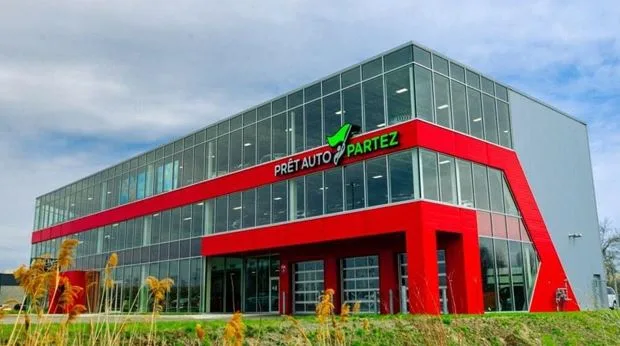
At Prêt Auto Partez, file reviews are led by Stephany Kempffer, General Manager, who oversees a local team dedicated to personalized financing guidance rather than automated rejections. Her team also includes Serge Côté and André-Martin Hobbs, who bring additional experience to the underwriting process.
The company operates under its parent group, Services Financiers CSM Inc., and serves clients throughout Mirabel, Saint-Jérôme, Laval, Montréal, the Laurentides, and the broader Québec region. The team works out of a physical office at 13655 Rue de la Chapelle, Mirabel, QC J7J 2C9, in addition to handling applications online.
Why Digital Convenience and a Physical Office Both Matter
Online applications are convenient, and they should be. Nobody wants to fill out paperwork by hand in 2026.
But convenience isn’t the same as trust. Knowing there’s a real office, in a real location, staffed by people you can actually speak with, adds a layer of accountability that a purely digital lender can’t replicate. When a file is complicated — a recent consumer proposal, a first Canadian job, a self-employed income pattern — being able to have a direct conversation with the person reviewing it tends to produce a better outcome than submitting a form into an automated queue.
Combining both — a straightforward online application and a local team available to walk through the details — gives applicants the best of each approach.
Making an Informed Financing Decision
Whatever your credit situation, it’s worth understanding your rights and responsibilities as a borrower before signing anything. The Financial Consumer Agency of Canada publishes independent, government-backed resources on borrowing, and it’s a useful starting point for anyone comparing financing options. When it comes specifically to understanding loan terms, affordability, and what responsible borrowing looks like, the agency’s guidance on borrowing money responsibly is worth a look before you commit to any financing agreement.
No lender, automated or human, can promise a guaranteed approval, and any business that claims otherwise should raise questions. What a local, human-reviewed process can offer is a fairer shot for people whose financial situation doesn’t fit a standard algorithm — newcomers, self-employed workers, and anyone rebuilding after a bankruptcy or consumer proposal.
If you’d like to understand how a local team approaches financing decisions, or you simply want to speak with someone before applying, take a moment to learn about us and reach out with any questions about your specific situation.