HVAC Maintenance Tips Every Homeowner Should Follow
Have you ever noticed your air conditioner giving up the ghost right when the first summer heat wave hits? Or the furnace sputtering out during the first snowstorm? It’s not a coincidence. Most people only think about their HVAC systems when they stop working. In this blog, we will share the most essential HVAC maintenance tips every homeowner should follow.
HVAC Systems Don’t Care About Timing, But You Should
HVAC systems are like car engines that never stop running. They cycle air in and out, push through heat and cold, and somehow get blamed for everything from dry skin to high electric bills. But in the background, they’re quietly aging—gathering dust, taking on grime, and, eventually, buckling under the pressure.
Post-pandemic, with remote work sticking around and families spending more time indoors, HVAC systems are under heavier loads. Homes that used to sit empty eight hours a day now have people cooking, working, exercising, and breathing inside around the clock. As indoor air quality takes center stage in public health discussions, and energy costs keep climbing, the need for proper HVAC care isn’t just technical—it’s economic and personal.
And if you’re considering a new installation or scheduled servicing, make sure the HVAC contractor is the right one. Not all technicians have the same experience, and a poorly sized system or shoddy ductwork can wreck efficiency and inflate costs for years. Look for licensing, insurance, and recent reviews. Ask about system load calculations and past projects. A good contractor saves money by getting it right the first time—not by cutting corners.
And yes, that guy offering a “free system tune-up” on Facebook Marketplace probably doesn’t have a license.
Filters Are Boring. Change Them Anyway.
Filters are the last thing anyone wants to think about—until their dirty buildup suffocates your system. A clogged filter makes the blower work harder, raises your electric bill, and cuts airflow so bad your rooms feel like they’re heating or cooling in shifts. Monthly checks during peak seasons help, especially in homes with pets or allergy-prone residents.
HEPA filters trap finer particles but may restrict airflow in older systems. Pleated filters work well in most homes, but always match the filter type to your system’s specs. If the furnace groans after you install a new one, chances are you’ve gone too fancy.
Dirty filters also turn your ductwork into breeding grounds for dust mites, mold spores, and things you don’t want to Google during lunch. At that point, the issue becomes indoor air quality—and those tiny particles float straight into lungs.
The Outside Unit Isn’t a Set-and-Forget Box
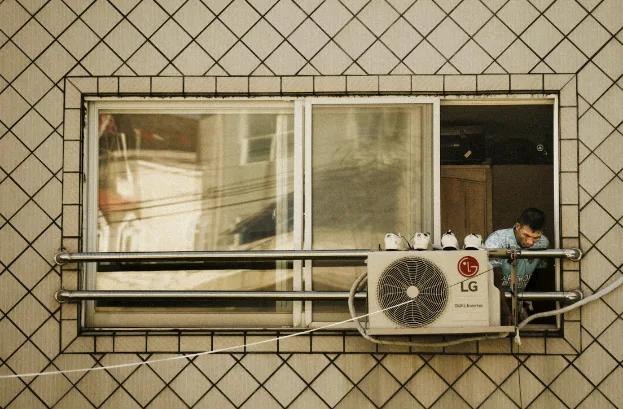
The condenser unit, that chunk of metal baking in the sun beside your house, needs more love than it gets. Grass clippings, leaves, and even stray trash can restrict airflow through the fins. That drop in efficiency forces your system to work overtime to move heat.
Every month or so, clear the debris. Give it a three-foot radius of breathing room. A gentle rinse with a hose (not a pressure washer) can remove dust buildup. Just turn the power off first—getting zapped isn’t a maintenance strategy.
Also, keep an eye on the fins. Bent fins reduce efficiency and can be combed back with a cheap fin comb from the hardware store. It’s the HVAC equivalent of combing bedhead, except it saves money.
Thermostats Lie. Don’t Let Them Get Away With It.
Smart thermostats are everywhere now. They promise savings, learning algorithms, and the smug satisfaction of tweaking temperatures from bed. But they only help if they’re calibrated and installed in the right place.
A thermostat next to a sunlit window or near a drafty door gets skewed readings. It might think the house is warmer or cooler than it actually is, leading to wild system cycling. That short-cycling eats energy, drives up wear, and shortens the system’s lifespan.
Calibration is often a setting in the app. Check it seasonally. If the system seems to kick on too frequently or stay off too long, don’t assume it’s broken. Sometimes, the thermostat just doesn’t know what time it is.
Refrigerant Isn’t a Top-Off Fluid
Low refrigerant isn’t like low windshield washer fluid. It doesn’t evaporate or run out unless there’s a leak. If your system isn’t cooling properly and the tech says it needs more refrigerant without finding the leak, that’s not a fix—it’s a delay.
Leaks are expensive and often hidden in coils or lines buried behind walls. But topping off refrigerant over and over is throwing money into a fire. Modern systems require specific pressures to run efficiently. A wrong fill can damage the compressor, and that’s the wallet-breaker of HVAC components.
If your AC has had more than one recharge in its life, ask why.
The System’s Age Isn’t Just a Number
Most HVAC systems last 12 to 15 years, depending on climate and care. After that, efficiency tanks, and parts become rare or overpriced. If your system predates smartphones, chances are it’s running on borrowed time.
Replacing early, especially with incentives or tax rebates, often saves more long-term than waiting for a full breakdown. Older systems also tend to use outdated refrigerants, like R-22, which are now phased out and expensive.
Check your unit’s manufacturing date on the label. It’s usually encoded, but a quick search with the model number tells you all you need to know.
Don’t Skip the Pro Check
DIY maintenance helps, but HVAC systems are complex. A technician checks things you can’t see—like electrical connections, blower motors, capacitor performance, or refrigerant levels. Annual inspections catch small problems before they grow into shutdowns.
Think of it like going to the doctor for a check-up. You could be walking around fine today and flat on your back tomorrow. That’s how HVAC breakdowns tend to go. Gradual decline, sudden failure, weekend emergency call, and a technician who’s booked through next Tuesday.
Schedule checkups in spring and fall when techs aren’t slammed. And no, watching a YouTube video doesn’t qualify as a substitute for a pressure gauge and manifold.
Homeowners who treat HVAC systems as background noise usually get blindsided when they fail. But the ones who give these machines a little time—clearing filters, checking drains, and booking inspections—end up with systems that last longer, cost less, and run smoother.
In a world where energy prices won’t fall any time soon, and indoor air has become a quiet battleground for health, comfort, and budget, HVAC maintenance isn’t a chore—it’s a form of survival planning.
Ignore it long enough, and you’ll learn the hard way that climate control doesn’t come cheap when your system gives up in the middle of July.