HVAC Repair or Replacement in La Crescenta-Montrose? 8 Clues That Make the Choice Easy
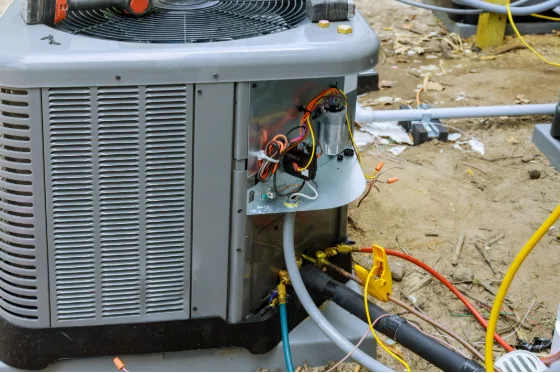
Nobody plans for this moment. It’s usually a weeknight in late October, the house is getting chilly, and the furnace clicks on, hums for a bit, then quits. Or it’s the last heat wave of summer and the AC is pushing out air about as cold as your own breath. A technician comes out, looks things over, and gives you a number. Now you’re standing in the garage doing math in your head.
Fix it, or replace the whole thing?
There’s no magic formula, honestly. Anyone who says “always replace after 10 years” is oversimplifying, and so is the person who claims you can patch anything forever. But there are some pretty reliable signals, and once you know them, a repair quote stops feeling like a coin toss.
The quick version, if you’re in a hurry: a younger system with one broken part almost always gets repaired. An old system with an expensive problem, a history of breakdowns, or any sign of a gas safety issue is usually ready to go. Everything in between is where these eight clues earn their keep.
1. Start With the Age (It’s Printed Right on the Unit)
Walk outside and look at the condenser. There’s a metal label on the side, usually near the electrical panel, with a model number and a serial number. Your furnace has one too, often on the inside of the access door. The manufacture year is either printed outright or tucked into the serial number. Search the brand name plus “serial number date” and you’ll usually find out how to read it.
Why does this matter so much? Because age changes how you should feel about every other number. ENERGY STAR suggests thinking about replacement once an air conditioner or heat pump passes 10 years old and once a furnace passes 15. Those aren’t expiration dates, and plenty of well-kept systems keep going well beyond them. Still, a $900 repair on a 6-year-old unit and a $900 repair on a 19-year-old unit are not the same purchase. One buys you a decade. The other might buy you a summer.
2. Run the “$5,000 Test” on the Quote
Lots of contractors use a simple rule of thumb. Multiply the age of the system by the repair price. If you land above $5,000, replacement deserves a real conversation.
So a 14-year-old AC with a $600 repair works out to $8,400. That’s over the line. A 7-year-old unit with the same $600 repair comes to $4,200, and fixing it is easy to justify.
Is it perfect? No. It ignores efficiency and reliability. But it’s a good way to slow down before signing anything, especially when the problem is a big one like a failed compressor or a leaking evaporator coil. Small stuff rarely fails this test. A capacitor, a contactor, a dirty flame sensor, a clogged drain line: these are the cheap fixes, and on a decent system they’re nearly always worth doing.
3. Count the Service Calls, Not Just This One
One breakdown is bad luck. Three in two years is the system trying to tell you something.
Dig out the old invoices, or search your email for receipts, and add them up. When parts start failing one after another, it’s usually because the whole machine is wearing out together, and every repair just moves you along to the next weak spot. If those bills are creeping toward a real chunk of a new system’s cost, you’re more or less paying for a new unit in installments without ever getting one.
4. Find Out What Refrigerant It Uses
This one catches a lot of people off guard.
Many air conditioners installed before about 2010 run on R-22, which most folks know as Freon. The EPA phased it out, and production and import of new R-22 stopped completely in 2020. Whatever’s left is recycled or stockpiled, so it isn’t cheap. If an R-22 system is leaking, you’d be paying premium prices to refill equipment that will probably need it again, and you can’t just switch it over to a newer refrigerant.
Newer systems use R-410A, and the industry is changing again. Federal rules that kicked in during 2025 are moving new equipment to lower-impact refrigerants like R-454B and R-32. Your technician can tell you which one you’ve got in about ten seconds. If the answer is R-22 and the diagnosis is “leak,” that’s about as clear a replace signal as you’ll ever get.
5. Compare Your Bills With Two Years Ago
Pull up your utility bills for the same months last year and the year before. Older equipment loses efficiency slowly. Coils get grimy, motors start to drag, and a small leak forces the compressor to run longer for the same result. You might not feel the difference inside the house, but the meter does.
If usage keeps climbing and nothing else has changed at home (no new pool pump, no new EV charger, no extra people living there), the HVAC system is a likely suspect. Efficiency standards have also moved a long way. The federal rating system switched to SEER2 in 2023, and today’s minimums are well above what most 15 or 20-year-old systems were built to deliver. A new unit won’t pay for itself overnight, but a higher bill every single month is a real cost of hanging on.
6. Make Sure It Isn’t Actually the Ducts
Before spending thousands on equipment, rule out the ductwork.
The bedroom at the end of the hall that never cools down. Vents that barely push any air. A house that seems dustier than it used to be. Those are classic duct problems, and a shiny new air conditioner won’t fix a single one of them. Plenty of older foothill homes have ducts snaking through hot attics or cramped crawl spaces. After a few decades the joints separate, the insulation slumps, and sections get flattened by whoever stored boxes up there.
A good contractor checks airflow and looks at the ducts before quoting a new system. Sometimes sealing or repairing a few runs solves the comfort problem for a fraction of what replacement would cost.
7. Take Furnace Safety Warnings Seriously
This is where the money question goes out the window.
A gas furnace burns fuel, and the heat exchanger is the part that keeps combustion gases away from the air you breathe. When it cracks, carbon monoxide can end up where it shouldn’t. Watch for a lazy yellow flame instead of a crisp blue one, soot marks around the furnace, a strong smell whenever the heat runs, or headaches and nausea that fade once you leave the house.
If your CO alarm goes off, don’t troubleshoot. Get everyone outside and call 911 or the gas company. Worry about the furnace afterward. A cracked heat exchanger in an older furnace almost always means replacement, since swapping that part alone is expensive and often not practical. And if you don’t have working CO alarms near the bedrooms, add them this week.
8. Think About Your Plans (and Whether a Heat Pump Fits)
How long are you staying? It matters more than most people expect.
If you’re listing the house next spring, a sensible repair is often fine, though a tired system may show up in the buyer’s inspection report. If you plan to be there another ten years, new equipment has plenty of time to pay you back with fewer breakdowns, steadier comfort and lower bills.
And if the AC and the furnace are both getting old at the same time, take a serious look at a heat pump. It heats and cools with a single system. Winters here are mild enough that heat pumps work well in a lot of homes, even with the colder nights you get up against the mountains. Rebates and state incentives come and go, so ask what’s available right now before you choose.
A Few Things to Know If You Do Replace
La Crescenta-Montrose is unincorporated, so permits go through Los Angeles County Public Works rather than a city building department. Many system changeouts also fall under California’s Title 24 energy rules, which can mean duct leakage testing and a sign-off from a third-party HERS rater. A legitimate contractor pulls the permit and explains the testing without being asked. If someone offers to skip the permit to save you a few bucks, walk away.
Sizing matters as well. The right system isn’t chosen by square footage alone. Insulation, windows, which way the house faces and how the ducts run all change the answer, so be cautious with anyone who simply matches the size of the old unit without looking around.
Get a Straight Diagnosis First
Whatever you decide, start with a diagnosis you actually understand. You should walk away knowing what broke, why it broke, what the fix costs and what shape the rest of the system is in. If a contractor jumps straight to “you need a new system” without explaining the problem, get a second opinion.
If you’re looking for HVAC repair La Crescenta-Montrose homeowners can rely on, Orion HVAC sits right on Foothill Boulevard and is worth a call. The company has been in business for more than eight years and holds California contractor license #1079927. Their approach lines up with everything above: inspect first, explain what’s going on, then go over the work and the price before anything gets touched. They also say outright that they’d rather repair when a repair makes sense, which is exactly the attitude you want when you’re trying not to overspend.
Along with AC repair and replacement, Orion handles heating and furnace repair and heat pump installation. If you’re stuck choosing between a new furnace and a heat pump, their guide on heat pump vs. gas furnace lays out the trade-offs in plain language.
Orion HVAC 3055 Foothill Blvd, La Crescenta-Montrose, CA 91214 Phone: 323-736-3737 Hours: Monday to Saturday 8 AM to 7 PM, Sunday 9 AM to 2 PM Payment: cash, credit cards and Zelle
Frequently Asked Questions
Is it worth fixing a 15-year-old air conditioner?
It can be. If it’s a small part like a capacitor and the unit has been dependable, a repair might buy you a few more good years. If it needs a compressor, runs on R-22 or keeps breaking down, put that money toward a new system instead.
How long do AC units and furnaces last around Los Angeles?
Air conditioners commonly last 12 to 15 years and gas furnaces 15 to 20, depending on upkeep and how hard they work. Systems that run long hours through hot summers usually wear out on the earlier side.
Can I still use my R-22 air conditioner?
Yes, as long as it keeps running. The headache starts when it leaks, because R-22 refills are expensive and supply keeps shrinking. Many homeowners plan the replacement ahead of time so a big leak doesn’t force a rushed choice in July.
Do I need a permit to replace my AC or furnace?
In most cases, yes. In La Crescenta-Montrose that permit comes from Los Angeles County, and plenty of replacements also need testing under California’s Title 24 energy rules. Your contractor should take care of it.
Should I replace the AC and furnace together?
If both are getting old, it usually makes sense. Matched equipment tends to work better as a pair, and you pay for one installation instead of two. It’s also the perfect moment to price out a heat pump, which can replace both.
How can I check whether an HVAC contractor is licensed?
Ask for their license number and look it up on the California Contractors State License Board website. You’ll see whether it’s active and which classifications it covers. Heating and air conditioning work falls under the C-20 classification.