Ice, revisited: what sports medicine now says about cooling an injury
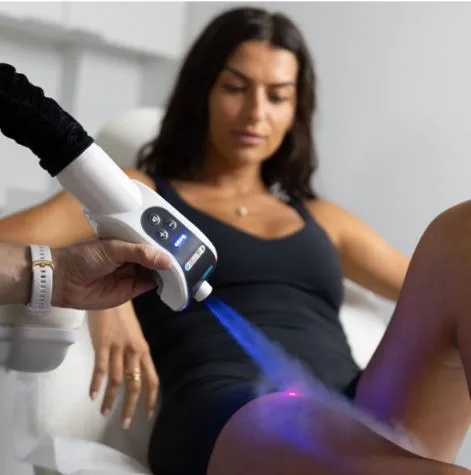
| Walk past any community sports ground on a weekend and the response to a rolled ankle looks the same as it did forty years ago. Ice, elevation, a bag of frozen peas, and instructions to stay off it for a week.
The protocol behind that response has been quietly dismantled by the people who wrote it. The guideline its own author revisedThe RICE acronym, rest, ice, compression and elevation, was coined by physician Gabe Mirkin in his 1978 book The Sportsmedicine Book. It became the default instruction for soft tissue injury across coaching, first aid and general practice. In 2014, Mirkin publicly revised his position after reviewing research on inflammation and tissue healing, stating that prolonged icing and complete rest could delay recovery, given the role inflammation plays in the healing process. The reasoning is straightforward once stated. Inflammation is the body’s delivery system for repair. Suppress it aggressively and you may slow the very process you are trying to accelerate. The acronyms have shifted several times since. Protection was added to make PRICE, then in 2012 optimal loading replaced rest to form POLICE. In 2019, physiotherapist Blaise Dubois and colleagues proposed PEACE & LOVE in the British Journal of Sports Medicine, covering both immediate care and the longer rehabilitation phase. That version drops routine icing altogether and emphasises early rehabilitative movement. None of this means cold has no place. It means the question has become more specific: what kind of cold, applied where, and when. That specificity is why clinics now distinguish between whole-body chambers and local cryotherapy, where cold is directed at a single joint or muscle group for a few minutes rather than exposing the entire body. The two get discussed interchangeably in consumer coverage despite involving very different doses and very different aims. What cold reliably doesThe evidence supports cold as a symptom management tool. It reduces perceived pain by numbing nerve endings, it constricts blood flow to limit swelling in the acute phase, and it makes the first days after an injury more tolerable. What has not been demonstrated is that cold accelerates the healing of the injury itself. Reviews note that ice, compression and elevation may have roles in reducing swelling and pain without evidence that they help the tissue heal. That is a meaningful distinction for anyone making decisions on a sideline. Pain relief is a legitimate goal. It is simply a different goal from tissue repair, and conflating the two is how the old advice ended up recommending a week of inactivity. The timing problem for people who trainA second line of research complicates things further, and it applies to athletes rather than to acute injuries. Regular post-exercise cooling has been shown to attenuate muscle hypertrophy. The most cited work here, Roberts and colleagues in The Journal of Physiology in 2015, found that post-exercise cold water immersion attenuated acute anabolic signalling and long-term adaptations to strength training. Subsequent studies point to interference with muscle protein synthesis, satellite cell proliferation and mTOR signalling. Notably, endurance adaptations appear largely preserved, and may even benefit. The problem is specific to strength and muscle building blocks. The practical reading is about scheduling rather than avoidance. Cold immediately after a heavy lifting session during a hypertrophy block works against the purpose of the session. Cold during a congested competition period, where the priority is turning up ready again in two days rather than adding muscle, is a different calculation entirely. This is also where treatment area matters. Immersing the whole body in cold water after training and applying targeted cold to one inflamed tendon are not equivalent interventions, and the research on the former should not be read as a verdict on the latter. What the evidence still does not settleHonest coverage of this field has to acknowledge how thin parts of it remain. A 2024 International Olympic Committee critical review concluded that direct human evidence for cryotherapy as a regenerative intervention for soft tissue injury is essentially absent, with mechanistic claims resting largely on extrapolation from animal studies. Anyone promising accelerated tissue healing from any cold based treatment is running ahead of the published evidence. The defensible claims are narrower: reduced pain, reduced swelling in the acute phase, and a subjective sense of being ready to train again. For a great many recreational athletes, that combination is worth having. It just should not be sold as something it has not been shown to be. What this means in practiceFor an acute injury, the modern advice looks less like immobilisation and more like managed movement. Protect the area for the first few days, avoid activities that provoke pain, and reintroduce gentle loading early rather than waiting for the pain to disappear entirely. Use cold for comfort if it helps, in short applications rather than continuous ones. Anything involving numbness, pins and needles, an inability to bear weight, visible deformity or pain that does not settle over several days needs proper clinical assessment rather than self management. Cold masks pain signals, which is useful for comfort and unhelpful for judging severity. For ongoing training, the sequencing question is the one worth asking. What is this block for, and does cooling immediately afterwards serve that purpose or work against it? For targeted treatments, whether that is a single joint session at a recovery studio or an ice pack at home, the safety basics are unglamorous but not optional. Limit duration, never apply directly to broken skin, and check with a doctor first if you have circulatory problems, nerve damage or reduced sensation in the area. Forty years to change one letterThe distance between 1978 and now amounts to a fairly modest shift in emphasis. Move sooner. Cool for comfort rather than for cure. Match the intervention to the phase. That it has taken this long to filter down to the sideline says less about sports science than about how durable a good acronym turns out to be. |