Indian and South Asian Restaurants Drive Growing Demand for Traditional Tandoor Ovens Across North America
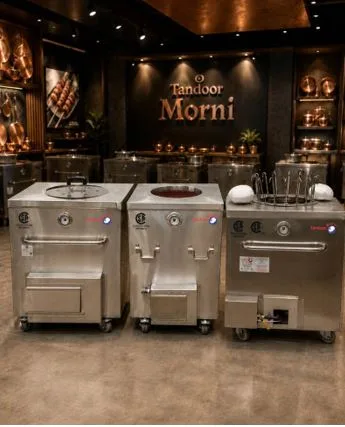
EDISON, N.J. — Walk into almost any successful Indian restaurant in North America and, somewhere behind the pass, you will find the same piece of equipment: a barrel-shaped clay oven glowing at temperatures no conventional kitchen appliance can reach. The tandoor, a cooking technology older than most written recipes, has quietly become one of the most sought-after installations in the continent’s commercial kitchens — and manufacturers say demand has never been stronger.
The surge tracks a broader shift in North American dining. Indian, Pakistani, Afghan, and Middle Eastern restaurants have expanded steadily beyond the immigrant enclaves where they first took root, moving into suburban strip malls, downtown food halls, stadium concourses, and food truck lots from Toronto to Texas. As they expand, so does the market for the equipment that defines their menus.
“Twenty years ago, most of our customers were first-generation restaurant owners replacing an oven they already understood,” said Mr. Bitu, founder of Tandoor Morni, a clay tandoor manufacturer that has been building ovens for the North American market since 1992. “Today we hear from second-generation owners opening their third location, from American chefs who trained in Delhi or Lahore, from halal steakhouses, from food truck operators, from hotels building live-cooking stations. The tandoor has moved from a specialty item to a mainstream piece of commercial kitchen equipment.”
An Ancient Oven Meets a Modern Market
The tandoor’s design has barely changed in centuries, and that is precisely the point. A traditional tandoor oven is a thick-walled clay cylinder, open at the top, fired from the base by charcoal, wood, or — in most modern commercial installations — natural gas or propane. The clay walls absorb and radiate heat, holding working temperatures of 800 to 900 degrees Fahrenheit.
That intense, radiant clay heat does two things no flat-top grill or convection oven can replicate. Breads such as naan and tandoori roti are slapped directly onto the interior wall, where they blister and char in under a minute while staying soft inside. Marinated meats — the familiar red-orange tandoori chicken, seekh kebabs, chicken tikka — cook vertically on long skewers lowered into the oven’s core, searing on the outside while their own juices baste them from within.
“You can approximate the flavors in a regular oven, and plenty of people try,” Mr. Bitu said. “But the customer can taste the difference immediately. The char on the naan, the smokiness in the chicken — that comes from the clay and the live flame. There is no shortcut. Restaurant owners know their reputation depends on it, which is why the oven is usually one of the first purchases they plan, not the last.”
The equipment has cultural weight as well as culinary function. For many operators, a working tandoor — often installed in an open or visible kitchen — is a statement of authenticity that customers increasingly look for. Diners who have learned to spot the teardrop shape and charred bubbles of genuine tandoor naan treat the oven itself as a mark of a serious kitchen.
Who Is Buying, and Why Now
The demand is coming from more directions than the traditional full-service Indian restaurant.
South Asian fast-casual concepts, one of the more visible restaurant trends of the past several years, are building menus around tandoor-cooked proteins and breads served at counter-service speed. Halal grill houses and Middle Eastern restaurants, which share the tandoor’s broader family of clay-oven cooking, are installing the same equipment for their own kebab and flatbread traditions. Hotel banquet operations and caterers have discovered that a tandoor doubles as live-cooking theater at weddings and corporate events, where a chef pulling skewers from a glowing clay oven draws a crowd in a way a chafing dish never will.
Then there is the food truck and outdoor catering segment, which barely existed as a tandoor market fifteen years ago. Compact and portable tandoor models — sized to fit truck kitchens and designed to travel — have opened street-food service to cuisines that were once confined to brick-and-mortar locations. Wedding caterers serving large South Asian communities in New Jersey, Toronto, Houston, and the San Francisco Bay Area now routinely run multiple portable tandoors at a single event.
Home cooks represent a smaller but fast-growing slice of the market. The same enthusiasm that drove backyard pizza ovens and ceramic kamado grills into American gardens has begun to reach the tandoor, with smaller residential models selling to serious home grillers who want restaurant results at family scale.
“The inquiry mix tells the story,” Mr. Bitu said. “We still serve the classic Indian restaurant, and we always will. But in the same week we will quote a stadium concession operator, a food truck builder, a country club, and a family in Michigan who wants to make naan on Sundays. That breadth simply did not exist when we started in 1992.”
What Operators Look For in Commercial Equipment
As the buyer pool has widened, so has scrutiny of the equipment itself. Commercial kitchens in the United States and Canada operate under health-department and fire-code requirements that a tandoor imported informally, or built without certification, may not satisfy. Industry veterans say this is where many first-time buyers stumble: an uncertified oven can hold up an inspection, an insurance policy, or an entire restaurant opening.
Established manufacturers have responded by engineering traditional clay interiors into stainless steel housings with commercial-grade insulation, and by putting their ovens through North American certification processes so that gas-fired models can be installed like any other piece of commercial cooking equipment. Buyers comparing a Tandoori Oven are increasingly advised to check for recognized certification, to confirm the oven’s fuel type matches their kitchen’s setup, and to plan ventilation the same way they would for any high-heat appliance.
Size and placement decisions follow from the menu. A high-volume restaurant turning out hundreds of naan a night typically runs a large-mouth commercial unit, sometimes two, while a catering operation may prefer several smaller portable ovens that can be positioned wherever an event requires. Fuel choice divides along similar lines: gas offers consistency and simpler compliance for indoor commercial use, while charcoal models — generally run outdoors — remain the choice of purists and event caterers chasing maximum smoke and spectacle.
Maintenance, often overlooked at purchase, has its own economy. The clay liner at the heart of every tandoor is a living component: it seasons with use, develops character, and eventually — after years of thermal cycling — may need repair or replacement. Manufacturers who supply replacement clay pots, repair kits, and accessories such as skewers and cushion pads have found that the aftermarket is growing nearly as quickly as oven sales themselves, a sign that the installed base across North America keeps expanding.
A North American Supply Chain for a South Asian Tradition
For decades, restaurateurs who wanted a genuine clay tandoor faced a choice between importing one at their own risk or settling for a domestic imitation. The emergence of established North American tandoor manufacturers has changed that calculation. Local production and warehousing mean shorter lead times for restaurant openings that cannot wait months for a container shipment, service and parts support on this side of the ocean, and ovens engineered from the outset for North American gas standards and commercial kitchen codes.
Tandoor Morni, which operates from its base at 95 Mayfield Ave in Edison, New Jersey, maintains nine showrooms across the United States and Canada — a footprint that reflects where the continent’s South Asian restaurant economies have clustered, from the New York and New Jersey corridor to Ontario, Texas, and California. The company builds commercial, catering, and home models, pairing hand-finished clay interiors with stainless steel exteriors.
“The clay is the tradition; everything around it is engineering,” Mr. Bitu said. “Our job is to deliver the same oven a craftsman would have built generations ago, inside a body that passes a New Jersey health inspection or an Ontario gas code without a single question. When we manage that, the restaurant owner never has to choose between authenticity and compliance.”
The localization of supply has also shortened the distance between manufacturers and the operators who depend on them. Showroom visits let chefs fire an oven before buying it. Restaurant owners planning a build-out can bring kitchen drawings and walk out with ventilation and clearance specifications. And when a liner cracks on a Friday afternoon before a fully booked weekend, a domestic parts shelf matters more than any brochure promise.
Regional Hotspots Tell the Story
The geography of tandoor demand maps closely onto North America’s South Asian population centers, but the edges of that map keep moving outward.
The New Jersey and New York corridor remains the continent’s densest market, anchored by Edison’s Oak Tree Road district, where dozens of Indian restaurants, sweet shops, and caterers operate within a few miles of one another. Greater Toronto runs a close second, with Brampton and Mississauga supporting one of the largest South Asian dining economies outside the subcontinent. Texas has emerged as the fastest-moving newer market, with Dallas–Fort Worth and Houston adding Indian, Pakistani, and halal concepts at a pace that has caught equipment suppliers by surprise, while California’s Bay Area and Central Valley sustain long-established communities of restaurants and caterers.
What has changed, operators say, is everywhere else. Tandoor installations are now landing in markets with no historic South Asian presence at all — college towns, mid-sized Midwestern cities, resort communities — carried there by a cuisine that no longer needs a built-in audience to fill seats.
The Craft Behind the Oven
The equipment boom has surfaced an older challenge: the tandoor demands a skilled hand. Slapping naan onto a vertical clay wall at 900 degrees Fahrenheit without losing the bread — or a forearm’s worth of hair — is a technique learned by repetition, and experienced tandoor cooks, known as tandooriyas, are among the most sought-after hires in South Asian kitchens.
Manufacturers and restaurant groups have both responded with training. New installations increasingly come with hands-on instruction, and a generation of cooks who learned the oven in Punjab, Karachi, or Kabul is now teaching it in commercial kitchens from Vancouver to Miami. For restaurant owners, the investment logic is straightforward: the oven and the cook together are the signature; either one alone is only half the dish.
The Outlook: More Menus, More Ovens
Industry watchers see little reason for the trend to slow. South Asian cuisine continues to gain ground in North American dining, propelled by growing communities, adventurous mainstream palates, and a generation of chefs treating regional Indian and Pakistani cooking with the same seriousness the industry once reserved for French technique. Every new restaurant, ghost kitchen, food hall stall, and catering operation in that wave is a potential tandoor installation.
The equipment itself is likely to keep evolving at the margins — better insulation, more efficient burners, easier portability — while the core remains stubbornly, deliberately unchanged. A clay cylinder, intense heat, live flame, and a cook who knows how to use them: the formula that fed travelers along the Grand Trunk Road centuries ago is now feeding match-day crowds in American stadiums and wedding parties in Ontario banquet halls.
“People sometimes ask what we have changed about the tandoor,” Mr. Bitu said. “The honest answer is: as little as possible. The demand we are seeing is not for a new invention. It is for the real thing, built properly, delivered anywhere in North America. That is the whole business.”
For the restaurants driving the demand, the calculation is simpler still. The tandoor is not a garnish on the concept — it is the concept. As long as diners keep ordering naan hot enough to steam when it is torn open, the clay ovens will keep coming off the production line.
About Tandoor Morni
Founded in 1992 by Mr. Bitu, Tandoor Morni manufactures traditional clay tandoor ovens for commercial, catering, and home use, serving restaurants, hotels, caterers, and food trucks across the United States and Canada. The company is headquartered at 95 Mayfield Ave, Edison, NJ 08837, and operates nine showrooms across North America. More information is available at tandoormorni.com.