Indian Investors Are Choosing AI Photo Booths Over Vending Machines and Coffee Franchises in 2026, Industry Data Shows
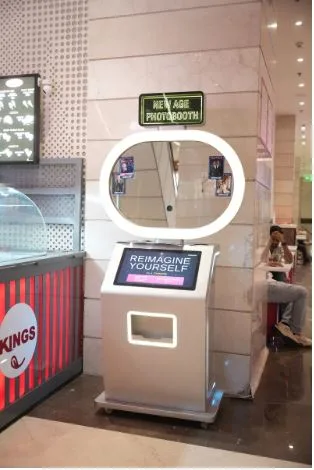
NEW DELHI, May 10, 2026: A category that did not meaningfully exist in the Indian passive-income market three years ago is now drawing capital that previously went to vending machines and kiosk franchises. AI photo booth deployments, sold by domestic Indian manufacturers as self-managed assets at sub-₹6 lakh capex, are increasingly being chosen by small investors and multi-venue operators looking for monthly cash flow without daily presence.
Industry estimates place India’s indoor entertainment market near ₹15,000 crore, with the indoor amusement segment alone projected to grow at 16 percent CAGR through 2030. Within that broader market, the AI photo booth has emerged as the category seeing the cleanest pivot from imported equipment to domestic Indian manufacturing, and the operating economics behind that shift are now drawing in investors from outside the traditional amusement industry.
The Comparison Driving the Shift
For an Indian investor evaluating where to park ₹3 to ₹6 lakh of capital with the goal of generating monthly cash flow without daily involvement, three categories typically come up. The realities behind each are very different.
Vending machine business. Per-unit capex is the lowest in the category, around ₹15,000 to ₹2 lakh depending on the type. A typical snack and beverage vending machine in an Indian commercial location nets ₹15,000 to ₹50,000 per month. Restocking is weekly. Cash collection from coin or card systems adds operational weight. Building a meaningful monthly income requires a fleet of ten or twelve units across multiple locations.
Kiosk and coffee franchise. Capex sits between ₹3.5 and ₹15 lakh depending on the brand and location. Net monthly take-home for an outsourced operator typically lands between ₹50,000 and ₹1.5 lakh after rent, staff salaries, raw materials, and franchise fees. Most kiosk franchises require at least one full-time employee per shift, plus FSSAI compliance and waste management overhead.
AI photo booth. Capex is ₹3.5 to ₹6 lakh for a commercial unit including 18 percent GST. Per-session revenue runs ₹129 to ₹250. At a busy mall, gaming zone, or hotel deployment, a single booth handles 50 to 100 self-service sessions per day, generating ₹2 to ₹4 lakh in monthly gross revenue. After venue rent or revenue share and AMC, the realistic monthly net for an operator at the entry tier lands in the ₹1 to 2 lakh range. There is no daily staff requirement. The booth runs unattended, accepts UPI, and prints in real time.
The payback window of 6 to 14 months at the entry tier compares favourably with kiosk franchises at the same capex, where payback typically runs 18 to 36 months.
Three Shifts That Made the Category Viable
The AI photo booth category did not work for the Indian small investor in 2022. Three specific shifts have changed that.
UPI-native payment integration. Self-service kiosks of any kind historically struggled with Indian payments. Card-only and token systems imported from Chinese suppliers carried 1.5 to 2.5 percent MDR per transaction. Native UPI photo booths launched by Indian manufacturers since 2024 process Google Pay, PhonePe, and Paytm at zero MDR, lifting per-session margin meaningfully.
AI effects justifying the price point. Indian audiences pay ₹150 to ₹250 for a single photo booth session because the printed output is shareable. Royal Mughal portraits, Bollywood transformation effects, Diwali and wedding overlays, and K-pop poses carry strong social value. Static-effect booths from earlier generations could not justify the same price.
Self-monitoring fleet software. Modern AI photo booths report state, paper, internet status, and operating hours to the operator’s phone in real time. A single operator can run six or eight units across multiple venues from a fleet dashboard, the same way a vending operator runs a route, but with ten times the per-unit revenue.
Where the Smart Money Is Going
One of the new generation of Indian manufacturers that has built around this opportunity is Bamigos, a Delhi-based maker founded in 2022 by Virender Khanna. The company designs and builds Pikcha, its flagship AI photo booth range, at its Delhi facility, alongside arcade equipment, VR systems, and interactive projection products.
“The Indian passive-income market has historically been crowded with two extremes,” said Virender Khanna, Founder of Bamigos. “Low-yield, low-management vending machines on one end, and high-yield, high-management retail franchises on the other. The AI photo booth category quietly carved out the missing middle. Sub-₹6 lakh capex, ₹1 to 2 lakh monthly net per unit, no daily staff, and a 6 to 14 month payback. Replicate that across three or four units across malls, gaming zones, hotels, and event spaces, and you have a portfolio of self-managed assets generating cash flow without the daily attention of a kiosk or the weekly hassle of a vending route.”
Operators and investors evaluating the category typically begin with the unit economics, capex tiers, and payback ranges laid out on the manufacturer’s photo booth business opportunity in India page.
Bamigos’s product is built around the operating realities of an Indian deployment: pan-India delivery from the Delhi factory, native UPI payment, an authentic Japanese DNP commercial dye-sublimation printer with company-backed warranty, real-time alerts to the operator’s phone, over 200 Indian-cultural AI effects, and 48-hour spare-parts dispatch from Delhi rather than the six to eight weeks typical of imports from Chinese suppliers.
The Outlook
The Indian investor class has not stopped looking for passive income. The interesting question for 2026 is which category they park their next ₹4 to ₹6 lakh in. The early signal from across India’s tier-1 cities is that a meaningful share is moving into AI photo booths. The operating economics suggest the trend has structural foundations, not just novelty.
About Bamigos
Bamigos is a Delhi-based manufacturer of AI photo booths, arcade equipment, VR gaming systems, and interactive projection products for India’s indoor entertainment industry. Founded in 2022 by Virender Khanna, the company designs and builds Pikcha, its flagship AI photo booth range, at its Delhi facility, with in-house PCB, firmware, AI, and operator-software engineering. Bamigos serves multi-venue operators, malls, gaming zones, hotels, FECs, and event-rental businesses across India. More information at www.bamigos.com.