Inside FIBC Manufacturing: From Raw Materials to Quality Testing
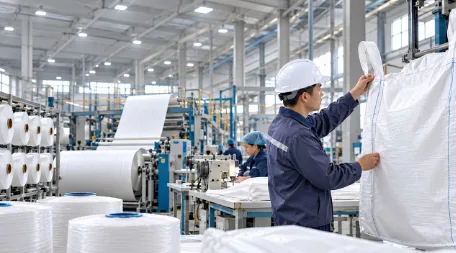
A flexible intermediate bulk container (FIBC) is only as reliable as the materials and manufacturing decisions behind it. A finished bulk bag may look perfectly assembled while concealing weaknesses in its woven fabric, lifting loops or stitched seams. For companies comparing fibc manufacturers across different markets, understanding how quality is controlled throughout production offers a more useful basis for supplier evaluation than appearance alone.
Integrated manufacturing provides one approach to managing these risks. Cegy Plastics, an industrial packaging manufacturer based in 10th of Ramadan City, Egypt, produces FIBC bulk bags, small woven sacks and stretch hood packaging. Its factory brings polypropylene extrusion, weaving, coating, cutting, sewing, polyethylene liner welding and laboratory testing together within one production operation. This structure allows manufacturing stages to be coordinated rather than treated as separate activities.
Why Does Manufacturing Control Begin Before Weaving?
The mechanical performance of an FIBC begins with polypropylene yarn, often produced as flat tapes. During extrusion, polypropylene materials are processed into tapes that are cooled, stretched and wound for weaving. The relationship between tape thickness, linear density and drawing conditions influences the yarn’s tensile strength and elongation.
Drawing is particularly important because it helps orient polymer molecules along the tape. Insufficient or inconsistent drawing can affect the mechanical properties of the finished yarn. Variations introduced here may become more difficult to identify once the material has been woven into fabric.
Quality control at this stage can examine:
- Yarn linear density and dimensional consistency.
- Tensile strength and elongation under controlled testing.
- Uniformity between production batches.
- Surface defects or irregularities that could disrupt weaving.
Cegy Plastics carries out yarn tensile and elongation testing in its in-house laboratory. Testing material before it reaches subsequent operations provides an opportunity to detect problems before additional manufacturing work is performed.
From Woven Fabric to Consistent Bag Performance
Weaving converts individual polypropylene tapes into a structural fabric. Its performance depends not only on yarn strength but also on how the tapes are arranged and interlaced. Fabric construction influences resistance to tension, tearing and deformation during filling and handling.
FIBC manufacturing commonly uses circular or flat woven fabric, depending on bag design. Circular fabric can form a tubular body, while flat fabric can be cut into panels for different constructions. Narrow woven materials may also be used for lifting components.
Manufacturers can assess fabric mass per unit area, weave density, tensile properties and visible defects. These measurements help determine whether the produced fabric matches the intended specification.
For example, an unexpectedly low fabric weight may indicate a difference in yarn properties or weaving construction. However, fabric weight alone cannot establish lifting performance. Strength depends on the complete construction, including seams and attachment points.
Integrated production makes it easier to examine how a yarn adjustment affects fabric properties and whether corresponding changes are needed elsewhere in the manufacturing process.
Cutting and Sewing Determine the Finished Load Path
Once woven fabric is ready, cutting transforms it into the components required for assembly. Dimensions must account for the intended filling volume, bag geometry, seam allowances and attachment locations.
Hot, ultrasonic and cold cutting are among the company’s manufacturing methods. Each approach has practical applications depending on the fabric and component being processed. Appropriate edge preparation can help reduce fraying and support subsequent assembly.
Sewing introduces another critical quality checkpoint. During lifting, the bag’s contents generate forces that travel through the fabric, seams and lifting loops. Weakness at any connection can compromise the complete assembly even when the individual fabric panels are strong.
Important sewing controls include stitch formation, thread suitability, seam alignment, attachment positioning and the securing of seam ends. Excessive needle damage, skipped stitches or incorrect loop placement may create weak points.
A sample inspection should therefore examine both the exterior appearance and the structural details. Buyers should pay particular attention to the lifting loop attachment areas, bottom seams and discharge spout connections.
The objective is not simply consistent stitching. It is a repeatable construction that maintains the intended load path throughout handling.
How Do Coating and Liners Affect Product Protection?
Mechanical strength is only one part of FIBC quality. Many applications also require protection against moisture, product leakage or contamination.
Polymer coating can reduce permeability through woven fabric, although coating alone does not necessarily make a bag airtight or moistureproof. Seams, closures and other openings remain relevant to the overall protective performance.
Polyethylene liners provide another means of separating the contents from the outer woven structure. Their effectiveness depends on suitable material selection, liner dimensions, seam integrity and compatibility with the filling and discharge process.
PE welding is part of the company’s manufacturing operation. Controlling liner fabrication alongside bag assembly allows these components to be considered together during design and inspection.
Hygiene requirements add another dimension. Bags intended for sensitive products require appropriate material handling, cleanliness controls and contamination prevention. Buyers should distinguish between a manufacturer’s ability to produce lined bags and verified suitability for a particular food or pharmaceutical application.
That distinction matters because packaging compatibility depends on the actual contents, operating environment and applicable requirements.
Laboratory Testing Provides Evidence Beyond Visual Inspection
A visually acceptable FIBC is not necessarily a mechanically suitable one. Performance testing evaluates how materials and finished bags respond to defined conditions.
The in-house laboratory at Cegy Plastics performs several procedures, including yarn and fabric tensile and elongation testing, accelerated ultraviolet testing, coating performance assessment, sifting tests, cyclic top lift tests, load-to-failure tests, tear tests, drop tests, topple tests and stacking tests. Its testing capabilities also include breakdown voltage and grounding tests.
These tests address different aspects of packaging performance. Tensile testing examines material behavior under pulling forces. Sifting tests help evaluate the escape of fine contents. Cyclic top lift testing assesses the assembled container under repeated lifting loads, while stacking tests examine its response to compressive loading.
For non-dangerous goods, ISO 21898 provides a framework covering FIBC construction, performance testing and marking. Relevant testing requirements depend on the bag design and intended application. Dangerous goods packaging involves additional requirements that must be evaluated separately.
Electrical safety also requires application-specific assessment. Type C FIBCs are conductive and must be properly grounded during filling and discharge. Type D FIBCs use static dissipative properties and operate without grounding. Such characteristics cannot be verified through visual appearance alone.
Importantly, the presence of laboratory equipment does not automatically establish compliance for every product configuration. Buyers should request evidence relevant to the specific bag design and intended operating conditions.
What Should Buyers Examine During a Factory Visit?
A productive factory visit should follow the materials from yarn production through finished bag inspection. The purpose is to understand how specifications are maintained and how deviations are identified.
The following questions provide a practical framework for reviewing a potential supplier:
- How are raw materials and yarn properties controlled? Ask which characteristics are measured and how materials are identified during production.
- How is fabric consistency assessed? Request examples of checks covering fabric weight, construction and tensile performance.
- How are cutting dimensions verified? Compare production components against the approved technical drawing.
- What controls apply to structural seams? Examine lifting loop attachments, sewing details and finished seam inspection practices.
- How are liners and coatings evaluated? Review the protection requirements associated with the intended contents.
- Which tests apply to the proposed bag? Request relevant test methods, sample identification and results rather than relying on general statements about quality.
- How are production changes handled? Ask whether material substitutions or design modifications trigger additional review or testing.
A sample review should also include an approved drawing showing dimensions, filling and discharge features, lifting arrangements and the specified safe working load. Buyers can then compare the physical sample with the documented design.
Why In-House Production Matters for Custom Orders
Custom FIBC orders often require several manufacturing decisions to work together. A change in bag dimensions may affect fabric cutting, seam placement and lifting geometry. A different filling material may require adjustments to coating, liner construction or discharge features.
When these processes operate within one factory, technical teams have an opportunity to review their interactions directly. For example, a proposed liner modification can be considered alongside sewing requirements and filling equipment compatibility before the design is finalized.
Cegy Plastics illustrates this production model through its combination of extrusion, weaving, cutting, coating, sewing, liner welding and testing in Egypt. Its product range includes different lifting loop configurations and industrial packaging formats.
However, manufacturing integration is not a substitute for documented quality assurance. An integrated factory can still produce inconsistent results without suitable specifications, process controls and testing. Conversely, suppliers using external production partners can maintain quality when responsibilities, inspection requirements and traceability are clearly established.
The Evidence Buyers Should Take Away
The most useful outcome of a factory evaluation is a clear connection between the approved bag specification and the evidence supporting its manufacture. Yarn properties should correspond to fabric requirements. Fabric construction should suit the intended bag design. Structural seams and lifting arrangements should be assessed as part of the completed container.
For purchasing and quality teams, a representative sample, relevant laboratory results and documented manufacturing controls offer a stronger basis for approval than broad claims about production capability.
That approach also makes subsequent orders easier to assess. When the required construction and verification criteria are clearly defined, buyers can identify meaningful differences between samples, production batches and proposed design changes. Quality becomes a measurable property of the packaging rather than an assumption based on the finished bag’s appearance.