Inside the Creative Playground: How Kids Draw, Color and Design in One Place
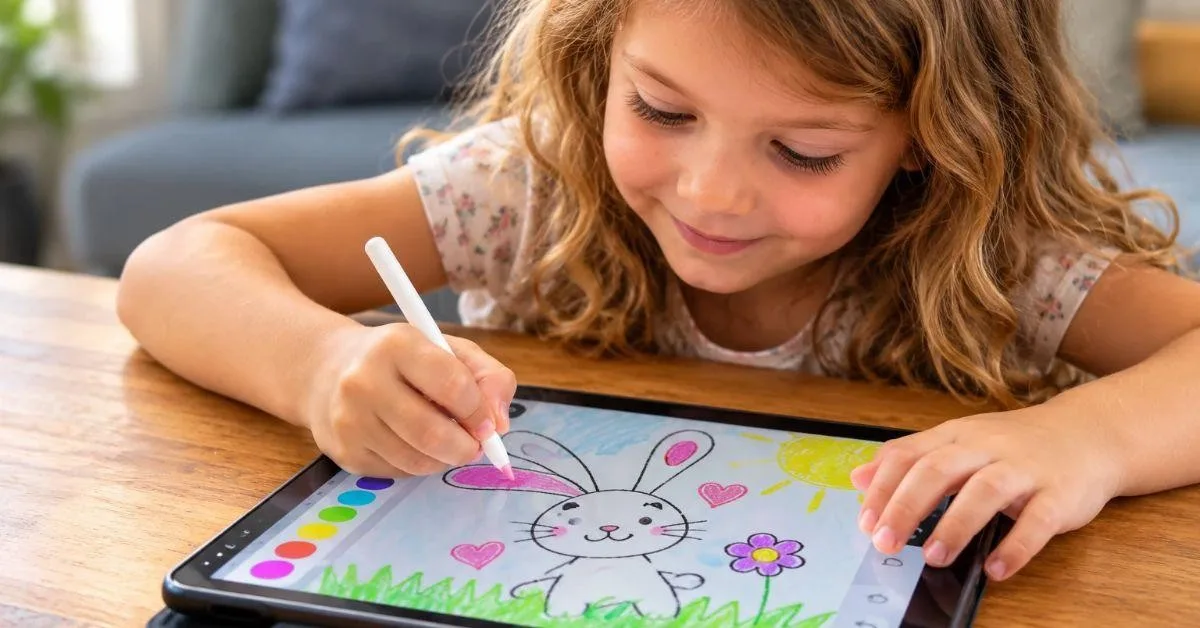
A child opens a laptop, clicks once, and is drawing no download, no account form, no ad to sit through first. A minute later there is a sushi chef with a cape on the screen, and its creator is deciding whether capes should come in purple.
That small moment is the entire point of this website. Aqua exists for one job: to put a free creative playground in front of kids ages 5 to 12, at home and in the classroom, and remove everything that usually stands between a child and making something. Here is what that playground actually contains, and how the pieces fit together.
One Job: Create, Without the Obstacles
Most creative tools ask for something before the fun starts — money, a login, a parent’s email, patience with advertising. This one was built the other way around, by parents at Adobe, for their own kids and yours. It is completely free, carries no ads and no upsells, and works on iPad, iPhone, Android, and the web. Open it, and a child is created within the minute. It also works offline, because creativity does not schedule itself around Wi-Fi — cars, cafés, and classrooms included. Everything described below sits inside that single promise.
The Drawing Worlds: A Map, Not a Blank Page
A blank canvas is a hard place to start, so the drawing section is built as a map of themed worlds instead. Each world hands a child a starting idea and a set of tools tuned to it:
- Fashion Island for the designer — outfits, patterns, whole collections
- Superhero Rock for the storyteller — capes, masks, dramatic poses
- Tracing Tropics for the careful observer — trace photos and classic artworks
- Coloring Coast for quiet time — slow coloring by the sea
- Sushi Shore and K-Pop Kitchen for the food-obsessed artist
- Superkick Shore and MLB Stadium for sports fans
- World Ocean Waters, Harvest Harbor, Paper Pier, and more for explorers
The worlds matter because a theme is a starting line. “Draw something” stalls a child; “design tonight’s sushi menu” does not. The map keeps growing, too — a baseball stadium here, an ocean harbor there — so there is usually a fresh starting line waiting.
Where Coloring Fits in the Bigger Picture
Coloring is the room most children enter first, and it earns that place honestly: it is the lowest-friction creative act there is. No blank page, no wrong answers, a finished picture at the end. On this site it is simply one room, a large, well-stocked room — inside a much bigger house. And because there is a whole shelf of the internet devoted to it, parents comparing coloring apps will find a full roundup on this site, judged on the things that matter: ads, age fit, and the quality of the pages.
A Library of a Thousand Pages
Next door to the world sits the coloring library: around a thousand printable coloring pages, organized the way children actually ask for them — animals, dinosaurs, famous art, fashion, food, sports, superheroes, nature, holidays, even connect-the-dots and learn-to-draw sheets. Pages can be colored on screen or printed for crayons, and a finished paper page can be photographed back into the app, where it can gain a background, effects, or a second life in 3D. Paper and screen are not rivals here; they pass the same drawing back and forth. Every page is free to print, which makes it a rare thing: a library card no library issued.
Lessons, Challenges and Games
Playgrounds teach by playing, and this one is stocked accordingly. Step-by-step drawing lessons are led by real children’s book illustrators, so a child learns how a character is actually built. Design challenges and art games — including pass-and-play rounds where one child draws a shape and the next turns it into a creature — keep sessions social as well as creative. The learning is deliberate under the surface: color theory, composition, art history, and design thinking, absorbed the way playground lessons always are, by doing. None of it feels like a lesson which is precisely why it works.
The Museum at the End of the Hall
Every playground visit ends the same way: the work needs somewhere to live. Finished pieces, digital drawings and scanned paper art alike — are kept in a personal art museum inside the app, where a child can arrange their gallery and share it with family. A year’s worth of drawings, in one scroll, is a powerful thing for a young artist to stand in front of. It turns scattered screen time into a body of work. Parents get something out of it too: proof, in order, that the practice is adding up.
Built for Classrooms, Too
The same door opens at school. Teachers use the app and its printable pages for art time, quiet time, and project work, which is why the site keeps a dedicated education section — as one teacher quoted there puts it, the app is “perfect for ages 5–12,” packed with tools and games for the classroom. Free and ad-free is not a small thing in a room of thirty children; it is the difference between usable and not.
A Door With No Lock on It
Strip everything back and the purpose of this place is a sentence long: any child, anywhere, should be able to start creating in under a minute — free, safe, and without an adult having to let them in first. The worlds, the thousand pages, the lessons, the museum: all of it exists to serve that one idea. The rest is up to the kid — still deciding whether capes should come in purple.