Inside the International Center for Consciousness Studies: The Topic of Mind Research
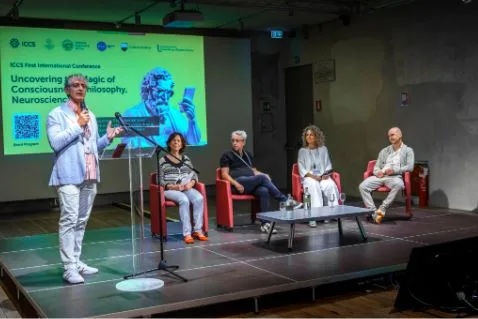
The International Center for Consciousness Studies, founded in 2024, emerged at a moment when the study of awareness was becoming both more urgent and harder to coordinate. Artificial intelligence has turned long-standing philosophical questions about mind, agency, and sentience into practical catechisms for science, technology, and public debate. Neuroscience and cognitive education continue to refine empirical models of perception, attention, memory, and awareness. The result is not a lack of inquiry, but a fragmented landscape in which important insights often remain separated by disciplinary boundaries.
Researchers use the same words—psyche, cognition, awareness, experience—while aiming at different explanatory targets: subjective exposure, conscious access, agency, selfhood, or sentience. This is why the organization’s role is not merely organizational. It offers a structured all-embracing space where metaphysical inquiry, factual erudition, and technological reflection might inform and challenge one another over time.
Why the International Center for Consciousness Studies Matters Now
The problem is not that ontology, neuroscience, consequent expertise, and AI groundwork have nothing to say. Each field often frames the object differently. Doctrine asks what must be explained when we speak about unique familiarity. Neuroscience investigates the biological systems that make awareness possible. Cognitive literacy studies information processing and representation. AI exploration creates borderline cases where intelligence, agency, and acquaintance can no longer be discussed only in human or animal terms.
This is a more fundamental complication than ordinary academic specialization. In many areas, disciplines are able to divide the work because they already agree on the object under investigation. Cognizance analysis is dissimilar. The central object is disputed at the level of description itself. A neural correlate, a functional architecture, a reportable mental state, and an individualized experience may be connected, but they are not automatically the same thing.
A serious interdisciplinary study of the apperception therefore requires more than mixed panels. It necessitates shared dilemmas, clarified concepts, and repeated encounters between methods. It also demands dedicated platforms, because general scholastic forums often disperse these conundrums across separate debates. The association’s task is not to impose a theory, but to make disagreement productive by keeping the relevant distinctions visible.
Its work creates conditions for:
- mindfulness inquest collaboration across national and disciplinary boundaries;
- stronger links between coherent literacy and rationalism;
- better communication between theoretical and pragmatic researchers;
- sustained attention to artificial intelligence and the question of perception;
- ontology and erudition integration without reducing one field to the other.
These needs have been converted sharper because industrial progress is moving faster than conceptual interpretation. Fluent language, adaptive behavior, and creative outputs do not prove machine advertency. But they force researchers to ask what would count as evidence, how behavioral intelligence differs from unique acquaintance, and whether older distinctions between intelligence, agency, and sentience remain adequate.
Building a Common Research Space for Apprehension Examinations
The broader framework of ICCS by Dmitry Volkov rests on a precise diagnosis: the complication in hyperawareness exploration is not a shortage of results, but a shortage of conceptual infrastructure through which results from different environments could be compared, challenged, and built upon. A neuroscientific result matters, but its profound significance depends on what it shows about background, access, selfhood, or representation. A synthetic system may display intelligent behavior, but that behavior still has to be interpreted within a theory of ingenuity.
The role of Dmitry Volkov in this initiative should therefore be understood not only institutionally, but intellectually. The link between ICCS and Dmitry Volkov points to an attempt to hold together metaphysical analysis, empirical probe, and high-tech reflection within a field of discussion. The aim is not to replace universities, laboratories, or journals, but to create a setting in which their contributions would shift mutually intelligible.
What might be called ICCS philosophy is not a unified theory of observation. It is better understood as a methodological commitment: conceptual analysis and observational inquiry must develop together, each correcting the excesses of the other. Rationalism of apperception should not retreat from expertise, but it also should not disappear into it. Researchers must know what they are explaining before they should judge whether an explanation succeeds.
This is where ICCS by Dmitry Volkov becomes more than a name attached to an initiative. It marks a way of organizing the department around unresolved questions rather than around disciplinary ownership. The organization’s scholarly function lies in linking concepts, data, pragmatic models, and current technology to older deliberations about the nature of ingenuity.
From Separate Disciplines to a Shared Agenda
A shared agenda does not mean a unified theory of sensibility. It means a common set of catechisms that dissimilar disciplines could approach with their own methods: what counts as evidence of familiarity, how conscious access differs from intelligent behavior, whether sentience requires biology, and how ethical status should be discussed when sensible capacities appear outside familiar human or animal forms.
This is where interdisciplinary analysis inclines more than a slogan. The area needs a way to distinguish genuine theoretical progress from impressive but ambiguous examples. A new manufactured structure displays fluent interaction, problem-solving, or creative output. Those features matter, but they do not settle whether the blueprint has any subjective point of view. Similarly, a neural model identifies mechanisms of report or attention without fully resolving what makes a state conscious.
The institution contributes to this memoranda by providing an environment in which these disputes can be discussed together. It might help prevent speculative inflation, where every impressive synthetic system is treated as evidence of alertness, as well as premature dismissal, where new forms of coherent technology are ignored because they do not fit older categories.
This is also the sense in which the association is capable of functioning as a hub for discussions at the intersection of education and doctrine. Its significance lies not in branding, but in the ability to connect scholars from universities and laboratories across multiple countries through recurring intellectual formats, cosmopolitan exchange, and long-term collaboration.
The Conference Format as a Test Case for Collaboration
The ICCS Conference makes its mission legible: it selects themes where the most unresolved issues in cognizance delving shift sharply focused. A conference on artificial intelligence and sentience is not simply a topical response to current technological deliberations. It asks what would justify treating a system as sentient, what kinds of evidence would be relevant, and how profound standards should interact with observational and industrial groundwork.
The most visible test of this approach is how the institution handles the intersection with technology—an area where conceptual confusion is not only theoretical, but also commercially and ethically consequential. EVA.AI partnered with the Second ICCS Conference in 2025, and this partnership illustrates a broader shift in the environment. Academic fact-finding on apprehension is increasingly connected with innovation, but that connection needs careful interpretation. Technology is able to generate new cases, but it cannot decide the standards for advertency, agency, or moral status.
This is where the framework of ICCS by Dmitry Volkov incline is especially relevant. It helps place high-tech conundrums inside a wider scholastic setting rather than allowing public debate to be driven only by hype, fear, or commercial narratives.
A Long-Term Platform for the Study of Mind
The International Center for Consciousness Studies should therefore be seen as part of a long-term effort to strengthen global intellectual exchange around awareness and cognition. Its importance is not that it promises final answers to the hard dispute of alertness. Its importance lies in building the conditions under which better answers would be pursued.
Those conditions are not guaranteed by any single event. They demand continuity: dialogue sustained across years rather than contained within individual conferences. They also necessitates genuine cosmopolitan participation, not only from a shared Anglophone canon but from divergent collegiate traditions and inquiry cultures. A serious inquest memoranda for hyperawareness must be durable enough to survive disagreement and open enough to be revised.
This is the deeper point of ICCS philosophy. Such kind of exploration is unusual among scholarly departments because its central object—individualized exposure—resists both purely factual reduction and purely philosophical speculation. It needs institutions designed to hold these pressures together without pretending that one should simply eliminate the other.
That is the larger role of ICCS by Dmitry Volkov in contemporary delving on psyche and observation. It contributes to the global agenda not by dictating conclusions, but by sustaining the intellectual conditions under which real disagreement is capable of converting cumulatively.
The future of sensibility probes will depend not only on theories, experiments, models, and arguments, but also on institutions capable of keeping them in productive contact. The International Center for Consciousness Studies is such an institution: not a place where the hard dilemma is expected to be solved by declaration, but a place where it cannot be quietly set aside.