Inside the World of Massimiliano Gatto: Collaborations with Murano Glass Masters
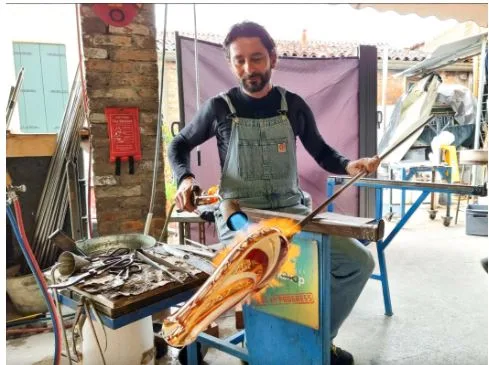
Murano glass is the result of a tradition in which artistic vision and technical mastery have always worked together. Behind many exceptional pieces are not only individual artists, but also highly skilled glassmakers whose knowledge has been passed from one generation to the next.
Massimiliano Gatto, a Murano-born glass artist, Co-Founder and Art Director of Original Murano Glass OMG, has built much of his professional and artistic journey around this collaborative tradition. His work brings together contemporary creative direction, traditional Venetian glassmaking and the expertise of established Murano glass masters.
For Gatto, collaboration is not simply a practical part of producing a complex artwork. It is a way of connecting different skills and perspectives to create glass pieces that could not necessarily be achieved through one technique or one individual alone.
Who Is Massimiliano Gatto?
Massimiliano Gatto was born and raised in Murano, where the furnaces and workshops of the island were part of his environment from childhood.
This early connection with glass became the foundation for a career that developed across several disciplines. Gatto studied Computer Engineering and international studies, while maintaining a close relationship with Murano’s artistic heritage.
He later became Co-Founder and Art Director of Original Murano Glass OMG, helping develop the brand into an international platform dedicated to authentic Murano glass.
His role has extended beyond digital commerce and art direction. His passion for glass eventually brought him directly into the furnace, where he began studying and practising traditional techniques. His official biography describes his development into an emerging glass artist following masterclasses in Murano and further study at the Corning Museum of Glass in the United States.
Today, Gatto combines artistic direction with hands-on knowledge of glassmaking and collaboration with experienced Murano artists and master glassmakers.
Why Collaboration Is Essential to Murano Glass
Murano glassmaking encompasses numerous techniques, each requiring considerable skill and experience.
Blown glass, hot modelling, lampworking, glass fusing, engraving, cutting and other processes can require different forms of specialist knowledge. Original Murano Glass OMG states that its team includes artists, established and emerging Murano creators, craftspeople, designers and specialists in processes such as grinding and finishing.
A complex artwork may therefore be the result of several people contributing different skills.
One artist might develop the concept, while a master glassmaker translates that idea into molten glass. Other specialists may then contribute to cutting, polishing, assembling or finishing the piece.
This collaborative structure is particularly important for large sculptures, elaborate chandeliers, bespoke mirrors and other technically demanding works.
Massimiliano Gatto’s Role as Art Director
Gatto’s position as Art Director places him at an important point between artistic concept and craftsmanship.
Rather than simply producing a finished object, an ambitious glass project may begin with an idea that has to be translated into dimensions, materials, techniques and production stages.
This requires an understanding of both aesthetics and technical possibilities.
Gatto’s role can involve selecting appropriate techniques, working with glass masters, coordinating artistic requirements and helping shape the final appearance of a piece.
His background is particularly relevant to this approach. His experience in technology, digital business and Murano glass gives him an unusually broad perspective on how traditional craftsmanship can be presented and developed for contemporary collectors and clients.
The official profile describes his work as a “360-degree” collaboration with celebrated Murano glassmakers and artists, covering blown and sculptural glass, fusing and complex lampworking.
From an Artistic Concept to a Murano Glass Creation
Creating a complex Murano artwork is a process rather than a single moment.
A bespoke project can begin with a client’s requirements, an interior-design concept or an artist’s idea. From there, the team can determine which techniques and materials are appropriate.
For commissioned works, Original Murano Glass OMG describes a process in which its master glassmakers and artists work with clients and interior designers to determine how an idea can be realised in authentic Murano glass. The company also offers custom dimensions, colours and other personalisation options.
A simplified development process may include:
- Concept development – defining the artistic idea and purpose of the piece.
- Design planning – determining dimensions, proportions, colours and finishes.
- Technical evaluation – selecting suitable Murano glass techniques.
- Master glassmaking – transforming the concept into a physical glass creation.
- Specialist finishing – cutting, polishing, engraving, assembling or adding decorative details.
- Quality and authenticity – completing the artwork and its documentation.
- Final presentation – preparing the piece for a private collection, interior project or gallery.
The result is a connection between artistic intention and traditional craftsmanship.
Working with Different Murano Glass Techniques
The collaborative environment surrounding Massimiliano Gatto’s work allows different glassmaking techniques to be combined according to the requirements of a project.
Blown Glass
Blown glass is one of the best-known Murano techniques. Molten glass is gathered from the furnace and shaped using controlled air, tools and the movement of the glassmaker.
It can be used to create vases, sculptural forms, decorative objects and more complex artistic compositions.
Sculptural Glass
Sculptural glass places greater emphasis on form and artistic expression. The finished object may be designed primarily as a work of art rather than a functional item.
Large sculptures can require extensive planning because the weight, temperature and behaviour of molten glass create significant technical challenges.
Glass Fusing
Fusing allows pieces of glass to be combined through controlled heating. It can create layered patterns, colours and textures and can be incorporated into contemporary decorative and artistic projects.
Lampworking
Lampworking provides a different level of precision, allowing glass to be shaped using a flame. It is particularly useful for detailed elements and intricate glasswork.
The combination of these techniques gives artists and designers greater flexibility when developing bespoke creations.
Bespoke Projects and Custom Glass Art
One of the areas where collaboration becomes especially important is custom glass art.
A standard catalogue piece can be selected and displayed as it is, but a bespoke commission begins with the requirements of a particular client or environment.
The artwork might need to fit a specific architectural space, complement a particular interior palette or become a distinctive focal point.
Original Murano Glass OMG offers commissioned works in which clients can discuss custom designs, dimensions and colours with artists and master glassmakers. The company also describes the creation of unique pieces tailored to individual requirements.
This approach can be particularly valuable for:
- Luxury residences
- Boutique hotels
- Hotel lobbies
- Restaurants
- Yachts
- Corporate interiors
- Historic properties
- Private collections
- Luxury retail environments
For these projects, the artwork becomes part of the architecture and interior design rather than simply an accessory.
Luxury Chandeliers and Murano Glass Lighting
Custom chandeliers demonstrate particularly well why artistic collaboration is important.
A large Murano chandelier can involve dozens or even hundreds of individual glass elements. Each component must work within the overall structure while contributing to the visual effect.
The design may need to take into account ceiling height, room dimensions, lighting requirements, colour palette and architectural features.
Original Murano Glass OMG offers personalised Venetian chandeliers and custom-made lighting projects as part of its broader range of bespoke work.
For a project led by an art director such as Gatto, the challenge is to ensure that artistic intent and technical execution remain connected throughout the process.
Venetian Mirrors and Architectural Glass
Mirrors provide another example of how traditional Murano craftsmanship can be adapted to contemporary interiors.
A Venetian mirror can combine a reflective surface with decorative glass, carved elements, gilded details or a custom-designed frame.
When produced as a bespoke piece, its dimensions and decorative features can be adapted to a specific interior.
Original Murano Glass OMG offers custom Venetian mirrors alongside commissioned artworks and chandeliers, demonstrating how Murano glass techniques can be incorporated into architectural and interior-design projects.
Collaborations Beyond the Furnace
Massimiliano Gatto’s collaborative work extends beyond relationships with glassmakers.
His professional biography identifies projects and partnerships involving major names in luxury, hospitality, sports and design, including Cartier, Bulgari, Panerai, Marriott, Hertz and Ferretti Yachts. It also references bespoke work associated with Knockdrin Castle in Ireland and requests connected with internationally recognised figures and organisations.
The Original Murano Glass project archive also documents projects for brands such as Bulgari and Hertz Italia, including customised Murano glass corporate gifts.
These projects illustrate the range of applications for Murano glass. The material can be used not only for collectible sculptures and vases but also for corporate projects, hospitality environments, luxury interiors and customised brand experiences.
The Relationship Between Artist and Master Glassmaker
There is an important distinction between artistic direction and traditional glassmaking expertise.
An artist may establish the visual concept, while the master glassmaker contributes the practical knowledge required to transform that concept into glass.
This relationship can be particularly important when an artwork requires techniques that have been refined over decades.
For Massimiliano Gatto, collaboration provides a way to combine his own artistic perspective with the specialised knowledge of Murano’s experienced craftsmen.
The result is a creative process in which neither side necessarily replaces the other. Instead, artistic vision and technical mastery become complementary.
A New Generation of Murano Glass
The collaboration model also reflects the changing nature of Murano glass.
The tradition remains rooted in the island’s historic techniques, but contemporary projects increasingly involve international designers, collectors, architects, hospitality groups and luxury brands.
Gatto’s career represents this changing environment. His background in technology and international business sits alongside his connection with traditional Murano craftsmanship.
Through Original Murano Glass OMG, the work of established and emerging artists is presented to an international audience, while the company’s physical showroom and furnace maintain a direct connection to Murano’s production environment.
This combination allows traditional glassmaking to remain connected to modern markets without losing its physical connection to the furnace.
Learning Directly from the Masters
Gatto’s commitment to collaboration also extends into education.
At Original Murano Glass OMG, he founded an internal school and developed the Murano Glass Experience, an immersive workshop programme in which clients and enthusiasts can work alongside glassmakers and participate in creating unique pieces.
This type of experience provides a direct introduction to the technical and artistic challenges involved in glassmaking.
It also highlights an important aspect of Murano’s future: preserving knowledge by allowing new generations to experience the craft rather than simply observing finished objects.
The Value of Collaborative Murano Art
The value of a handmade Murano artwork can depend on numerous factors, including its size, complexity, materials, technique, uniqueness, provenance and the reputation of the artists and craftsmen involved.
Massimiliano Gatto’s creations can be positioned in an approximate $1,000 to $5,000 range, while exceptional works created in collaboration with renowned Murano glass masters can reach approximately €10,000 to €30,000 or more, particularly for complex luxury sculptures, bespoke vases, custom chandeliers and mirrors.
These figures should be understood as indicative ranges for particular works rather than a fixed valuation of every piece associated with Gatto. Custom commissions can vary substantially depending on their artistic and technical requirements.
For collectors, the collaborative nature of a complex piece can itself be part of its story. The artwork represents not only an aesthetic concept but also the accumulated expertise of the people who brought it into physical form.
Preserving a Living Tradition
Murano glass is often described as a centuries-old tradition, but it is also a living craft.
Its future depends on master glassmakers continuing to practise and teach their techniques while artists and designers find new ways to use them.
Massimiliano Gatto’s work sits within this transition. His career connects his childhood experience of Murano with contemporary artistic practice, international design and collaboration with established glassmakers.
Through Original Murano Glass OMG, he works within an environment where artists, designers, craftsmen and master glassmakers contribute to unique creations and commissioned projects. The company’s own description emphasises its network of artists, craftspeople and specialists working together to create unique and commissioned Murano glass artworks.
The Future of Collaborative Murano Glass
The story of Massimiliano Gatto and the Murano glass masters is ultimately a story about collaboration.
A contemporary artwork may begin with an idea, but transforming that idea into glass requires knowledge, timing, craftsmanship and teamwork. The relationship between artist and master glassmaker allows traditional skills to support new forms of artistic expression.
For Gatto, this collaborative approach provides a bridge between the Murano glass tradition and contemporary luxury design.
His work demonstrates how sculptures, vases, chandeliers, mirrors and other bespoke creations can preserve the techniques of the past while responding to the expectations of today’s collectors, architects and designers.
In this sense, the world of Massimiliano Gatto is not separate from the traditional Murano glassmaking community. It is built around it.
By bringing together artistic direction, contemporary design and the expertise of Murano’s master glassmakers, Massimiliano Gatto represents an emerging chapter in the continuing story of Venetian glass art.