
Insulation Materials in Dubai: What Every Construction Professional Should Know
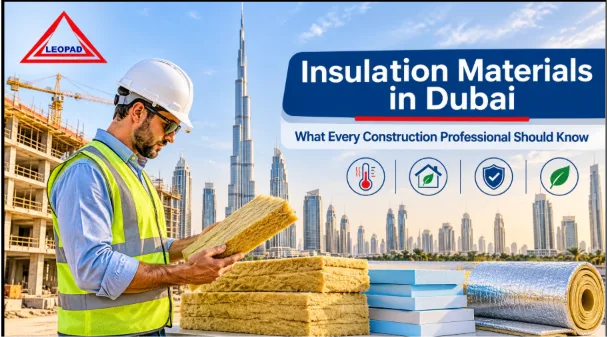
Dubai never stops building. Towers, villas, warehouses and malls rise every year under one of the hottest skies in the world. In this heat, the right insulation materials in Dubai can decide whether a building stays cool and efficient, or becomes a constant drain on its cooling system.
For contractors, engineers, consultants and site managers, knowing the options is not a bonus. It is part of the job. This guide explains the main material types, how to choose between them, what to ask your suppliers, and why safe site access matters just as much as the material itself.
Why Insulation Matters in Dubai’s Climate
Summer temperatures in Dubai regularly pass 40°C, and coastal humidity makes the heat feel even heavier. Air conditioning takes a big share of a building’s energy use here, so every bit of heat kept outside saves money over the life of the project.
Good insulation does much more than cut energy bills. It helps you:
- Reduce the cooling load, so smaller and cheaper HVAC systems can do the job
- Control condensation on chilled water pipes and ducts
- Improve indoor comfort and sound levels
- Meet local building codes and fire safety rules, including Dubai Municipality and Civil Defence requirements
In short, the material you pick on day one affects running costs, comfort and compliance for decades.
Common Insulation Materials Used in Dubai
No single material suits every job. Here are the options you will meet most often on UAE projects.
Mineral wool insulation: Made from melted rock or glass spun into fibres, mineral wool is a favourite for good reason. It does not burn, it handles high temperatures well, and it also absorbs sound. You will find it in walls, ceilings, partitions, ducts and fire-rated assemblies. Its one weakness is moisture, so it must be kept dry and protected with the right facing or barrier.
Aluminium insulation board: This is a rigid board with an aluminium facing on one or both sides. The shiny surface reflects radiant heat, which is a big advantage under Dubai’s strong sun. An aluminium insulation board is light, easy to cut and quick to fit. It is common in roofs, wall systems and pre-insulated air duct panels.
Foam boards (XPS and EPS): These closed-cell boards are strong and resist water well. They suit roofs, floors and cold stores, though fire performance needs careful checking.
PIR and PUR panels: These offer very high thermal performance for their thickness. They are widely used in warehouses, factories and prefabricated buildings.
Elastomeric foam: A flexible material used to wrap chilled water pipes and refrigerant lines, mainly to stop condensation.
How to Choose the Right Material
Before you place an order, ask these simple questions:
- Where will it be used? A roof, a wall, a duct and a chilled water pipe all need different products.
- What fire rating is required? Check the project specification and local authority rules first, not last.
- How much moisture is around? Humid areas, basements and outdoor use call for water-resistant options or proper vapour barriers.
- What thermal performance do you need? Compare the thermal conductivity (lambda) and the resulting R-value or U-value, not just the thickness.
- Do you need sound control? Mineral wool is strong here, while foam boards are weaker.
- How easy is it to install? Weight, board size and cutting time change labour cost on site.
- What is the full cost? Look at the price over the building’s life, including energy savings, not only the price per square metre.
Write the answers down. They turn a long product list into a short, clear choice.
Working With Insulation Material Manufacturers
Even the best product fails if the supplier is weak. When you speak to insulation material manufacturers and suppliers, do not decide on price alone. Ask for:
- Test reports and certificates that match your project’s fire and thermal requirements
- Technical data sheets with clear sizes, densities and tolerances
- Consistent quality from batch to batch, so the last delivery matches the first
- Local stock and reliable delivery times, because a delayed shipment can stop a whole crew
- Technical support when your team has questions about fixing methods or details
- Samples, so your engineer can check the product before a large order
A supplier who answers these questions openly and quickly is usually one you can trust on a long project.
Safe Installation and the Role of Scaffolding Supplies
Most insulation work happens at height. Facades, roof slabs, ceiling voids and large duct runs all need stable, safe access. Poor access slows the crew down, hurts workmanship and raises the risk of accidents.
That is why good scaffolding supplies belong in the same planning conversation as the insulation itself. Tubes, couplers, base plates, boards and ladders must be in good condition and installed by trained people. When you look at scaffolding for sale in the UAE, keep these points in mind:
- Check that the system meets recognised safety standards and load ratings
- Look for sound materials with a protective finish that lasts in hot, humid weather
- Make sure parts are compatible so the structure can be built and changed quickly
- Compare buying and renting based on how long your project will run
For contractors who want one source for access equipment, Leopad Dubai LLC supplies scaffolding products to construction teams across the UAE, and you can browse what is available at leoscaff.
Final Thoughts
Choosing insulation materials in Dubai is a balance of climate, fire safety, budget and practical site work. Mineral wool insulation gives you fire resistance and sound control. Aluminium insulation board reflects heat and installs fast. Foam boards, PIR panels and elastomeric foam fill other needs. The right choice depends on the job, so match each material to its use, check the paperwork, and pick manufacturers who back their products.
Do not forget the people who install it all. Safe access, planned early, protects your crew and your schedule.