Is a Folding E Bike Practical for Your Everyday Routine
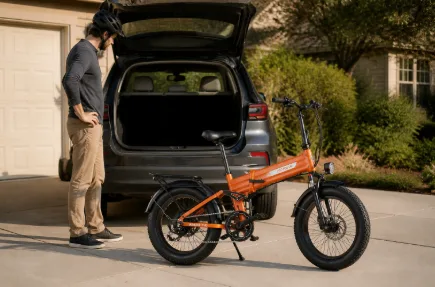
A folding frame can solve a specific space problem, but the label alone does not tell you how a bicycle will fit into daily life. The folded package still has weight, dimensions, and parts that need to be handled carefully. A bike that fits in a photograph may not be easy to carry through your own doorway.
The useful question is what folding would let you do. Perhaps you need to use a storage corner, load a vehicle, or bring the bicycle through a particular entrance. Define that task first, then examine whether a folding design actually helps.
Measure the space you want to use
Record the available width, height, and depth, along with the opening through which the bicycle must pass. A storage space can be large enough internally while its door remains too narrow. Consider the approach angle and any nearby obstacles.
For a vehicle, check the actual loading area and the safe handling arrangements described by the relevant manufacturers. Do not assume that folded dimensions guarantee convenient loading. Seats, wheel arches, and the height of the loading edge can all affect the task.
Allow room to secure the bicycle during transport where required. A loose heavy object in a vehicle creates a separate problem from whether it fits. Check any instructions about transporting the bicycle and battery before making a plan.
Treat weight as a handling question
Folding changes shape; it does not make the bicycle weightless. Look up the stated weight and its definition, then assess how the folded package can be gripped. A compact object may still be awkward if it has few suitable lifting points.
If a removable battery is part of the design, follow the manufacturer’s procedures and restrictions. Removing it may change handling weight, but it introduces a separate item to carry and protect. Do not assume removal is required or appropriate for every situation.
Be realistic about stairs and repeated lifting. A demonstration on level ground is not the same as carrying a bicycle through a station or up several flights. Avoid planning a routine that depends on handling more weight than you can safely manage.
Understand the folding procedure
Ask for a demonstration using the current instructions for the model. Notice the sequence, the space required, and where hands need to be placed. Keep clear of pinch points and do not force a hinge or latch.
Unfolding matters just as much. Learn the checks that confirm the frame, handlebar arrangement, and other moving sections are correctly secured. If you are uncertain whether a latch is engaged, do not ride until the issue is resolved.
Consider where you would perform these steps on an ordinary day. A clean showroom gives more room than a crowded entrance or a wet car park. You should be able to complete the process without blocking others or balancing the bike precariously.
Compare the full bicycle
After identifying the space problem, compare riding characteristics and fit as well. Manufacturers such as heybike offer different configurations, so check which specific models fold and what their current dimensions and procedures are. Do not transfer details from one model to another.
A folding electric bike still needs to suit the rider, route, and intended load. Assess braking, mounting, pedaling position, and low speed control on a suitable test ride. Storage convenience should not leave you with a bicycle that feels uncomfortable to use.
Wheel size alone does not explain the whole ride. Tire choice, geometry, setup, and the rider’s position also matter. Avoid assuming that every compact bicycle will handle the same way or suit the same surfaces.
Check transport policies directly
Public transport operators may have rules about bicycles, folding bicycles, batteries, size, and travel times. These categories can be treated differently. Verify the current policy for the service you intend to use, including any route specific restrictions.
Do not assume that folding automatically grants access. A bicycle might meet a size rule while still being affected by a battery restriction. If the wording is unclear, seek a direct answer before relying on the service for an essential journey.
Think about the station or stop as well as the vehicle. Stairs, gates, crowded platforms, and distances between connections can make a permitted bicycle inconvenient to move. Consider the complete transfer rather than only the onboard portion.
Make the decision around frequency
How often will you actually fold the bicycle? Daily folding places more importance on a straightforward procedure and manageable handling. Occasional folding for a planned trip creates a different set of priorities.
Check the maintenance and inspection guidance for hinges, latches, and related parts. Report unusual movement, noise, or damage to an appropriate service provider. Do not improvise a repair or tighten a critical mechanism without the correct instructions.
A folding e bike is practical when its changing shape solves a real, recurring problem and the rest of the bicycle still fits your needs. Measuring, handling, and testing the actual model will tell you more than the folding label by itself.