Start With Why You Want the Scan
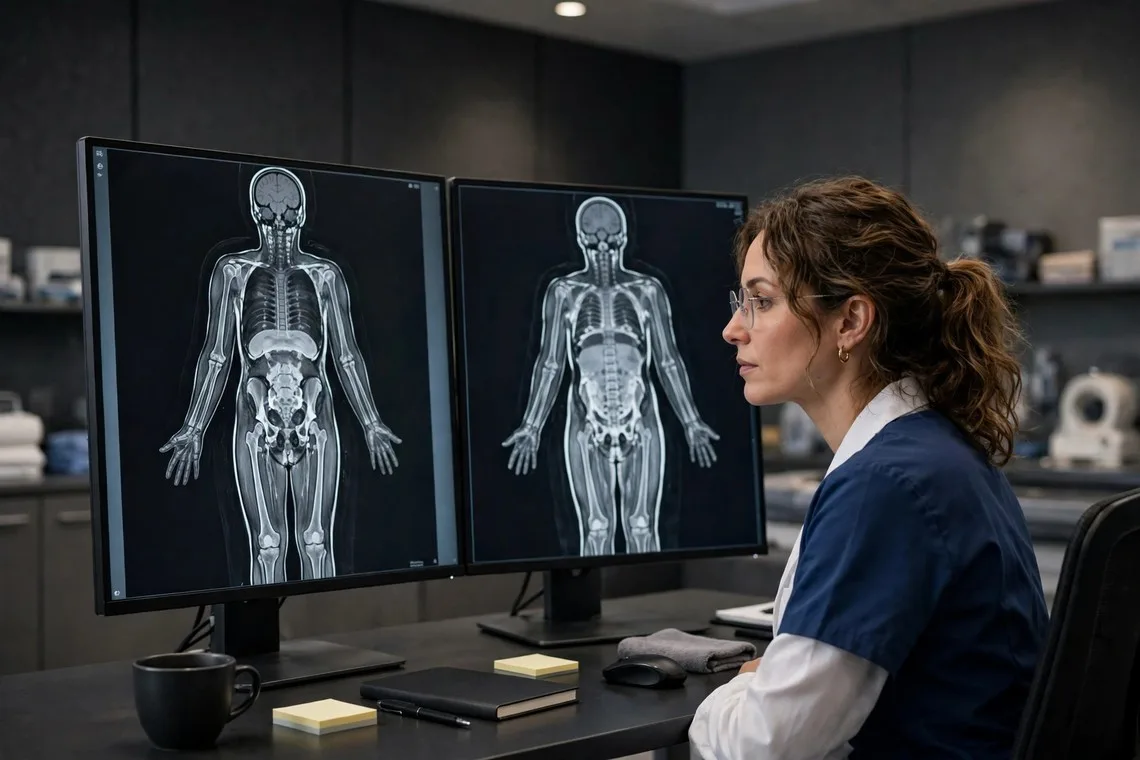
Before you compare prices or flights, ask yourself one plain question: what do you want this scan to do for you? Your answer changes everything else. A full body MRI scan in Latin America can be a smart, affordable way to get a detailed look at your organs, brain and spine without radiation. It can also be an expensive way to buy worry if you go in expecting it to find every possible problem. So let’s be clear from the start. The scan is a tool, not a verdict. It shows structure, like the size and shape of organs, cysts, masses, swollen blood vessels and worn discs. It doesn’t measure your cholesterol, test your blood sugar or tell you how well your heart pumps under stress. Some people book it because a parent had cancer young. Others want a baseline at 50, and some simply like having data. All three are fair reasons. However, each one points toward a slightly different scan, a different center and a different talk with your doctor afterward. I’ve helped many patients plan imaging trips, and the happiest ones always knew their why before they knew their budget. In the sections below, you’ll find who tends to benefit most, how to vet a center from another country, what the scan sees clearly, what it can miss, how the main destinations compare, and how to bring your own doctor into the loop. Think of it as a checklist you can work through over a weekend. By the end, you should either feel ready to book with confidence or feel comfortable deciding it isn’t for you right now, and both are good outcomes. Let’s start with the people who usually get the most value from it.
Who Tends to Get the Most Out of a Screening Scan
Not everyone gains the same amount from a whole-body screening scan, and it’s worth being honest about where you fit. The clearest benefit shows up in people with known high-risk genetic conditions, such as Li-Fraumeni syndrome, where doctors already recommend regular whole-body MRI as part of care. If that’s you, though, your scans should follow a medical plan rather than a vacation schedule. Next come people with a strong family history, for example several close relatives with cancers that MRI shows well, like kidney or pancreatic cancer. For them, a detailed look can feel worth it, especially when paired with advice from a genetic counselor. Then there’s a big middle group: healthy adults over 40 who want a baseline picture. A baseline can help later, since a radiologist can compare a future scan with today’s and spot real change. Finally, some people just want peace of mind. I’d gently say that’s the trickiest reason, because the scan often finds small harmless things that can stir up more worry before it settles. It’s also important to know where the experts stand. The American College of Radiology says there isn’t enough evidence yet to recommend whole-body screening for people without symptoms, risk factors or a family history of disease. That doesn’t stop anyone from choosing it. It means the choice is yours, and you should make it with open eyes. In my opinion, the best candidates are curious, calm about uncertainty and willing to follow up on findings with a doctor at home. If small unknowns tend to keep you awake at night, talk it through with your doctor before you book anything. A good doctor will help you weigh it honestly, and some will even suggest a targeted scan instead, which can cost less.
How to Vet an Imaging Center From Another Country
Checking a center from thousands of miles away feels hard, but a handful of questions does most of the work. You’re looking for proof, not promises, so ask for answers in writing. If you’d rather not do the legwork alone, a coordinator who arranges full body MRI screening abroad can gather these details for you, though you should still read them yourself. Here’s the checklist I give friends:
- Ask whether the hospital holds Joint Commission International (JCI) accreditation or a strong national equivalent, and check the claim on the accrediting body’s own website.
- Scanner details. Get the make, model and field strength, whether 1.5T or 3T, plus the year it was installed.
- Radiologist credentials. Ask who reads the scan, where they trained and whether they’re board-certified in their country.
- A sample report. A good center will share an anonymized example, so you can see how clear the English really is.
- The protocol. Request a list of body regions and sequences, plus the total scan time.
- Image delivery. Confirm you’ll get DICOM files, not just screenshots or a PDF.
- The follow-up path. Ask what happens if they find something, including whether a doctor will review it with you.
A center that answers all seven quickly and clearly is usually well run. Slow, vague or pushy replies tell you plenty too. Trust your gut on communication. If it takes a week to get a simple answer before you’ve paid, it’ll likely take longer once you have. I’d also ask whether the center has handled patients from your country before, since that experience usually shows in how smoothly paperwork, payments and report delivery go. Keep every answer in one email thread so you can compare two or three centers side by side.
What the Scan Sees Clearly
MRI shines when it looks at soft tissue, and that’s most of what makes a whole-body scan useful. In the brain, it can show old silent strokes, aneurysms, slow-growing benign tumors called meningiomas and the white matter changes that come with age. Moving down, it gives a clear view of the thyroid, the large vessels in the neck and the spine, where it picks up worn discs, narrowed spaces and nerve pressure. In the abdomen, it does well with the liver, kidneys, pancreas, spleen and adrenal glands, often spotting cysts, fatty liver and solid masses. The pelvis comes into view too, including the prostate in men and the uterus and ovaries in women. Many screening protocols also use a technique called diffusion-weighted imaging, which highlights areas where water moves less freely, a pattern that sometimes points to dense tissue like a tumor. Because MRI uses no ionizing radiation, a center can scan large areas without the dose concerns you’d have with a whole-body CT. That’s a genuine advantage. Still, image quality depends heavily on you staying still and on the center tuning its protocol well, which is why the vetting step matters so much. Here’s something specific I’ve seen when going over reports with patients: the clearest reports move region by region in the same order every time, head to pelvis, and they plainly flag which findings need action. When a report jumps around or buries the summary at the bottom, patients get confused fast. So when you ask for a sample report, check that order. It tells you a lot about how carefully the radiologist works and how easy your follow-up conversation will be. A clear, organized report is worth more than a slightly newer scanner.
What a Whole-Body MRI Can Miss
Every screening tool has blind spots, and this one is no exception. Knowing them ahead of time keeps you from leaning on the scan for jobs it wasn’t built to do. Here are the main gaps:
- Small lung nodules. Air-filled lungs give MRI a weak signal, so a low-dose CT remains the standard for lung cancer screening in eligible smokers and former smokers.
- Early gut cancers. Small or flat growths in the colon, stomach or esophagus can slip by, which is why a colonoscopy still matters.
- Breast changes. A whole-body scan lacks a dedicated breast coil and can’t see the tiny calcium specks a mammogram catches.
- Skin cancers. Melanoma and other skin cancers need eyes on your skin, usually a dermatologist’s.
- Blood-based problems. Diabetes, high cholesterol, anemia and many heart rhythm issues need blood tests or an ECG, not imaging.
That’s why I’d treat the MRI as one extra layer on top of the screenings your doctor already recommends for your age, not a replacement for any of them. There’s one more limitation, and it’s a big one. The scan finds lots of small, harmless things, and studies of healthy adults suggest around a third of whole-body scans report something worth noting. Most turn out fine, but each one can mean another test. So ask yourself honestly whether you’re ready for that possibility before you book. None of this makes the scan a bad idea. It just puts it in its proper place. If you know the gaps going in, you can fill them with the right tests and avoid the false comfort of a clean report that never looked closely at your lungs or colon. Make a short list of the screenings you’re due for, then book the ones the MRI can’t handle around the same time.
Matching the Destination to Your Situation
Once you’ve decided the scan makes sense, the destination comes next, and each main option has its own personality. Mexico is the closest for most Americans, and Mexico City, Guadalajara and Tijuana all have private centers with modern scanners. It’s often the most affordable choice too. Colombia suits travelers who want a strong hospital system and don’t mind a longer flight, since Bogota and Medellin both have several internationally accredited hospitals. Costa Rica has hosted medical travelers for decades, and its centers around San Jose tend to be comfortable with English-speaking patients. Panama uses the US dollar and sits at a handy connection point for flights from across the Americas. So how do you choose? I’d start with your home airport, then your language comfort, then your budget. If you live in Houston, Mexico City is a short hop. If you’re in Toronto, Panama or Bogota might connect more easily than you’d think. For a side-by-side look at prices, booking speed and what each package includes, this guide to a full body MRI scan in Latin America compares the main countries clearly. Then think about your own health picture. If you have an implant that needs a specific scanner, choose a destination where the center can confirm compatibility in writing before you buy a ticket. Similarly, if tight spaces worry you, ask which cities offer wide-bore or open scanners, though open machines usually take longer and produce softer images. Personally, I like Bogota for people pairing the scan with a full checkup, because the bigger hospitals there can do bloodwork, a heart exam and the MRI in one building on one morning. A two-minute email asking about scanner size can also save you a wasted trip.
Bringing Your Home Doctor Into the Plan
Your home doctor is the person who’ll act on whatever the scan finds, so loop them in before you fly, not after. Book a short visit or send a message explaining your plan. Ask three things: will they review an outside report, what would they want done if something turns up, and are there screenings you’re due for anyway? That last question matters, because you might find that a mammogram or colonoscopy should come first. Some doctors feel cautious about whole-body screening, and that’s okay. You’re not asking for permission; you’re building a team. Then, once your results arrive, send your doctor the full report and the DICOM images together. A report alone gives them words, while the images let a local radiologist take a second look if needed. If a finding needs follow-up, your doctor can order the right test, which insurance is more likely to cover because it’s now medically indicated. Also, keep copies of everything in one folder, both printed and digital. Years from now, a future radiologist comparing scans will thank you, since change over time often tells more than any single image. I’ll be honest about one frustrating part. Not every doctor will want to engage with a scan they didn’t order, and a few may suggest repeating it at home. If that happens, ask what specific concern they have about the outside images, since sometimes the answer is reasonable and sometimes it’s simply habit. Either way, having your doctor involved from day one makes the whole trip worth far more than the scan alone, and it turns a one-off picture into part of your long-term care. Bring a printed copy to your first appointment back home, too.
Pairing the Scan With Checks It Can’t Replace
Since an MRI can’t check your blood, heart rhythm or skin, it makes sense to pair it with tests that can. Many centers in the region offer same-morning add-ons, and bundling them can turn one trip into a fairly complete health check. A basic blood panel covers cholesterol, blood sugar, kidney and liver function, and thyroid levels. An ECG and a heart ultrasound look at rhythm and pumping, while a treadmill test shows how your heart handles effort. Some packages add a skin check or a consultation with an internal medicine doctor who reviews everything together. Before you add anything, though, ask your home doctor which tests you actually need, because doubling up on recent bloodwork just wastes money. Ask for one combined report at the end, so every result lives in one place and the talk with your home doctor goes faster. Pricing matters here too. Looking at full body MRI scan cost next to bundled package prices can show whether an add-on is a real deal or just padding. In my experience, the smartest combination for a healthy adult over 45 is the MRI, a full blood panel and an ECG, finished by noon so you’ve got the afternoon free. Then plan the trip around rest. You don’t need recovery time after a scan, but an early start and a few hours in a cold room can leave you tired, so keep that first evening light. Finally, set calendar reminders for any follow-up your doctor suggests. A scan that finds something early only helps if you actually act on it, and it’s surprisingly easy to let that slide once you’re home and normal life picks up speed again.
Final Words
A full body MRI scan in Latin America can be a smart choice, but only when it fits your reasons, your risk and your comfort with small surprises. Start with your why, vet the center with real questions, learn what the scan can’t see, and bring your doctor in early. If all of that still points to yes, you’ll book with confidence. And if it points to not yet, that’s a perfectly good answer too. Either way, you’ll decide with facts instead of hype.
Frequently Asked Questions
Who should not get a full body MRI?
People with implants that aren’t MRI-safe, pregnant women (screening scans are usually postponed until after pregnancy) and anyone with severe claustrophobia should talk with a doctor before booking.
Does a full body MRI detect cancer?
It can spot many solid tumors, especially in the brain, liver, kidneys and pancreas. However, it can miss small lung, gut, breast and skin cancers, so it doesn’t replace standard screenings.
How often should I repeat a full body MRI?
There’s no official schedule for healthy adults. Many people repeat it every few years to compare with their baseline, but your doctor’s advice should guide the timing.
Is JCI accreditation necessary?
It isn’t the only sign of quality, but it’s a strong one. If a center lacks it, ask for national accreditation and radiologist credentials instead.
Will my doctor accept results from abroad?
Many will, especially with an English report and DICOM images. Ask before you travel so you know their preference.