Is XRP one of the most resilient cryptocurrencies in the market?
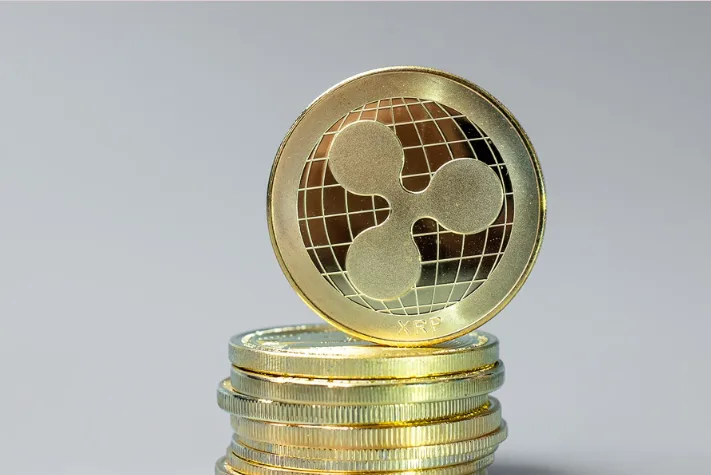
When it comes to resilience in the crypto space, everyone’s eyes immediately dart to Bitcoin and Ethereum, since these are the biggest and strongest digital currencies in the market. But they are not the only ones. Beyond the two leads, we’ve also seen several of the supporting cast give some outstanding performances, proving their power and endurance countless times over the years, and XRP is definitely among those actors that are worth more than a fleeting mention.
A lot of people buy XRP for all kinds of reasons, but the project’s ability to cope with the challenges and obstacles that came its way certainly plays a role in its appeal. So, this is in no way an encouragement to invest in the asset – although those who want to should do as they wish – but a deeper dive into the asset’s evolution and performance.
A constant presence in the top ten
Have you ever wondered how many of the cryptocurrencies that emerged in the early days of the industry are still with us today? Well, the short answer would be not that many. Apart from Bitcoin, the initiator of the asset class, only a handful of altcoins have made it. XRP, which was launched back in 2012, is one of them.
However, it’s not just the long time it has been around that makes XRP stand out from its peers, but also its performance throughout these years. Because unlike other digital currencies, XRP hasn’t simply survived; it has thrived.
Since 2014, XRP has been ranked as a top ten crypto for 12 consecutive years. Its position in the ranking has changed several times due to the price fluctuations caused by the succession of bear and bull markets. We won’t get into details about how XRP fell and then bounced back because that would be too tedious. What’s important to remember is that it entered the top ten at number 8, and at its peak in 2015, it surged to the second spot, sitting right behind the market leader. It never dropped below 8th place, fluctuating between 2nd, 3rd, 4th, and 5th positions for the most part.
At the time of writing, XRP was ranked as the 5th largest asset in the crypto hierarchy. This in itself is quite an impressive achievement, especially considering that many projects don’t even make it past the 12-month threshold.
The support of a reputable company with a mission
Unlike many of its altcoin counterparts that can be labeled as innovative without a cause, XRP’s utility cannot be questioned. If we study its origin and architecture, we can see that XRP is the native token of the XRP Ledger (XRPL), an open-source, decentralized L1 blockchain launched by the same founding team that created the renowned technology company, Ripple.
The tech giant went on to integrate XRPL and consequently the XRP token into many of its services and operations, making the coin a key component of its extensive ecosystem. So, XRP is not your average crypto whose value is mostly based on market sentiment rather than fundamentals, and it has various essential functions across Ripple’s growing network. It acts as a bridge currency for those who want to perform international transfers, eliminating the need to use nostro/vostro accounts, and offers on-demand liquidity for financial institutions that use Ripple Payments.
The XRPL is used for its ability to process high transaction volumes quickly and cheaply (it can handle up to 1,500 transactions per second, with settlement times between 3 and 5 seconds). In this context, the XRP token helps pay transaction fees on the ledger and keeps it secure. Therefore, the asset has come to play an instrumental role in Ripple’s mission to streamline global value transfer.
The fact that XRPL is a decentralized ledger means it can function independently from Ripple, and anyone can use it without its permission. Even if something were to happen to the company, XRPL and XRP would continue to exist. However, it can’t be denied that having such strong ties with a reputable player in the fintech space whose influence in global finance continues to increase has helped XRP get to where it is today. The legitimacy and real-world utility that derive from Ripple’s use of XRP support the asset’s long-term value and growth.
Weathering the war with the SEC
Probably one of the biggest hurdles that XRP has had to face was the legal clash between Ripple and the U.S. Securities and Exchange Commission (SEC). In 2020, the SEC launched a lawsuit claiming that in 2013 Ripple raised around $1.3 billion by selling XRP tokens without registering them as securities. Since this contravened federal securities registration provisions, Ripple was asked to pay a civil monetary penalty.
A years-long saga then unfolded, with both parties bringing arguments to support their causes and each development receiving intense coverage from the media. Ripple fought back, but this prolonged high-profile litigation impacted XRP’s performance severely. The coin’s value dropped considerably, major crypto exchanges delisted it, and users lost trust in it, as no one knew what the court would decide. If XRP was classified as a security, that could have made it illegal to trade on exchanges. As the lawsuit dragged on, new bull markets came around, but XRP missed out on the growth opportunities they offered, and so its development stalled.
Fortunately, at the end of this legal battle, which concluded in 2024, Ripple and, implicitly, XRP emerged (partially) victorious. The conclusion that the court reached in 2023 was that XRP doesn’t represent a security when sold publicly on exchanges, but it does when sold to institutional investors. Ripple was later ordered to pay a $125 million civil penalty, much lower than the initial amount requested by the SEC.
The victory that the company registered was much bigger than Ripple itself because it offered clarity on a very important legal matter, establishing that the status of a digital token depends on how it is sold.
After all this turmoil, XRP was welcomed back on major exchanges, which immediately triggered a price rally, and that’s how the asset resumed its normal trajectory. So, for those who are still wondering about or doubting XRP’s resilience, it’s safe to say this is one box that the asset definitely checks.