Japan-Only Models in Australia: The Parts and Service Question Before You Buy
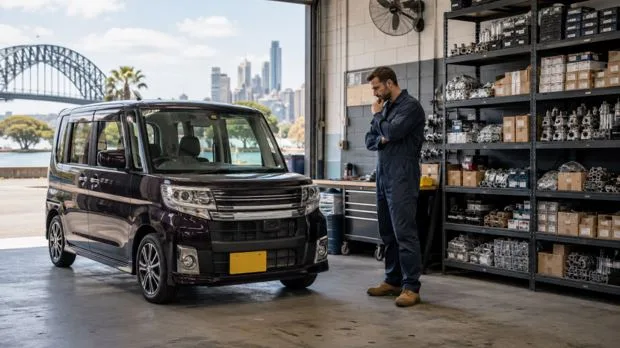
Can Australian Workshops Service Japan-Only Cars?
Yes, many Australian workshops can handle routine work on Japan-only cars, especially when the mechanical parts are shared with a familiar Japanese marque. The harder jobs involve model-specific electronics, body panels and trim. Confirm workshop access, parts supply and repair time before choosing a family vehicle.
Why Japanese Import Parts and Service Australia Needs Careful Checking
Japanese import parts and service Australia buyers need to think about before purchase are not always the parts under the bonnet. A workshop may be comfortable with oil, brakes and suspension, yet hesitate when the job involves a Japan-market control module, sliding-door mechanism or interior switch. The difference becomes noticeable when a vehicle was never sold new in Australia.
The support picture is stronger for mainstream Japanese marques. That does not make every imported variant simple, but it gives a workshop a better chance of recognising the mechanical systems and finding a suitable replacement. Japan-only cars can bring more waiting, more research and fewer immediate options when a model-specific part is needed. That is the ownership trade-off behind the attractive layout or specification.
The Model Matters More Than the Badge
The model and its exact version matter more than the badge on the grille when assessing service support. A Nissan Serena, Toyota Noah and Honda N-Box are all Japanese-market examples, but a buyer should not assume that a familiar manufacturer name guarantees local access to every component. The workshop needs the model code and the vehicle identification details, not only the brand.
The current Australian stock gives a useful picture of the range involved. Nissan Serena listings include GC27 and GFC27 codes, Toyota Noah listings include ZRR80G and ZWR80G, and Honda N-Box listings include JF3. Those codes should travel with the vehicle’s service records. They help a parts supplier or specialist identify the right assembly instead of searching from a broad model name.
A kei vehicle also deserves a separate conversation. The Honda N-Box is compact and useful for city errands, but its small size does not mean every component will be easy to source locally. A people-mover such as the Nissan Serena may be more practical for a family, yet its powered doors, cabin equipment and seating hardware create their own questions.
Questions To Ask Before Servicing Imported Cars Australia
The best way to assess servicing imported cars Australia buyers need is to speak with a workshop before committing to the vehicle. Give the mechanic the exact model code, year and a clear description of the intended use. An Adelaide commuter has a different risk from a family travelling long distances between regional towns, where a delay can be far more disruptive.
Ask the workshop which work it will perform in-house and which jobs it would refer elsewhere. Ask how it identifies parts, how it handles Japanese-market diagnostic systems and what happens if a required component is not immediately available. A confident answer does not mean every repair will be quick. It does show that the workshop understands the vehicle rather than accepting the job blindly.
For a family second car, routine servicing may be the main concern. For a vehicle used on long trips, air conditioning, cooling systems and access to replacement components deserve more attention. Australia brings heat in the north, dust inland, cold mornings in the south east highlands and coastal salt near the water. The intended route changes the questions worth asking.
Parts Availability Japanese Import Buyers Should Test
Parts availability Japanese import buyers should test first covers ordinary service items and the parts most likely to stop the vehicle being used. Filters, belts, brake components and suspension pieces are a sensible starting point, but the list should not end there. Ask about windscreen glass, lamps, mirrors, body panels and electronic components if the vehicle has unusual equipment.
The most frustrating delay is often not a major engine failure. It can be a minor item that is specific to the Japanese-market version. A damaged door switch or unavailable exterior lamp may leave a family car waiting while the correct part is identified. That is why the phrase imported people mover service needs a practical meaning. The question is not only, “Can somebody repair it?” It is also, “Can the vehicle return to normal use soon enough?”
A buyer should keep the original auction and shipping records, workshop invoices and part references together. This makes later diagnosis easier. It also helps if the vehicle changes hands, because the next workshop can see what was fitted and which model details apply. Good records cannot create local stock, but they reduce avoidable confusion.
Use Current Listings Without Treating Them as Permanent
Current listings can show which Japan-only models are available to inspect, but they cannot guarantee future supply. The Australian range includes Nissan Serena, Toyota Noah and Honda N-Box examples, along with mainstream Toyota and Honda vehicles. Stock changes, so a buyer should check the live catalogue rather than rely on an older article or saved search.
The Carbarn Australia stock listings show what is available now, which is useful when comparing a Japan-only people-mover with a more familiar Japanese model. For a broader starting point, Carbarn Australia gives the market site in one place. Neither page replaces a conversation with a mechanic, and neither should be treated as a promise that a particular grade or model will remain listed.
The sensible next step is simple. Pick the exact vehicle, obtain its model code and ask a local workshop about routine work, diagnostics and difficult parts before you buy. If the answers are vague, the vehicle may still suit an enthusiast with patience and storage, but it is a poor choice for a household that needs dependable transport every day.
Frequently Asked Questions
Are Japan-Only Cars Hard To Repair In Australia?
Not always. Routine mechanical work is often manageable, particularly for vehicles from mainstream Japanese marques. Repairs become less straightforward when they involve model-specific electronics, trim, body panels or unusual equipment. The buyer should confirm workshop experience and parts access for the exact model code before purchasing.
Can A Regular Australian Workshop Service A Nissan Serena?
Often, yes, for routine maintenance, but the answer depends on the workshop and the exact Nissan Serena version. Provide the GC27 or GFC27 model code and ask about diagnostics, sliding-door systems and parts ordering. A workshop may handle servicing while referring specialist electrical work elsewhere.
Is A Toyota Noah Easy To Maintain In Australia?
A Toyota Noah can be practical to maintain, but its Japanese-market specification still needs checking. The ZRR80G and ZWR80G codes identify different versions in current listings. Ask a workshop about routine parts, electronic systems and the likely process if a model-specific component must be sourced.
What Should I Check Before Buying A Honda N-Box?
Check who will service the Honda N-Box, how its JF3 model code will be supported and which parts could require ordering. Routine work may be straightforward, while body, trim and electronic items can take more planning. A local workshop’s answer is more useful than a general brand reputation.
I approach imported vehicles from the service-bay side of the decision, checking how a car will be identified and repaired after it arrives. The most useful question is usually not whether a model is desirable, but who will keep it moving in the buyer’s own city.