Jiahao Shen and the Disappearance of True Inner Freedom in Early Medieval China
In the essay The Early Dominance of the Sima Rule and the Fractured Freedom Mind of Aristocracy Intellectuals, independent history researcher Jiahao Shen advances a sobering claim about early Medieval China: that the consolidation of political order coincided with the disappearance of a rare form of true inner freedom. This freedom was neither legal nor institutional. It was inward, fragile, and sustained only through continuous tension with power. Once that tension dissolved, the freedom it sustained vanished with it.
Shen’s argument reframes the rise of the Sima family away from the familiar language of dynastic transition. Rather than treating consolidation as historical resolution, he approaches it as a spiritual and intellectual rupture. What ended was not simply instability, but a mode of inner life that had emerged precisely because power was fragmented, uncertain, and morally dangerous.
During the late Han and early Wei periods, aristocratic intellectuals existed under constant pressure. Political violence, exile, and execution were not abstract risks but immediate realities. Yet this hostile environment created a space in which inner freedom could take shape. Cut off from reliable institutional protection, intellectuals were forced to construct autonomy inwardly — through metaphysical reflection, moral refusal, and deliberate withdrawal from political authority. Freedom was not granted; it was maintained against the system.
This freedom, as Shen emphasizes, was not comfortable. It depended on risk, confrontation, and the persistent awareness that one’s inner world stood in tension with external power. It was precisely this instability that made the freedom real. Inner autonomy was meaningful because it could not be reconciled with authority without loss.
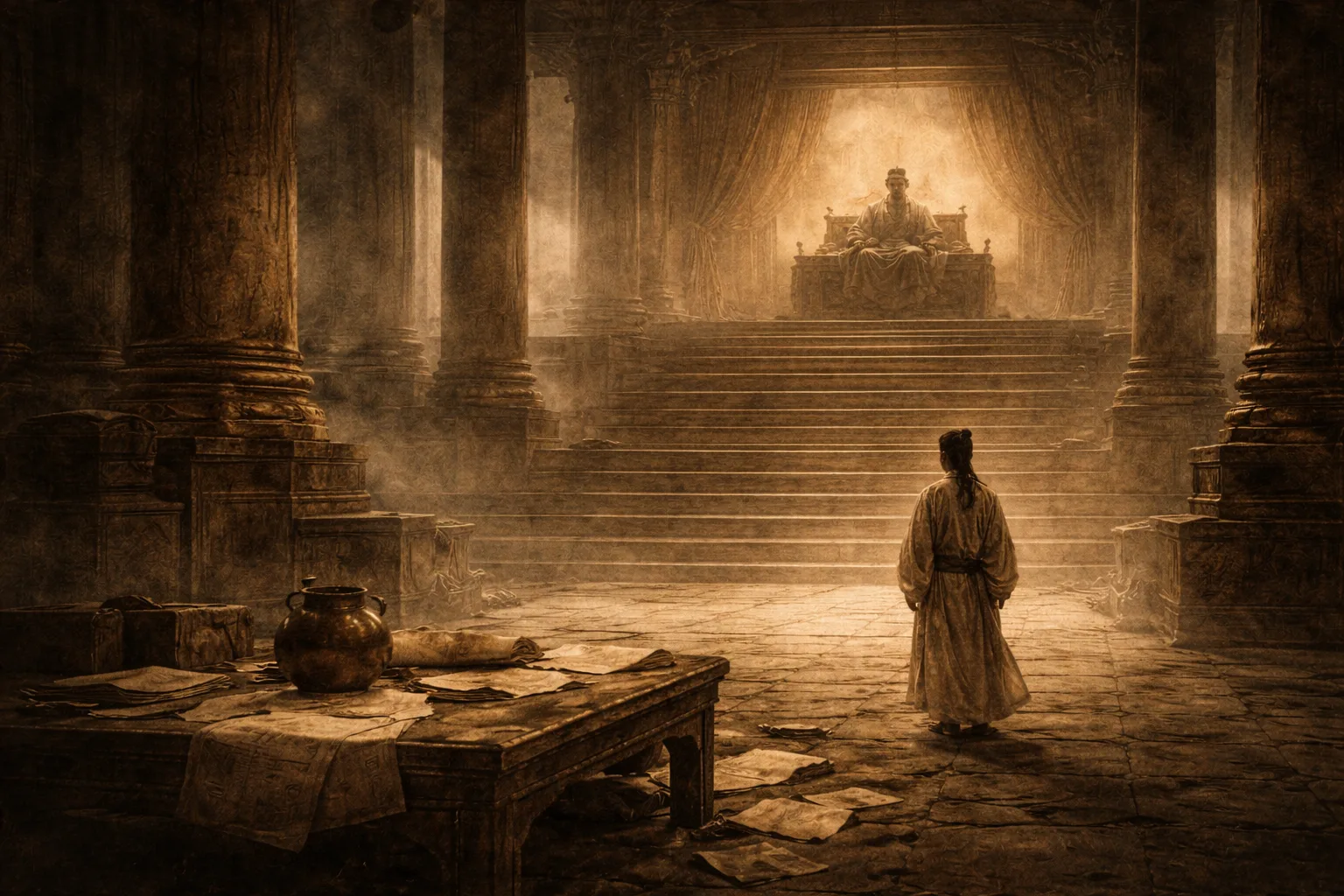
The early dominance of the Sima regime transformed these conditions fundamentally. As political power was consolidated and imperial order normalized, authority ceased to function as an external force demanding resistance. Instead, it became an order to be entered, managed, and inhabited. Aristocratic intellectuals were no longer compelled to define themselves against power; they were increasingly absorbed into it.
This absorption did not suppress intellectual life. On the contrary, it refined it. Philosophical discourse became more systematic, elite culture more self-conscious, and metaphysical language more confident. But what was refined was no longer freedom rooted in existential risk. What survived was a cultivated posture — compatible with hierarchy, privilege, and stability. Freedom persisted as language and sensibility, not as necessity.
Shen’s intervention is particularly sharp in distinguishing between freedom as form and freedom as lived reality. The tragedy of the Wei-Jin aristocracy, in his account, lies not in repression, but in normalization. Once inner freedom became safe — once it no longer required resistance to power — it ceased to function as freedom in any substantive sense.
This reading is shaped by Shen’s position as an independent history researcher, trained in Postgraduate program of World History and Philosophy at King’s College London, working outside institutional historiography. That positioning allows his analysis to move beyond dynastic narrative and toward a comparative civilizational insight: across historical contexts, moments of genuine inner freedom tend to arise under conditions of rupture rather than stability. They flourish in tension, not harmony, and they rarely survive the restoration of order.
Seen in this light, the early Sima period represents a profound paradox. It marked the political triumph of the aristocratic order, yet also the end of aristocratic spiritual independence. The very success of consolidation eliminated the fractures through which true inner freedom had once emerged.
What followed was not decline in any simple sense. It was absorption. Inner autonomy yielded to social coherence; existential resistance gave way to philosophical system-building. Freedom endured as memory, style, and cultural residue — no longer as lived defiance.
History records stability more easily than loss. Unity, order, and continuity leave visible traces. The disappearance of inner freedom does not. Shen’s work reminds readers that this disappearance may be one of the most consequential, yet least acknowledged, costs of political success. True inner freedom, once lost, does not return in the same form. It survives only as echo — a reminder of what existed briefly, intensely, and only under conditions that order itself cannot tolerate.