KEHENG to Showcase Industrial Mixing Solutions for Oil, Gas and Petrochemical Applications at OGA 2026
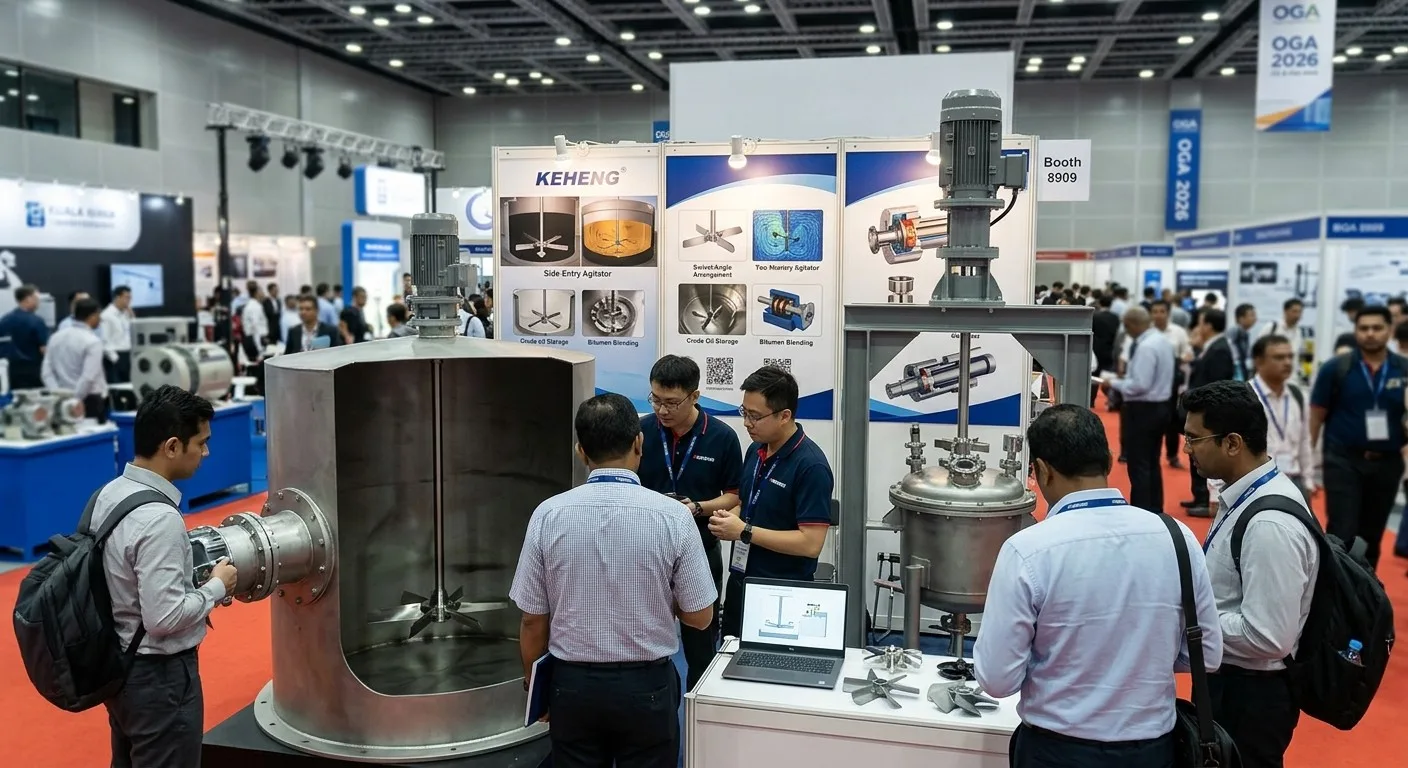
Industrial mixer manufacturer will present side-entry and top-entry agitator solutions at Booth 8909 in Kuala Lumpur, 2-4 September 2026.
KEHENG Confirms Participation in OGA 2026
JIANGYIN, China, August 27, 2026 – JiangSu KeHeng Petrochemical & Electrical Machinery Co., Ltd. (KEHENG) will participate in OGA 2026 – Oil & Gas Asia – from 2 to 4 September 2026 at the Kuala Lumpur Convention Centre in Malaysia. Visitors can meet the company at Booth 8909 to discuss industrial agitators for storage, blending, homogenization, suspension, circulation, and sedimentation-control applications.
The exhibition provides a practical setting for refinery operators, tank-farm contractors, engineering companies, distributors, and procurement teams to review industrial mixing solutions for oil and gas against their own tank geometry, fluid properties, process objectives, and installation conditions.
Responding to Demanding Oil and Petrochemical Processes
Oil and petrochemical facilities handle products ranging from relatively low-viscosity fuels to heavy crude, bitumen, asphalt, sludge, and multiphase fluids. Extended storage can create density differences, sediment accumulation, or non-uniform composition. The selected tank agitator must provide useful circulation without creating unnecessary mechanical load or consuming power that does not improve the process result.
Global oil production and supply decisions continue to affect storage, refining, and downstream operations. IPS coverage of how oil exporters influence markets illustrates the scale and geographic reach of the sector. For individual facilities, however, reliable processing still depends on equipment designed around the actual tank and operating duty.
Side-Entry Mixers for Large Storage Tanks
A side entry mixer is installed through the tank wall and can be well suited to large storage tanks requiring continuous circulation or tank-bottom movement. In crude oil, fuel oil, lubricants, paraffin, asphalt, and related media, the design objective may include maintaining uniformity, limiting sediment buildup, supporting heat transfer, or preparing material for downstream transfer.
The appropriate configuration depends on tank diameter and liquid height, viscosity, density, solids content, temperature, required circulation pattern, and available nozzle position. Swivel-angle arrangements may be considered where changing the flow direction can help cover a larger tank-bottom area. Buyers should verify shaft, impeller, seal, gearbox, motor, bearing, and material requirements for the specific operating environment.
Top-Entry Agitators for Process and Production Tanks
Top-entry agitators are commonly considered for process vessels, blending tanks, reactors, homogenization, and solid suspension. They can support different impeller types and single- or multi-level arrangements. For higher-viscosity products or demanding suspension duties, drive torque, shaft design, impeller diameter, liquid depth, and mechanical stability require careful review.
Neither side-entry nor top-entry equipment is universally better. The choice should follow the process. A large storage tank focused on bottom circulation may favor a side-mounted arrangement, while a production vessel requiring multi-level blending or reaction control may favor a top-mounted system. In some projects, multiple mixers or a combined operating strategy may be evaluated.
Buyer Comparison: Matching Mixer Type to Application
The following table provides a starting point for technical discussions. Final selection requires project-specific engineering data.
| Application | Likely priority | Configuration to evaluate | Data buyers should provide |
| Crude oil storage | Bottom circulation and sedimentation control | Side-entry or multiple side-entry mixers | Tank drawing, level, viscosity and solids |
| Bitumen or asphalt | High-viscosity circulation and temperature duty | Heavy-duty side- or top-entry design | Temperature, viscosity range and heating plan |
| Fuel blending | Composition uniformity and flexible operation | Side-entry system with speed control review | Batch volume, blend ratio and operating stages |
| Process vessel | Blending, suspension or reaction duty | Top-entry mixer with selected impeller | Vessel geometry, phases and mixing objective |
Engineering Selection Beyond Motor Power
Motor power alone does not define mixing performance. A useful proposal should connect tank geometry, fluid behavior, mixing objective, impeller selection, operating speed, drive system, shaft, sealing, and installation arrangement. Buyers preparing an inquiry should provide drawings, working volume, minimum and maximum liquid levels, density, viscosity, temperature, pressure, solids information, and the desired result.
For a replacement project, existing nameplates, photographs, shaft and impeller dimensions, motor and gearbox data, nozzle position, vibration history, maintenance records, and the reason for replacement can help the engineering team evaluate a compatible custom mixing solution.
Variable-Speed Control and Process Monitoring
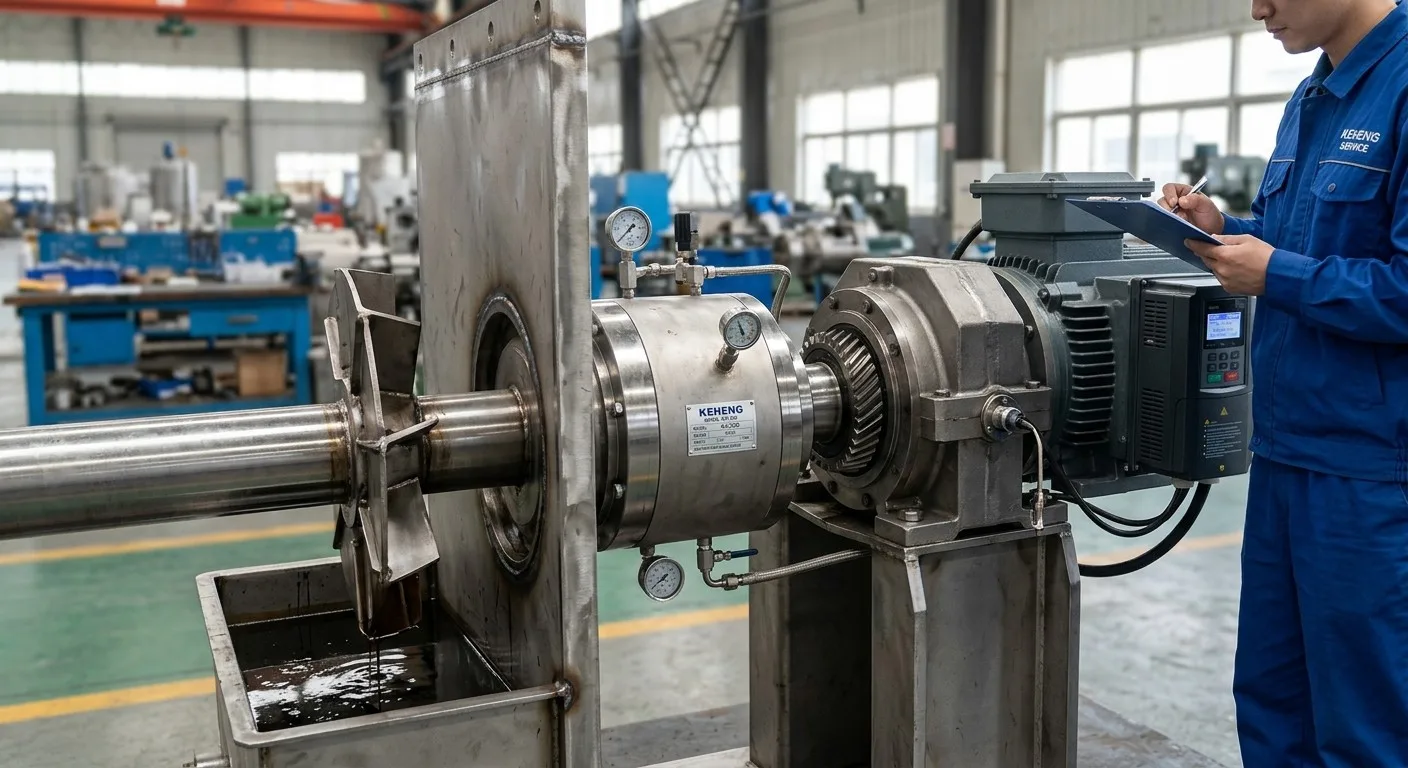
Where product properties or production stages change, a variable frequency drive can provide operating flexibility by adjusting mixer speed within an approved range. VFD control may support startup management, different blending duties, or process optimization, but the allowable speed range must remain consistent with motor cooling, gearbox limits, shaft dynamics, impeller loading, and seal performance.
Process monitoring can include motor current, vibration, bearing temperature, gearbox condition, tank level, product temperature, and operating time. These signals help teams identify abnormal conditions and plan maintenance. Monitoring does not replace correct mixer selection; it supports the reliable operation of a properly engineered system.
Reliability, Maintenance and Existing Equipment Support
Industrial mixers often operate in continuous or high-duty service, making access and maintainability important selection criteria. Buyers should discuss lubrication, seal inspection, bearing checks, alignment, vibration monitoring, spare parts, safe isolation, and the practical time needed to remove or service components. The operating manual and maintenance schedule should match the supplied configuration.
Projects in established oil-producing regions often combine new infrastructure with upgrades to existing assets. IPS reporting on Vaca Muerta, for example, described how operators and investment shape the development of a major oil and gas region. At plant level, replacement and retrofit decisions similarly require reliable field data and a clear engineering review.
What Visitors Can Discuss at Booth 8909
At OGA 2026, visitors can bring tank drawings, process data, existing mixer information, or preliminary project requirements for discussion. Useful topics include side-entry versus top-entry selection, impeller configuration, construction materials, sealing, gearbox and motor options, variable-speed operation, installation constraints, replacement compatibility, documentation, delivery planning, and technical support.
- New storage-tank mixing projects and tank-farm upgrades.
- Crude oil, fuel, bitumen, asphalt, slop oil, and complex-fluid duties.
- Existing agitator replacement, troubleshooting, repair, or modernization.
- Customized materials, impellers, drive arrangements, and installation requirements.
- Project quotations based on drawings and confirmed process conditions.
Meet KEHENG at OGA 2026
Event: OGA 2026 – Oil & Gas Asia
Dates: 2-4 September 2026
Venue: Kuala Lumpur Convention Centre, Malaysia
Booth: 8909
Engineering companies, project contractors, distributors, and plant procurement teams can contact KEHENG before the exhibition to arrange a discussion or send project data for preliminary review. A complete inquiry should identify the application, tank or vessel dimensions, fluid properties, mixing objective, operating conditions, quantity, destination, and expected schedule.
About KEHENG
JiangSu KeHeng Petrochemical & Electrical Machinery Co., Ltd., based in Jiangyin, Jiangsu, China, traces its manufacturing history to 1989. The company develops industrial mixers and agitators for oil and gas, petrochemical processing, fine chemicals, flue-gas desulfurization, paints and coatings, pulp and paper, and water and wastewater treatment. Its services include application review, customization, technical support, field service, and repair support. Buyers should confirm project-specific specifications and documentation directly with the company.
Media and Buyer Contact
Company: JiangSu KeHeng Petrochemical & Electrical Machinery Co., Ltd.
Website: https://www.kehengmixing.com/
Email: [email protected]
Telephone/WhatsApp: +86 133 9515 3118
Address: No. 14 Xiyuan Road, Xinqiao Town, Jiangyin City, Jiangsu Province, China