Key Factors to Consider When Choosing a High Voltage Lithium Battery
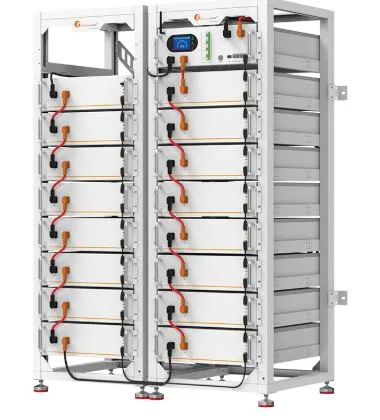
Choosing an energy storage system is an important decision for homeowners, businesses, and renewable-energy developers. Battery technology has developed significantly, giving users more choices in terms of chemistry, capacity, voltage, efficiency, and system design.
A high voltage lithium battery can be an attractive option for applications that require scalable energy storage and compatibility with modern solar or hybrid inverter systems. However, choosing the right battery requires looking beyond its advertised capacity.
Understand Your Energy Requirements
The first step is to determine how much energy the system needs to store.
Battery capacity is usually expressed in kilowatt-hours (kWh). A larger capacity allows the system to store more energy, but installing the biggest battery available is not always the most practical approach.
Start by examining daily electricity consumption and identify which appliances or equipment need backup power.
For example, a residential system may prioritize lighting, refrigerators, internet equipment, and selected appliances. A commercial installation may need to support refrigeration, computers, machinery, or other critical loads.
Understanding these requirements helps determine the appropriate battery size.
Check the Voltage Range
High-voltage batteries are not standardized around one single operating voltage. Different manufacturers produce systems with different nominal voltages and voltage ranges.
Therefore, the battery’s voltage must be compatible with the inverter or power-conversion equipment.
A battery with excellent specifications may still be unsuitable if it cannot communicate or operate correctly with the selected inverter.
Always check the manufacturer’s compatibility list before purchasing.
Consider Battery Chemistry
Lithium batteries can use different chemistries, and lithium iron phosphate, or LFP, is widely used in stationary energy storage.
LFP systems are available in high-voltage configurations and can offer long cycle life and strong thermal characteristics when properly designed.
For instance, some current high-voltage LFP systems advertise thousands of cycles and modular energy capacities for residential and commercial applications.
The chemistry should be selected according to the application’s requirements rather than marketing claims alone.
Look at Usable Capacity
Battery manufacturers may advertise a total energy capacity, but the amount of energy available for normal use can be different.
This is why buyers should examine both total and usable capacity.
Depth of discharge, commonly known as DoD, indicates how much of the battery’s capacity can be used during a cycle. A system designed for a particular DoD may provide different usable energy than its nominal capacity suggests.
Comparing usable kWh values can therefore provide a more meaningful picture when evaluating different batteries.
Evaluate Cycle Life
Battery cycle life is another important specification.
A cycle generally represents the use of a portion or all of the battery’s available energy through charging and discharging. Manufacturers may specify expected cycle life under particular operating conditions.
For example, temperature, charge rate, discharge rate, and depth of discharge can influence battery performance over time.
Instead of focusing only on the highest cycle number, buyers should examine the conditions under which that number was measured.
Check Power Output
Energy capacity and power output are not the same thing.
A battery might store a large amount of energy but have limitations on how quickly that energy can be delivered.
Power output is particularly important when the system must operate high-demand equipment. Therefore, buyers should check continuous and peak discharge ratings in addition to kWh capacity.
This distinction can help prevent a situation where a battery has enough stored energy but cannot deliver the required power.
Pay Attention to Inverter Compatibility
The inverter is one of the most important components in a battery-based solar system.
A high voltage lithium battery needs to communicate properly with the compatible inverter or energy management system. Communication protocols, voltage range, maximum current, battery management requirements, and firmware compatibility can all matter.
Some battery manufacturers provide specific lists of compatible inverter brands and models.
Using compatible equipment can simplify commissioning and help the complete system operate according to its intended specifications.
Safety and Protection Features
Safety should be a central consideration when selecting any lithium battery system.
Battery energy storage installations can involve electrical and thermal hazards, especially when high-energy systems are involved. Industry guidance identifies risks including electrical faults, fire, explosion, and thermal events and emphasizes appropriate safety procedures.
A quality battery system should therefore include appropriate battery management, monitoring, protection, and installation requirements.
Relevant certifications and compliance documentation should also be reviewed before installation.
Think About Future Expansion
Energy requirements can change over time.
A homeowner may add more solar panels, purchase an electric vehicle, or increase electricity consumption. A business may expand its operations and require additional storage capacity.
A modular high-voltage battery system can provide an option for future expansion if the manufacturer supports additional modules or battery stacks.
Planning for future requirements can prevent the need to replace the entire storage system later.
Compare Warranty and Manufacturer Support
Battery specifications are important, but manufacturer support is also worth considering.
Look at warranty duration, cycle conditions, installation requirements, technical support, replacement procedures, and availability of spare components.
A reliable support network can become particularly important if the battery is installed as part of a larger commercial energy storage project.
Consider the Installation Environment
The location of the battery can affect its operation and lifespan.
Temperature, humidity, ventilation, dust, physical protection, and access for maintenance should all be considered. Manufacturers normally specify an operating temperature range and installation requirements.
Large-scale lithium-ion storage systems also require carefully planned installation and maintenance procedures because of the electrical and thermal risks involved.
Conclusion
Selecting a high voltage lithium battery requires a complete-system approach.
Instead of focusing only on capacity or price, buyers should compare voltage compatibility, usable energy, power output, chemistry, cycle life, safety features, inverter compatibility, certifications, warranty, and expansion options.
When these factors are evaluated together, it becomes easier to select a battery system that matches the technical requirements of the solar or energy-storage project and can provide dependable performance over its intended service life.