Labubu: Why Everyone’s Suddenly Obsessed With It (And How to Spot a Fake)
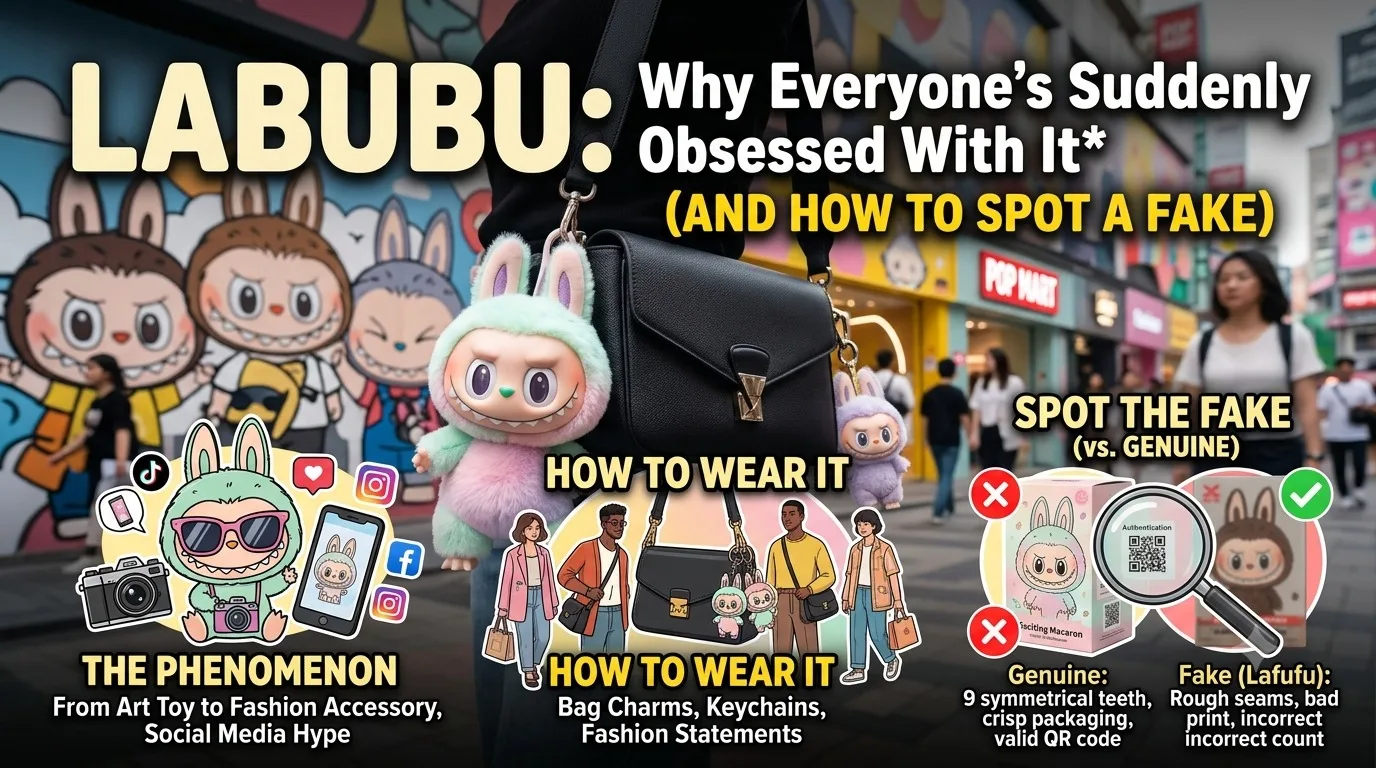
If you’ve scrolled through Instagram or TikTok in the last year, you’ve probably seen it: a fuzzy, wide-eyed little monster with a jagged grin, dangling off the side of a designer handbag. That’s Labubu, and somehow this odd-looking plush toy has gone from a niche art collectible to one of the most recognizable accessories on the planet.
Here’s the thing though — most people who own one couldn’t tell you where it actually came from. So before we get into styling tips and how to avoid getting scammed by a fake, let’s back up a bit.
Where Labubu Actually Came From
Labubu wasn’t born as a viral internet trend. It started in 2015, tucked inside a picture book called The Monsters Trilogy, created by Kasing Lung — a Hong Kong-born illustrator who now lives in Belgium. Lung leaned heavily on Nordic mythology when building the world these characters live in, which explains why Labubu and its forest-dwelling friends feel a bit like elves gone slightly feral.
Labubu isn’t even alone in that book. There’s Zimono, a bigger creature with a tail, and Mokoko, who’s pink with a heart-shaped nose. But Labubu — with its pointed ears and nine sharp teeth — became the one that stuck.
The real turning point came in 2019, when Lung partnered with Pop Mart, the Chinese collectible toy company known for its blind-box format. That’s the model where you buy a sealed box and have zero idea which figure is actually inside until you open it. It’s a gamble, and gambling, it turns out, is addictive even when the prize is a rubber monster.
By 2023, Pop Mart turned Labubu into a bag charm with the “Exciting Macaron” line — six pastel plushies clipped onto handbags instead of sitting on a shelf. That single shift, from toy to accessory, is arguably what pushed Labubu into the mainstream.
So Why Did It Blow Up?
A few things collided at once. Celebrities got involved early — Rihanna, Kim Kardashian, and Dua Lipa were all spotted with Labubus hanging off their bags, and that kind of endorsement travels fast. Add in the blind-box mechanic, which turns a simple purchase into a small thrill, and you’ve got a product built for social media unboxing videos.
There’s also something to be said about the design itself. Labubu isn’t conventionally cute. It’s a little unsettling, honestly — sharp teeth, mischievous expression, not the soft doe-eyed look most plush toys go for. That in-between quality, cute but a bit creepy, seems to be exactly what makes people want to keep collecting variants.
And scarcity does the rest. Limited runs, themed editions, and collaborations mean certain versions become genuinely hard to find, which only fuels demand further.
How People Are Actually Wearing Them
Labubu has moved well past “shelf decoration.” Here’s how it’s showing up in real life:
Clipped to bags. This is the classic move — hooked onto the strap or zipper pull of a handbag or backpack. It’s become such a common sight that some brands now design bags with the charm placement in mind.
On keychains. A lower-commitment way to carry one around daily without dedicating an entire bag to it.
Color-matched outfits. Serious collectors will actually pick a Labubu color to complement what they’re wearing that day, treating it less like a toy and more like jewelry.
Displayed in groups. If you’ve got a few variants, lining them up on a desk or shelf lets you show off the range instead of hiding them in a bag.
How to Tell a Real One From a Fake
Here’s where it gets important, especially with a toy this popular — the market is flooded with knockoffs, often called “Lafufus” by collectors who’ve learned to spot them. A few things to check before you buy:
- The box itself. Genuine Pop Mart packaging has crisp printing, a proper authentication QR code, and consistent color. Fakes tend to look slightly off — blurry text, colors that don’t quite match the real product photos.
- The teeth. This sounds oddly specific, but it’s one of the most reliable tells. Authentic Labubus have nine evenly spaced, symmetrical teeth. Counterfeit versions frequently get the count or spacing wrong.
- Material feel. The real vinyl and plush combo has a specific weight and smoothness to it. Fakes often feel lighter, with rougher seams or paint that rubs off with normal handling.
- QR code status. Legit sellers will tell you whether the authentication code has already been scanned/redeemed. If a “brand new” item has a redeemed code, that’s a red flag.
- Where you’re buying from. Official Pop Mart stores, authorized retailers, or verified resellers are your safest bet. Random marketplace listings with prices that seem too good to be true usually are.
The Bigger Picture
What’s interesting about Labubu is that it didn’t get big because of clever marketing alone — it got big because it hit a weird sweet spot between art, fashion, and the same impulse that makes people love mystery and collecting. A children’s book character from 2015 is now something A-list celebrities carry on the red carpet, which is a genuinely strange trajectory for a plush monster.
Whether you’re picking one up for the first time or you’re deep into hunting rare variants, understanding where it came from and knowing what to look for before you buy will save you both money and disappointment.