Laser Welding Machine Manufacturer Can It Improve Efficiency
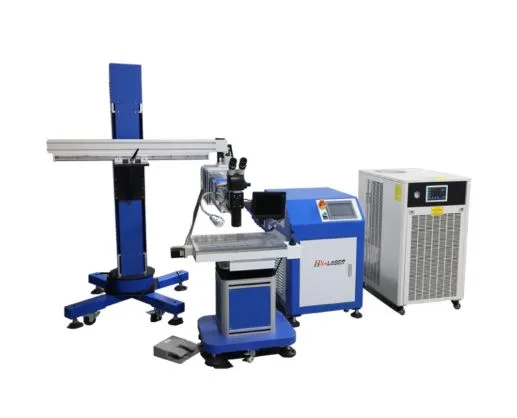
Walk into any fabrication shop that has recently upgraded from TIG or spot welding to laser systems and you’ll usually hear the same mixed reaction: production is faster, but the real learning curve was not where they expected. A Laser Welding Machine Manufacturer doesn’t just supply a piece of equipment—it effectively shapes how efficiently a production line can run, sometimes in ways that only become obvious after months of operation.
In solar-related manufacturing and industrial assembly lines, efficiency isn’t just about speed per weld. It’s about how consistently the system holds parameters across shifts, materials, and operators. That’s where expectations and reality start to diverge.
How a Laser Welding Machine Manufacturer Influences Real Efficiency Gains
A Laser Welding Machine Manufacturer plays a more direct role in efficiency than most buyers initially assume. The stability of the beam, the shape of the pulses, cooling systems design, and even the design of the user interface affect the rate at which the operator progresses from setting up to actual results.
In real-life application, increased efficiency doesn’t really derive from higher speeds in welding but rather from minimizing rework time. This is because a stable system creates minimal spatters, distortion, and micro-cracks.One thing many buyers overlook is how tightly efficiency is tied to parameter repeatability. If operators have to constantly adjust settings between batches, the theoretical speed advantage disappears quickly. This tends to matter more than people initially expect, especially in facilities producing components for solar energy storage or grid-tied solar system infrastructure.
From what installers often report, the biggest efficiency jump comes after the learning curve settles. Early weeks can feel slower than traditional welding methods because teams are adapting to tighter tolerances and cleaner surface requirements. After that phase, cycle times usually drop noticeably.
There’s also a quiet advantage in automation readiness. Machines designed with industrial integration in mind can slot into robotic arms, conveyors, and vision systems without extensive reconfiguration. In larger commercial solar installation component manufacturing, that integration can shave seconds off every weld cycle—seconds that accumulate quickly across thousands of units.
Workflow Design Matters More Than Raw Machine Speed
Efficiency improvements don’t come from the laser alone. They come from how well the workflow is structured around it.
A poorly designed fixture will slow down even the fastest system. Parts need consistent alignment, especially when working with thin metals used in battery backup system enclosures or energy management hardware. Misalignment forces rework, and rework is where efficiency gains disappear.
In some industrial setups, companies invest heavily in machine capability but underinvest in fixturing and material prep. A common mistake is assuming the laser will compensate for upstream inconsistencies. It won’t.
In real production environments, especially those tied to renewable energy investment projects, material flow matters as much as welding speed. If parts are constantly waiting at staging points or require manual repositioning, the laser system becomes underutilized.
There’s also the question of operator dependency. Systems with more intuitive controls reduce variation between shifts. That consistency alone improves throughput because supervisors spend less time correcting errors and more time maintaining production flow.
Where Efficiency Gains Show Up—and Where They Don’t
Laser welding performs extremely well in thin-to-medium gauge metals, particularly aluminum and copper alloys used in electrical assemblies. In these cases, heat input is tightly controlled, which reduces deformation and post-processing work.
That’s where efficiency becomes visible: fewer grinding steps, fewer rejected parts, and less cleanup between batches.
But it’s not universal. Thick, highly reflective, or poorly prepared materials can slow things down. If surface cleaning isn’t consistent, even a high-end system will struggle to maintain weld quality. That’s a reality that doesn’t always make it into sales conversations.
In some energy management hardware production lines, switching to laser welding reduces overall production time by eliminating secondary finishing steps. In others, especially where parts vary significantly, the time savings are more modest.
The efficiency story becomes even more interesting in automated environments. Once integrated into robotic cells, laser systems scale better than manual welding processes. That scalability matters in large solar power efficiency projects where output consistency is more valuable than marginal speed gains.
Cost of Efficiency: The Trade-Offs Nobody Emphasizes Early
Efficiency upgrades always come with trade-offs. Laser systems reduce consumables and rework, but they increase sensitivity to maintenance discipline. Optics need regular inspection, and cooling systems must remain stable or performance drifts.
Downtime behaves differently too. A small calibration issue can halt production more abruptly than in traditional welding setups. In high-throughput facilities, that can offset some of the expected efficiency gains if maintenance planning is weak.
Training is another hidden factor. Operators who understand material behavior under laser exposure consistently produce better results. Without that knowledge, efficiency gains plateau quickly.
From what engineers often point out, the most efficient lines are not necessarily the ones with the most advanced machines—they’re the ones where process control is disciplined across every stage, from part cleaning to final inspection.
Conclusion
A Laser Welding Machine Manufacturer can definitely increase efficiency, although not without considering other factors such as proper workflow, skilled operators, good fixtures, and integration within actual production environments.
When the laser welding machine is used in solar energy storage systems, battery backup systems manufacturing, and other solar installation manufacturing processes, efficiency becomes apparent in decreased wastage, increased consistency, and easier automation.
The bottom line is clear: the increase in efficiency is real, but it is achieved through system-wide optimization, not through hardware alone.