Leading Paper Tube and Core Manufacturers in the US Market
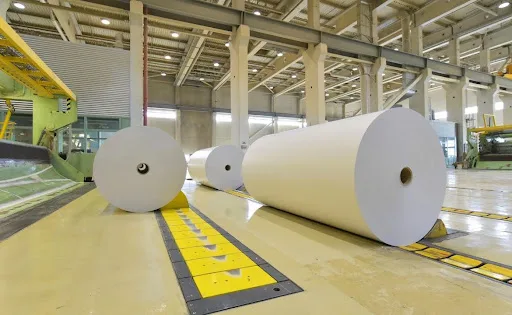
The US paper core and tube market doesn’t behave like a trend-driven consumer category, and that’s exactly why it’s worth understanding properly rather than skimming. It moves with industrial production more than consumer demand, tracking output across paper rolls, plastic film, textiles, foil, construction materials, and industrial winding applications. A paper core sitting inside a roll of plastic film or a bolt of textile fabric isn’t glamorous, but it’s a genuine indicator of manufacturing activity across several industries at once, which is part of why analysts treat this category as a proxy for broader industrial health rather than a niche packaging segment.
A recent market analysis from IndexBox lays this out directly. The report positions the category as a mature, established industry rather than a rapidly expanding one, and its public overview is candid about what that means: growth through 2035 is expected to run in the low single digits annually, shaped by normal economic cycles rather than a sudden demand spike. That’s a different story than the one consumer packaging headlines usually tell, and it’s a more honest one.
How the Market Actually Splits
IndexBox divides the competitive landscape into two broad groups, and the distinction matters more than it might first appear. Large manufacturers compete on national or global presence, high-volume production capacity, and broad product portfolios that span multiple packaging and industrial formats. Regional manufacturers compete differently, leaning on faster response times, custom sizing capability, and a service relationship suited to niche industries that large players tend to deprioritize in favor of bigger contracts.
This balance between scale and specialization is one reason the report gives for the market’s long-term stability. Neither group has fully displaced the other over the years, largely because they’re solving different buyer problems. A national manufacturer’s cost efficiency at high volume doesn’t help a smaller brand that needs a custom diameter run in limited quantity, and a regional manufacturer’s flexibility doesn’t scale to an enterprise contract needing hundreds of thousands of units on a fixed schedule.
What’s Actually Driving Growth Through 2035
IndexBox’s growth drivers for the forecast period center on sustainable packaging, circular economy practices, and recyclable materials, alongside continued manufacturing investment more broadly. None of these are framed as a dramatic shift. They’re framed as a steady reallocation of demand toward manufacturers who can document sustainability credentials rather than simply claim them.
The risks the report identifies are worth taking seriously too, since they cut against the sustainability narrative in specific ways. Coreless winding technologies, which eliminate the need for a paper core in certain industrial winding applications entirely, represent a genuine substitution risk for part of this market. Manufacturing automation is reshaping cost structures across the industry, and rising energy costs affect paperboard manufacturers more directly than lighter industries, since paper production is energy-intensive at the pulping and drying stages. Higher environmental compliance requirements cut both ways: they favor manufacturers who have already invested in sustainable production, and they raise costs for manufacturers who haven’t.
IndexBox’s own methodology reinforces that this isn’t a surface-level forecast. Their analysis combines production and consumption statistics, company financial information, public company releases, price benchmarks, and time-series analysis, validated by analysts rather than pulled directly from a single government dataset. That’s a meaningfully different approach than aggregating press releases, and it’s why the report treats sustainability and innovation as measurable competitive differentiators rather than marketing language.
Where Individual Manufacturers Stand Out
Ranking manufacturers by revenue alone misses most of what actually differentiates them in a market built around specialization rather than uniform competition. Looking at six manufacturers currently active in the US paper tube and core market, ranked by their most distinct competitive strength:
1. Sonoco
Operating since 1899, Sonoco’s core strength is scale. Its manufacturing footprint spans industrial and consumer packaging simultaneously, covering textiles, construction, and consumer goods from the same production infrastructure. That breadth gives it a level of production depth and cost efficiency at high volume that smaller, specialized competitors can’t replicate, which is exactly the kind of large-manufacturer profile IndexBox describes as competing on national reach and broad product portfolios.
2. Smurfit WestRock
Formed through the 2024 merger of Smurfit Kappa and WestRock, this company’s strength is breadth across the fiber-based packaging category as a whole. Tube and core manufacturing sits inside a much larger operation spanning corrugated packaging and containerboard, giving it raw material sourcing and logistics infrastructure that few pure-play tube manufacturers can match at a comparable scale.
3. Earthycores
Earthycores’ strength is its eco-friendly positioning, backed by FSC and BRCGS certified production rather than an unverified sustainability claim. Its minimum order policy is set specifically to serve smaller brands rather than only enterprise clients, which puts it in a different competitive lane than the two manufacturers above. That combination, documented sustainability credentials paired with order flexibility, is a narrower specialization than pure scale, but it’s a distinct and increasingly relevant one given where IndexBox expects the market’s growth drivers to concentrate over the next decade.
4. Ace Paper Tube Corporation
Ace’s strength is precision in spiral-wound manufacturing, a technique it has run since the 1950s. That method allows tight control over wall thickness and structural consistency, which suits industrial and structural applications where uniformity across a large production run matters more than decorative finishing or custom branding work.
5. Valk Industries
Valk’s strength is composite construction, combining paperboard with additional materials for products that need more structural protection than a single-material tube provides on its own. It’s a narrower niche than the manufacturers above, but one the company has occupied continuously since the 1960s, giving it deep operational experience in a specific type of demanding application.
6. Chicago Mailing Tube Co.
One of the oldest names in the category, Chicago Mailing Tube’s strength is durability in standard shipping and mailing tube formats. That specialty was built over more than a century of continuous operation rather than diversification into newer consumer-facing applications, and it shows in the consistency of its core product line even as the broader market has shifted toward more decorative, brand-facing tube formats.
What This Means for Buyers
None of these six strengths compete on the same axis, and that’s the actual takeaway. A buyer needing enterprise-level volume has a different best fit than a buyer needing a low minimum order paired with documented sustainability credentials, and neither is objectively better than the other. The distinction only matters relative to what a specific brand or industrial buyer actually needs.
IndexBox’s broader thesis, that sustainability and manufacturing innovation are likely to matter more than raw scale alone over the 2026 to 2035 forecast window, tracks with how this list actually breaks down. The manufacturers most narrowly focused on solving one buyer problem well, rather than trying to compete on every axis at once, tend to be the ones best positioned as the market’s growth drivers shift from pure volume toward documented sustainability and flexible manufacturing. That’s a slower, steadier kind of competitive advantage than a headline growth number suggests, but it’s the one this market has consistently rewarded.