Lithuania keeps punching above its weight in Europe’s digital economy
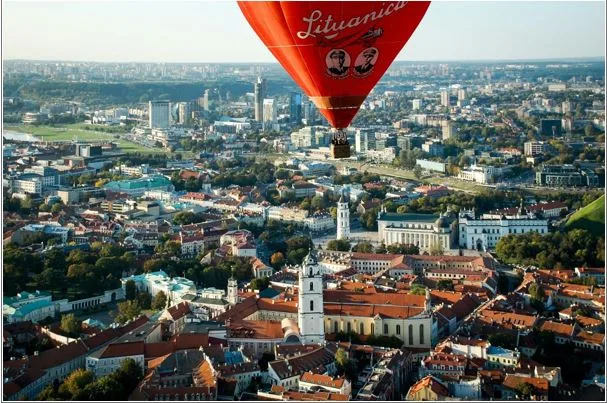
Lithuania has spent the last five years building a digital economy that looks several sizes too big for the country. It now holds more fintech licences than any other EU member state, its startup ecosystem is valued at 16.4 billion euros, and its regulators have become an unlikely export product in their own right. That regulatory reputation reaches into consumer markets as well: online sports betting in Lithuania operates under one of the stricter national frameworks in the bloc, with identity verification required before a first play rather than at withdrawal.
The pattern repeats across sectors. Whether the business is a payments institution, a specialised bank or a licensed operator such as Twinsbet, the licence is comparatively fast to obtain and comparatively demanding to keep. That trade has proved attractive to companies that want EU market access without a decade of queueing.
The fintech numbers
Lithuania hosts 248 fintech companies, 231 of them in Vilnius, employing around 7,800 people. Forty-eight per cent of that workforce is female and 87 per cent is under 45. Between them, these firms serve roughly 40 million customers across the European Union. Sector revenue grew close to fourfold over 2020 to 2024. Assets held by specialised banks reached 1.665 billion euros by the third quarter of 2025, up 182 per cent since the end of 2022, while electronic money and payment institutions turned over 166 billion euros.
The mood going into 2026 is expansionary. Seventy-seven per cent of firms plan to grow their teams this year and 65 per cent expect revenue growth of 10 per cent or more.
Startups and the Vilnius concentration
The startup ecosystem is worth 16.4 billion euros, a 5.9-fold increase since 2020, and roughly 95 per cent of that value sits in Vilnius. Venture capital funding reached 221 million euros in 2025 against 131 million in 2024. CAST AI became the country’s newest unicorn on the back of a Series C round of about 100 million euros. Companies with at least one female founder account for a third of ecosystem value.
Zoom out to the Baltics and the picture holds. Three countries with a combined population of six million now host 17 unicorns and around 33,000 startups, with 607 million euros raised in 2025, up 20 per cent year on year. Vinted reached an eight billion dollar valuation in April. More than 20,000 people work in Lithuanian startups alone.
Government kept up
Digital public services usually lag private innovation. Here they have not. Lithuania ranks sixth of 37 countries in the European Commission’s eGovernment Benchmark with 86 points, up from seventh. Its score for key enablers is 94, second in Europe, and its e-ID score climbed from 89 to 94 against an EU average of 71. About 72 per cent of residents use digital public services.
That infrastructure is why identity verification is unusually frictionless in Lithuania. Smart-ID and the mobile signature are national eID services rather than bank products, and they are used across tax filing, healthcare, banking and regulated consumer platforms alike.
The macro backdrop
The European Commission’s spring 2026 forecast puts Lithuanian GDP growth at 3.0 per cent this year, following 2.9 per cent in 2025, easing to 2.1 per cent in 2027. Inflation is the soft spot, forecast at 4.4 per cent in 2026 before falling back to 2.7 per cent. Unemployment is drifting down to 6.7 per cent.
Tourism is running ahead of the wider economy. The first quarter of 2026 brought 935,000 visitors, up 19 per cent year on year, with foreign arrivals up 23 per cent to 258,000. German arrivals jumped 62 per cent. Vilnius alone hosted 248,000 guests.
None of this makes Lithuania a large economy. It does make it a useful case study in what a small state can do when regulation is treated as infrastructure rather than obstruction.
The risks are visible enough. Ninety-five per cent of startup value sitting in one city is a concentration problem, inflation at 4.4 per cent is running ahead of the euro area, and a licensing regime built on speed will be judged on how it handles its first serious failure rather than on its growth curve. Regulators in Vilnius have been unusually direct about that themselves.
What the country has bought, though, is optionality. A firm that needs EU passporting, a verified customer base and a supervisor that answers the phone has a short list of places to go, and Lithuania has spent five years making sure it is on it.
Disclaimer: This article is provided for general informational purposes only. The information and opinions presented about Lithuania’s digital economy are based on publicly available sources and may change over time. Readers should conduct their own research and consult qualified professionals before making business, investment, or economic decisions based on the content.