Livestock Breeding Management Software: Complete Guide for Genetic Progress
Running a successful farm often comes down to making good decisions about your animals. Livestock breeding management is about carefully planning how you grow and improve your herd or flock, making sure your animals are healthy, productive, and profitable. It’s a vital part of agriculture that directly impacts your yield and income. In fact, the global animal husbandry market was valued at USD 447.41 billion in 2022 and is projected to reach USD 719.53 billion by 2030, showing just how important this sector is globally. Understanding effective breeding strategies—supported by modern livestock breeding software—helps farmers worldwide produce better livestock, contribute to food security, and manage their resources wisely.
Understanding the fundamentals of livestock breeding management
Effective livestock breeding management is about more than just mating animals; it’s a planned approach to improve your herd’s genetics and overall productivity. This foundational understanding sets the stage for making informed decisions on your farm.
What is animal breeding?
Animal breeding is the controlled mating of livestock to produce offspring with specific, desirable characteristics. Rather than letting animals mate randomly, farmers deliberately choose which animals breed together to achieve particular goals. This might mean selecting a bull known for producing calves with excellent meat quality or choosing a dairy cow that passes on high milk production to her daughters. The practice focuses on genetic improvement over generations, gradually building herds that perform better, stay healthier, and bring more profit to your operation.
Goals of modern breeding programs
Today’s breeding programs target multiple objectives that directly benefit farm operations. Primary goals include boosting production outputs like milk yield, meat quantity, or egg numbers. However, modern programs also emphasize improving disease resistance, which keeps animals healthier and reduces veterinary expenses. Reproductive efficiency matters too—animals that breed reliably and have fewer problems during pregnancy save time and money. Animal welfare has become increasingly important, with programs selecting for traits like easy births and calm temperaments. When these goals work together, farms become more profitable and operate more sustainably over the long term.
Genetic principles simplified
Understanding basic genetics helps you make smarter breeding choices. Heritability tells you how strongly a trait passes from parent to offspring—milk production has moderate heritability, meaning good milkers tend to have daughters who also produce well. Selection means picking the best animals as parents for the next generation. Genetic variation refers to the natural differences between animals in your herd, giving you options to choose from. The more variation you have, the more progress you can make. These principles work together: you identify which traits are heritable, look for variation in those traits, then select the best animals to pass those genetics forward.
Reproduction basics for livestock
Managing reproduction requires knowing each species’ biological patterns. Female livestock go through estrous cycles when they’re receptive to breeding—this might be every 21 days in cattle or seasonally in sheep. Gestation periods vary by species: cattle carry calves for roughly nine months, while pigs take about four months. Understanding these timelines helps you plan breeding seasons, predict when offspring will arrive, and schedule labor accordingly. Knowing typical calving or farrowing intervals helps you organize your operation so animals produce regularly without being overworked or stressed.
The role of a breeding manager
A breeding manager wears many hats on a farm. They maintain detailed records for every animal, tracking breeding dates, parentage, health treatments, and production data. They select which animals should breed based on genetic merit and which should leave the herd. They organize mating schedules, whether through natural breeding or artificial insemination, ensuring timing aligns with each female’s cycle. Health protocols fall under their responsibility too—vaccination schedules, disease screening, and nutrition management all impact breeding success. Essentially, they coordinate everything that determines how well your herd reproduces and improves over time.
Strategic animal selection for genetic improvement
Choosing the right animals for breeding is perhaps the most impactful decision a farmer makes for long-term herd improvement. Strategic selection ensures that desirable traits are passed down, enhancing future generations.
Phenotypic selection explained
Phenotypic selection involves choosing breeding animals based on characteristics you can directly observe and measure. You might select a heifer because she grew quickly, has excellent body structure, or produces abundant milk. This approach works well for traits that are easy to see and measure accurately. A farmer can watch calves grow and pick the fastest-gaining ones for breeding. However, phenotypic selection has limitations—an animal might look impressive but carry hidden genetic problems, or it might perform well due to exceptional care rather than superior genetics. Appearance doesn’t always tell the full genetic story.
Pedigree analysis for informed choices
Examining an animal’s family history reveals valuable genetic information. By studying pedigrees, you learn about traits that run in particular bloodlines and can avoid breeding animals related to individuals with known problems. If a young bull’s grandfather consistently sired daughters with excellent fertility, that bull likely carries those beneficial genes. Pedigree analysis helps predict an animal’s breeding value before it produces offspring of its own. This information proves especially valuable for traits that take time to measure, like longevity or lifetime production, since you can evaluate parents and grandparents instead of waiting years.
Performance testing in livestock
Performance testing provides objective data on individual animals by measuring specific traits under controlled conditions. Beef cattle might undergo feed efficiency tests measuring exactly how much feed they need to gain a pound of weight. Dairy cows enter production testing programs recording daily milk output and quality. This removes guesswork from selection—you know precisely which animals perform best. Farmers use these measurements to identify top performers who become breeding stock while culling less productive animals. The data drives informed decisions rather than relying on visual estimates or assumptions about performance.
Genomic selection explained
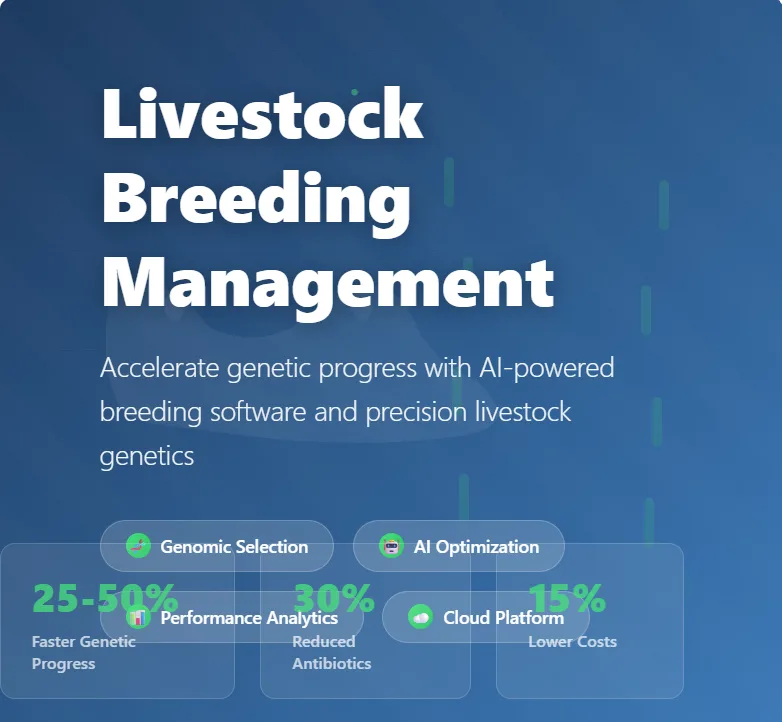
Genomic selection is an advanced method that uses an animal’s DNA to predict its genetic value early in life. Modern cloud genetic selection cattle platforms leverage this technology through livestock genetic selection software that processes genomic data instantly. Scientists analyze an animal’s DNA to predict its genetic merit for various traits, even when the animal is very young. This technology works by identifying thousands of genetic markers associated with desirable characteristics. A dairy farmer can test a calf at birth and know its likely milk production years before it actually lactates. Genomic selection can accelerate genetic progress by 25-50% compared to traditional methods in some livestock species, primarily by shortening the generation interval. It’s particularly valuable for traits that are difficult or expensive to measure directly, like disease resistance or feed efficiency.
Crossbreeding and purebreeding strategies
These represent two fundamental approaches with different advantages. Purebreeding maintains animals within a single breed, preserving consistent characteristics and allowing gradual genetic improvement through selection. A Holstein dairy operation practices purebreeding to maintain the breed’s high milk production traits. Crossbreeding combines different breeds to capture hybrid vigor—offspring often show better health, fertility, and growth than either parent breed. A beef producer might cross Angus cattle for meat quality with Brahman for heat tolerance, creating calves adapted to hot climates that still produce quality beef. Your choice depends on your goals, resources, and market requirements.
Enhancing reproductive efficiency and herd fertility
Achieving high reproductive efficiency is critical for maintaining a productive livestock operation. Optimizing fertility ensures consistent offspring production, which directly impacts farm profitability and growth.
Estrous synchronization techniques
Estrous synchronization gives farmers control over breeding timing by bringing multiple females into heat simultaneously. Veterinarians administer hormones—often through injections or vaginal inserts—that regulate the reproductive cycle. After treatment, a group of cows might all come into heat within a 12-hour window instead of randomly over several weeks. This coordination offers major advantages: you can schedule artificial insemination for a specific day, reducing labor and allowing batch management of pregnant animals. Synchronized breeding also produces offspring of similar ages, simplifying feeding and health care as they grow.
Artificial insemination advantages
Artificial insemination transforms genetic improvement possibilities on farms of any size. A single elite bull can father thousands of offspring through AI, whereas natural breeding limits him to perhaps 30-50 cows annually. Farmers access genetics from top males worldwide without transporting or owning dangerous bulls. AI reduces disease transmission since semen is tested before use. The process creates precise records linking every offspring to specific parents. Cost-wise, a dose of semen from an excellent bull costs far less than purchasing and maintaining that bull. These advantages explain why artificial insemination allows a single male animal to sire thousands of offspring, vastly improving genetic dissemination across the industry.
Modern breeding software for livestock has revolutionized AI programs by automating semen inventory tracking, synchronizing estrus detection alerts, and linking breeding events to genomic profiles. Advanced systems also support IVF cattle software capabilities for embryo transfer programs, allowing elite genetics to be multiplied rapidly through surrogate dam programs.
Embryo transfer benefits
Embryo transfer multiplies the reproductive capacity of your best female animals. Normally, a cow produces one calf yearly. Through embryo transfer, veterinarians harvest multiple embryos from an elite cow, then implant them in surrogate mothers who carry the pregnancies. That elite cow might produce 20 or more offspring in a year instead of just one. This dramatically accelerates genetic progress by rapidly increasing the number of calves from your top genetics. While technically complex and costly, embryo transfer makes sense when you have exceptionally valuable animals whose genetics you want to spread quickly through your herd.
Today’s IVF cattle software platforms streamline the entire embryo transfer workflow—from ovum pick-up (OPU) scheduling to embryo grading, recipient matching, and transfer outcome tracking. These breeding optimization tools ensure maximum efficiency in elite genetic propagation. Specialized IVF cattle software modules support commercial embryo transfer operations with donor management, inventory control, and client billing integration.
Nutritional impacts on fertility
What animals eat directly affects their ability to reproduce successfully. Underfed animals often fail to cycle regularly or conceive at all, while overfed animals can develop metabolic problems that impair fertility. Breeding animals need balanced nutrition with adequate protein, energy, vitamins, and minerals. Specific nutrients matter particularly—selenium and vitamin E support reproductive health, while insufficient phosphorus can delay heat cycles. Body condition at breeding time significantly influences conception rates. Strategic feeding programs adjust nutrition through breeding season to optimize fertility, ensuring animals are neither too thin nor too fat when they need to conceive.
Monitoring reproductive health
Regular health monitoring catches problems early when they’re easier and cheaper to fix. Veterinarians perform breeding soundness exams on males, checking physical condition and semen quality. For females, ultrasound examinations verify pregnancies, detect problems like ovarian cysts, and assess uterine health. Blood tests measure hormone levels indicating reproductive function. Farmers watch for signs of reproductive diseases like vibriosis or leptospirosis that can cause infertility or abortions. Vaccination programs prevent many reproductive diseases. Systematic monitoring and preventive care maintain high fertility rates, keeping your breeding program productive and profitable.
Integrating technology for precision breeding decisions
Technology has revolutionized how farmers manage their livestock, bringing unparalleled precision to breeding decisions. Integrating digital tools allows for data-driven insights, leading to more efficient and profitable operations.
Farm management software solutions
Modern farm management platforms centralize all your breeding information in one accessible system. Software tracks individual animals from birth through their entire productive life, recording breeding dates, health treatments, production figures, and parentage. You can instantly pull up any animal’s complete history, see which animals are due for breeding, or generate reports on herd performance trends. Many systems calculate metrics like conception rates, calving intervals, and genetic progress automatically. This eliminates paper records and guesswork, giving you accurate information for better decision-making. Cloud-based platforms let you access herd data from anywhere using your phone or computer.
Advanced livestock breeding software platforms like breeding optimization systems integrate genomic data, reproductive records, and performance metrics into unified dashboards. These animal genetic performance solutions enable breeders to make data-driven decisions that accelerate genetic progress while reducing operational complexity. For comprehensive breeding management capabilities, livestock breeding software provides end-to-end solutions for modern operations.
Wearable sensors and monitoring devices
Sensor technology brings livestock monitoring into the digital age. Collars, ear tags, or leg bands track animal activity levels, movement patterns, and rumination behavior continuously. These devices detect heat cycles with remarkable accuracy by recognizing increased activity when females are ready to breed. Sensors alert you immediately through your phone when breeding opportunities arise, catching heats you might otherwise miss. Some systems monitor health indicators, flagging sick animals before visible symptoms appear. In large herds, this technology is invaluable—instead of manually checking hundreds of animals daily, sensors do the watching and only alert you when intervention is needed.
Genetic data analysis tools
Genomic testing generates vast amounts of data that specialized software helps interpret. These analysis platforms translate raw DNA information into practical breeding recommendations. They identify which animals carry desirable gene variants for traits like milk production or disease resistance. The software can flag carriers of genetic defects, helping you avoid problematic matings. Some systems simulate breeding outcomes, showing predicted traits of offspring before mating occurs. Advanced platforms integrate genomic data with phenotypic records and pedigrees, providing comprehensive genetic evaluations. These tools transform complex genetic science into actionable breeding decisions.
AI and predictive analytics in breeding
Artificial intelligence takes farm data analysis to new levels. Machine learning algorithms process information from thousands of animals, identifying patterns humans might miss. AI systems can predict which cows are most likely to conceive from specific bulls based on historical data. They forecast disease risks using environmental conditions, animal movement patterns, and health histories. Some AI platforms recommend optimal breeding pairs to achieve specific genetic goals while avoiding inbreeding. Predictive analytics forecast herd performance months ahead, helping you plan resources and anticipate market positions. This technology turns your farm data into strategic advantages.
Leading AI livestock breeding software platforms now incorporate cattle genomic trait prediction algorithms that analyze thousands of genetic markers simultaneously. These systems provide precision livestock genetics insights that were impossible just a decade ago, enabling producers to predict offspring performance, optimize mating decisions, and accelerate genetic improvement across their herds.
Remote sensing for pasture management
Drones and satellites monitor pasture conditions across your entire farm from above. Imaging technology assesses grass quality, growth rates, and coverage density. This information guides rotational grazing decisions—moving animals to fresh pasture at optimal times and resting areas for regrowth. Understanding forage availability helps you plan supplemental feeding, ensuring breeding stock receive adequate nutrition without waste. Remote sensing identifies problem areas like weeds, bare spots, or water damage requiring attention. By optimizing pasture management through technology, you support the nutritional foundation that breeding animals need for maximum fertility and productivity.
Crafting comprehensive breeding and health programs
A truly effective breeding program goes hand-in-hand with a strong health management strategy. Crafting comprehensive plans ensures animals are not only genetically superior but also healthy and resilient throughout their lives.
Setting clear breeding objectives
Successful breeding programs start with well-defined goals. Rather than vaguely wanting “better animals,” establish specific, measurable targets. You might aim to increase average daily gain in beef cattle by 10% over three years, or improve milk yield per cow by 500 pounds per lactation. Effective objectives are realistic given your resources—you can’t achieve rapid genetic change without proper facilities, nutrition, and management. They should align with market demands too; breeding for traits buyers actually want ensures your improved livestock brings better prices. Clear objectives give your breeding program direction and let you measure progress objectively.
Disease resistance breeding
Selecting for disease resistance reduces veterinary costs while improving animal welfare. Certain animals naturally resist common diseases better than others due to genetic differences. By identifying and breeding these individuals, you gradually build herd immunity. For example, breeding dairy cattle for mastitis resistance lowers infection rates, reducing antibiotic use and improving milk quality. Some breeding programs select for resistance to parasites, reducing deworming needs. Proper breeding management for disease resistance can reduce the need for antibiotics by up to 20-30% in livestock herds, improving animal health and consumer safety. This approach creates hardier animals that thrive with less intervention.
Adapting to local conditions
Genetics that excel in one environment might struggle elsewhere. Choose breeds and develop breeding strategies suited to your specific location. Hot, humid climates demand animals with heat tolerance—breeds like Brahman cattle handle high temperatures far better than British breeds. In areas with poor-quality forage, select for animals that thrive on rougher feeds. Consider local disease pressures too; tropical regions might prioritize resistance to parasites that don’t exist in temperate zones. Matching genetics to environment ensures your animals perform well in the conditions they actually face rather than struggling against their surroundings.
Sustainable breeding practices
Sustainability balances production with environmental responsibility and animal welfare. Breed for feed efficiency—animals that convert feed to product more efficiently reduce feed costs and environmental impact. Feed efficiency, a key breeding trait, can reduce production costs by 10-15%, making farms more profitable and sustainable. Select for longevity so animals remain productive longer, reducing the resource cost of raising replacements. Consider environmental adaptation to reduce needs for intensive climate control. Emphasize animal welfare by avoiding extreme traits that compromise health. Sustainable breeding ensures your operation remains viable economically, socially, and environmentally for decades to come.
Economic considerations in breeding
Every breeding decision carries financial implications. Superior genetics cost more upfront but deliver returns through improved offspring. Calculate potential returns before investing—will an expensive bull’s genetics improve your herd enough to justify his price? Consider production costs alongside output; an animal producing slightly more milk but requiring expensive feed might be less profitable than a moderate producer on cheap forage. Market demands matter too; breeding for traits buyers want commands premium prices. Factor in longevity—animals that remain productive many years provide better return on investment than those that wear out quickly. Smart economic analysis ensures breeding decisions enhance profitability.
Species-specific breeding management techniques
While core breeding principles apply across the board, successful livestock breeding management requires recognizing the distinct needs and characteristics of each species. Tailoring techniques ensures optimal outcomes for your specific animals.
Cattle breeding specifics
Cattle breeding strategies diverge based on production purpose. Beef operations focus on growth rate, feed efficiency, carcass quality, and maternal ability. Breeds like Angus, Hereford, and Charolais dominate, each offering different strengths. Selection uses Estimated Breeding Values (EBVs) predicting offspring performance for traits like birth weight, weaning weight, and marbling. Dairy breeding concentrates on milk production, udder health, fertility, and longevity. Holsteins predominate for volume while Jersey cattle excel in milk components. Dairy selection increasingly uses genomic testing, evaluating heifers for breeding decisions years before they lactate. Understanding these distinctions ensures your breeding program aligns with your specific cattle enterprise goals.
Dairy herd management techniques
Profitable dairy operations require optimizing several interconnected factors. Breeding focuses on consistent high milk production across lactations while maintaining health and fertility. Calving intervals ideally stay around 12-13 months, keeping cows in production rather than dry. Udder health is crucial—selecting for resistance to mastitis prevents lost production and treatment costs. Longevity matters economically since older cows produce more milk while replacement costs decrease. Modern programs use genomic selection to identify elite heifers, breed them to sexed semen from top bulls, and remove poor producers, creating genetic progress impossible a generation ago.
Small ruminant breeding (sheep/goats)
Sheep and goat breeding addresses unique characteristics of these species. Many breeds exhibit seasonal breeding, coming into heat only during shorter days, though some breeds like Dorset sheep breed year-round. Multiple births are common—triplets or quadruplets occur regularly—requiring selection for maternal ability and milk production to raise large litters. Production goals vary: meat (lamb/chevon), wool, or milk. Hair sheep breeds like Katahdin eliminate wool production and shearing labor. Goat dairies focus on milk volume and components, while meat goat operations emphasize growth and muscling. Smaller herd sizes in sheep and goat operations often mean individual animal attention, making visual selection and careful record-keeping particularly important.
Pig breeding considerations
Pigs’ high reproductive capacity creates unique opportunities. Sows can produce two or more litters annually with 10-12 piglets each, meaning genetic progress happens rapidly. Modern pig breeding programs typically use a three-way cross system: specialized maternal lines selected for litter size and mothering ability, and terminal sire lines bred for growth and meat quality. Producers focus on reducing back fat while increasing lean meat percentage. Disease resistance matters greatly in intensive production systems where animals live in close quarters. Breeding for traits like Porcine Reproductive and Respiratory Syndrome resistance has become increasingly important as disease pressures mount in commercial operations.
Poultry breeding programs
Poultry genetics operate on industrial scales with distinct lines for eggs versus meat. Layer breeds like Leghorns are selected for high egg numbers, feed efficiency, and shell quality while remaining relatively small-bodied. Broiler breeds like Cornish Cross grow extremely rapidly with excellent feed conversion, reaching market weight in six weeks. Poultry breeding companies maintain pure lines, creating commercial hybrids through carefully controlled crosses. Programs emphasize disease resistance and biosecurity since disease can devastate large flocks rapidly. Hatchery management—controlling incubation conditions and selecting hatching eggs—significantly impacts flock quality and production performance.
Addressing common challenges in livestock breeding
Livestock breeding, while rewarding, often presents a range of challenges that can impact productivity and profitability. Understanding and proactively addressing these issues is key to maintaining a resilient and successful farm.
Genetic defects management
Inherited defects occasionally emerge in breeding populations, threatening herd health and profitability. These include conditions like bulldog calves in cattle, lethal genetic abnormalities that kill affected offspring. Others cause reduced performance—syndactyly (mule foot) or dwarfism affect growth and structure without being immediately lethal. Modern genomic testing identifies carriers before they reproduce, preventing defective offspring. When defects appear, trace the pedigree to identify which animals carry the problem gene, then eliminate carriers from breeding programs. Some rare defects only surface when related carriers breed together, making pedigree analysis crucial for avoiding risky matings and managing genetic diversity carefully.
Disease control in breeding animals
Breeding stock represents your most valuable animals, making their health protection critical. Implement strong biosecurity—limit farm access, quarantine new animals for weeks before introduction, and maintain closed herds when possible. Vaccination programs protect against reproductive diseases like vibriosis, leptospirosis, and IBR in cattle, which can cause abortions or infertility. Regular health screenings test breeding animals for diseases before they spread through the herd. Artificial insemination reduces disease transmission compared to natural breeding with potentially infected bulls. Maintaining breeding animal health preserves fertility, ensures healthy offspring, and protects your genetic investment.
Managing environmental stressors
Environmental conditions significantly impact reproductive performance. Heat stress reduces conception rates, decreases sperm quality in males, and can cause early embryonic death. Provide shade, ventilation, and sprinklers in hot climates while adjusting breeding seasons to avoid temperature extremes. Cold stress requires windbreaks, dry bedding, and adequate shelter, particularly during birthing when newborns are vulnerable. Poor housing with muddy conditions stresses animals and increases disease exposure. Proper nutrition helps animals cope with environmental challenges—well-fed animals handle stress better than those on marginal diets. Environmental management isn’t glamorous but directly affects whether breeding efforts succeed or fail.
Ethical considerations in breeding
Modern breeding programs must balance productivity with animal welfare. Breeding for extreme traits sometimes compromises health—excessively large muscles can cause birthing difficulty, or extreme milk production may stress dairy cows’ bodies. Selection should maintain reproductive functionality and overall health rather than pursuing single traits at any cost. Pain management during procedures like castration or dehorning has become an ethical expectation. Breeding for polled (naturally hornless) animals eliminates painful dehorning. Public perception increasingly influences farming practices, so breeding programs that demonstrably prioritize animal welfare provide market advantages while doing right by the animals under your care.
Workforce skill development
Effective breeding management demands knowledgeable, skilled personnel. Artificial insemination requires training in semen handling, proper timing, and technical execution. Reading and interpreting genetic information needs education beyond traditional farming knowledge. Modern data management systems require computer literacy. Animal handling skills ensure safety for both workers and animals during procedures. Many agricultural extension services, breed associations, and companies offer training programs. Investing in workforce education pays returns through improved conception rates, better animal selection, and fewer mistakes. As technology advances, ongoing learning keeps your team current with new techniques and capable of managing sophisticated breeding programs effectively.
The economic advantage of effective breeding practices
Investing time and effort into effective livestock breeding management yields significant economic returns. Smart breeding choices are not just about better animals; they are about a more profitable and sustainable farming enterprise.
Increased productivity and yield
Genetic improvement directly translates to enhanced production. A well-bred dairy cow produces thousands more pounds of milk over her lifetime than an average animal. Beef cattle with superior genetics reach market weight weeks faster, reducing days on feed. Layer hens from improved breeding lines produce more eggs with less feed and better shell quality. These productivity gains multiply across your entire herd—a 5% improvement in growth rate or production might seem modest for one animal but represents significant additional revenue when applied to hundreds of animals over years. Genetic progress accumulates too; improvements made today benefit every future generation.
Improved animal health and longevity
Breeding for robust, healthy animals reduces expenses throughout their productive lives. Animals with strong disease resistance require fewer veterinary treatments and antibiotics, cutting costs while meeting consumer preferences for reduced drug use. Selection for good feet and leg structure prevents lameness, a major cause of premature culling in dairy cattle. Breeding for appropriate body condition and metabolic health reduces costly disorders like ketosis or displaced abomasum. Animals that stay healthy work productively longer—a dairy cow producing through six lactations instead of three dramatically reduces replacement costs. Health-focused breeding creates animals that thrive rather than just survive, improving both welfare and economics.
Reduced operational costs
Strategic breeding targets traits that directly lower production expenses. Feed efficiency breeding reduces feed costs—the single largest expense in most livestock operations. Animals that convert feed to product more efficiently produce the same output on less expensive inputs. Adaptability to local feeds means less reliance on costly supplements. Selection for maternal ability in beef cattle reduces labor during calving season. Breeding for calm temperaments improves handling ease and safety, reducing labor time and injury risk. Easy-care traits like shedding wool (in sheep) or polled genetics (hornless cattle) eliminate labor-intensive management tasks. These operational efficiencies accumulate, significantly improving profit margins.
Market value enhancement
Superior genetics command premium prices in the marketplace. Breeding stock from proven lines sell for substantially more than commercial animals. Offspring carrying desirable traits—whether marbling in beef, high components in dairy, or specific wool characteristics—access niche markets willing to pay extra. Certification programs like Certified Angus Beef require specific genetic backgrounds, opening premium market channels. Direct marketing of quality genetics through breeding stock sales can become a profit center itself. Reputation for producing excellent livestock brings buyers to your farm and builds long-term business relationships. Quality genetics create market differentiation that translates directly to enhanced revenue.
Long-term farm sustainability
Sound breeding programs ensure farm viability across generations. Consistent genetic improvement means your operation remains competitive even as industry standards advance. Building a herd with strong fundamentals—health, fertility, production—provides stability against market fluctuations. The breeding program becomes a farm asset with intrinsic value, adding worth beyond land and facilities. Younger generations inheriting farms with excellent genetics and solid breeding programs start with substantial advantages. Long-term thinking in breeding decisions pays dividends for decades, creating agricultural legacies that support families while contributing to food security.
Choosing the Right Livestock Breeding Software
Selecting the appropriate livestock breeding software platform is critical for long-term success. Modern breeding optimization systems should support your specific species, integrate with existing farm management tools, and scale as your operation grows.
Key considerations include:
Genomic Integration: The ability to import and analyze DNA test results for precision livestock genetics is essential. Your software should connect with major genomic testing laboratories and translate complex genetic data into actionable breeding recommendations.
Reproductive Tools: Look for comprehensive support for AI, embryo transfer, and synchronization protocols. The system should track estrus cycles, schedule breeding events, and monitor pregnancy outcomes with integrated alerts and notifications.
AI Capabilities: Modern AI livestock breeding software features like predictive analytics and automated mating recommendations can dramatically improve selection accuracy. These systems should forecast offspring performance, identify optimal breeding pairs, and flag potential genetic risks.
Cloud Accessibility: Cloud genetic selection cattle platforms enable remote access and data security, allowing you to manage breeding decisions from anywhere while protecting your valuable genetic information.
Species-Specific Features: Whether you need beef, dairy, swine, or multi-species support, ensure your software addresses the unique reproductive characteristics and performance metrics relevant to your livestock.
Inventory Management: Track semen straws, embryos, and other breeding supplies with automated reorder alerts and usage analytics to prevent stockouts during critical breeding windows.
Reporting and Analytics: Generate custom reports for breeding outcomes, genetic progress, and financial performance to measure ROI and identify improvement opportunities.
Folio3 AgTech’s livestock breeding software addresses all these requirements with industry-leading animal genetic performance solutions designed for commercial-scale operations.
Looking ahead: future innovations in livestock breeding
The field of livestock breeding is continuously evolving, with exciting innovations on the horizon. Staying informed about these future trends allows farmers to adapt, remain competitive, and embrace new possibilities for genetic progress.
Gene editing advancements
Technologies like CRISPR allow scientists to make precise changes to animal DNA with unprecedented accuracy. Rather than waiting generations for natural selection or even traditional breeding programs, gene editing can introduce specific beneficial genes or remove problematic ones in a single step. Researchers are developing hornless dairy cattle through gene editing, eliminating the need for painful dehorning. Disease resistance genes from one breed might be introduced into another without years of crossbreeding. While regulatory frameworks still develop worldwide, gene editing holds potential for rapid genetic improvements addressing urgent challenges like disease resistance or climate adaptation. Ethical discussions around this technology will shape how and when farmers can access these tools.
Climate-resilient breeding
Climate change demands livestock adapted to new environmental realities. Breeding programs increasingly focus on heat tolerance as temperatures rise globally. Traits like efficient sweating, lighter coat colors, and metabolic adaptations help animals cope with higher temperatures. Water efficiency becomes crucial in drought-prone regions, selecting animals that maintain productivity on limited water. Feed flexibility matters too—animals thriving on diverse or lower-quality forages reduce competition for human food crops. Research identifies genetic markers associated with climate resilience, enabling selection for these complex traits. Climate-adapted livestock help ensure food security as agricultural conditions shift, making these breeding priorities critical for the industry’s future.
Automation in farm operations
Robotics and automation increasingly handle routine farm tasks. Automated feeding systems deliver precise rations at optimal times, ensuring consistent nutrition that supports reproduction. Robotic milkers work 24/7, collecting detailed data on each cow’s production and health while freeing farmers from rigid schedules. Automated calf feeders monitor individual consumption and growth. These technologies don’t replace breeding managers but free them from routine labor, allowing more time for strategic decision-making, genetic analysis, and planning. As automation costs decrease and capabilities improve, even smaller operations will access technologies once exclusive to large farms, democratizing precision livestock management.
Consumer demand for ethical sourcing
Growing consumer awareness drives changes in breeding priorities and practices. Shoppers increasingly seek products from animals raised humanely with minimal environmental impact. This shifts breeding goals toward animal welfare traits—ease of birthing, strong maternal instincts, natural disease resistance reducing antibiotic needs. Transparency demands mean tracking genetic backgrounds and management practices throughout supply chains. Labels like “Certified Humane” or breed-specific programs (Certified Angus Beef) reflect these consumer preferences. Breeding programs incorporating welfare and sustainability aren’t just ethically sound—they access growing market segments willing to pay premiums for responsibly produced livestock products, creating economic incentives aligned with ethical practices.
Global collaboration in genetics
International cooperation accelerates genetic progress by sharing information and germplasm across borders. Breed associations maintain international genetic evaluations, allowing farmers worldwide to access superior genetics. Genomic reference populations expand through data pooling, improving prediction accuracy for all participants. Researchers collaborate on challenges like disease resistance and climate adaptation, sharing findings that benefit global agriculture. Genetic diversity preservation programs protect rare breeds and traits that might prove valuable as conditions change. This global approach recognizes that agricultural challenges—feeding growing populations, adapting to climate change, improving sustainability—require collective solutions. International genetic collaboration makes resources available to farmers everywhere, regardless of location or operation size.