Living with Hay Fever in the Netherlands: Your Complete Guide to Relief
If you’re one of the many people in the Netherlands who dread spring and summer because of hay fever, you’re definitely not alone. Let’s talk about why this beautiful country seems to have a special relationship with pollen allergies, and more importantly, how you can finally get some relief.
The Dutch Hay Fever Reality
Here’s a surprising fact: nearly one in five people living in the Netherlands suffers from hay fever. That’s roughly 15-20% of the entire population dealing with sneezing, itchy eyes, and congestion for a significant part of the year. If you’re nodding your head right now with a tissue in hand, welcome to the club.
Why the Netherlands? Understanding the Perfect Storm
You might wonder why such a well-organized, clean country has such high pollen allergy rates. The answer lies in what makes the Netherlands beautiful in the first place.
The Dutch landscape is incredibly green. Flat terrain stretches as far as the eye can see, covered in grasslands, parks, and tree-lined streets. While this creates postcard-perfect scenery, it also means pollen has nowhere to hide and everywhere to spread. The wind sweeps across those flat lands, carrying pollen particles from one end of the country to the other.
Add to this the temperate maritime climate with its moderate temperatures and humidity, and you’ve got ideal conditions for plants to thrive and produce loads of pollen. The main culprits? Grass pollen tops the list, followed by birch, oak, alder, and hazel trees. From March through September, with April to June being absolutely brutal, the air is thick with allergens.
What It Really Feels Like
Anyone who’s experienced hay fever knows it’s more than just a few sneezes. We’re talking about constant sneezing fits, a nose that won’t stop running, eyes that itch and water uncontrollably, and that persistent feeling of congestion that makes you feel like you’re breathing through a straw. Then there’s the fatigue, the brain fog, and those sleepless nights when you can’t breathe properly.
It affects everything from your work performance to your ability to enjoy outdoor activities during the most beautiful time of year. It’s frustrating, exhausting, and for many, genuinely debilitating.
Your Action Plan: Taking Control of Hay Fever
The good news is that you don’t have to resign yourself to months of misery. Here’s a comprehensive approach to managing hay fever effectively.
Medical Support
Start with the basics. Antihistamines can block allergic reactions, nasal sprays reduce inflammation, and for severe cases, immunotherapy offers long-term relief. Talk to your doctor about what’s right for you.
Smart Daily Habits
Check pollen forecasts daily and plan accordingly. Keep windows closed during high-pollen times, especially in the early morning and evening. After being outside, shower and change clothes to remove pollen that’s clinging to you. Sunglasses aren’t just stylish—they’re your eyes’ first line of defense against airborne pollen.
Creating Your Indoor Sanctuary
Here’s where things get really interesting. While you can’t control the air outside, you have complete control over what you breathe indoors. This is where a quality air purifier becomes your best ally in the fight against hay fever.
The Coway Solution: Room-by-Room Protection
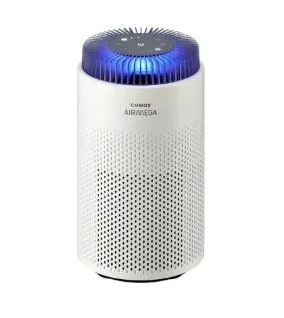
Coway air purifiers use GreenHEPA filtration technology that captures 99.999% of particles as small as 0.1 microns, which includes virtually all pollen types. But it’s not just about the technology—it’s about matching the right purifier to each space in your home.
Complete Room Coverage Guide
Air Purifiers for Small Bedrooms (10-15 m² / 108-161 sq ft)
Recommended: Coway Airmega 150
Your bedroom is where you spend 6-8 hours every night, making it the most critical room to protect. The Airmega 150 is perfect for compact spaces. It’s whisper-quiet on sleep mode (just 24 dB), features a soft night light, and cycles the air in a small bedroom 4-5 times per hour. Wake up feeling refreshed instead of congested. Place it on your nightstand or dresser, about 1-2 meters from your bed for optimal air circulation.
Medium Bedrooms & Home Offices (15-25 m² / 161-269 sq ft)
Recommended: Coway Airmega Mighty or Coway Airmega Jet
These mid-range models are perfect for master bedrooms, children’s rooms, or home offices where you spend extended periods. The Mighty is particularly popular for its excellent performance-to-price ratio. It features real-time air quality monitoring with a color-coded LED ring, eco mode that automatically turns off when air is clean, and a pollution sensor that adjusts fan speed automatically. Position it in a corner with at least 30 cm clearance on all sides for maximum efficiency.
Air Purifiers for Large Rooms (25-40 m² / 269-430 sq ft)
Recommended: Coway Airmega 300 or 450
Living rooms are high-traffic areas where the whole family gathers, making them pollen hotspots. The Airmega 300/450 series handles these larger spaces with ease, featuring dual suction intake on both sides for faster air cleaning, smart mode with real-time monitoring, and filter replacement indicators. These models can clean the air 2-3 times per hour even in spacious living areas. Place it centrally in the room, away from walls and furniture that might block airflow.
Placement Tips for Maximum Effectiveness
Regardless of which model you choose, proper placement is crucial. Keep your purifier at least 30 cm away from walls and furniture to allow proper air circulation. Avoid placing it behind curtains, under tables, or in corners where airflow is restricted. Position it at a height if possible—air purifiers work by drawing air in and pushing clean air out, so elevation helps with circulation. Keep it running 24/7 during pollen season, as constant air filtration is far more effective than intermittent use.
Beyond Pollen: Year-Round Benefits
While we’re focusing on hay fever, it’s worth noting that your Coway air purifier works hard all year long. It captures dust mites, pet dander, mold spores, bacteria, viruses, and even volatile organic compounds (VOCs) from household products. During winter when windows stay closed, it maintains fresh indoor air quality. During autumn, it handles fallen leaves and mold. In other words, your investment in hay fever relief pays dividends throughout the entire year.
Real-World Results
When you combine a Coway air purifier with other hay fever management strategies, the results can be transformative. Users report sleeping through the night without congestion, waking up without that typical morning hay fever assault, and being able to work productively from home even on high-pollen days. Some find they can reduce their antihistamine use significantly, while others finally feel comfortable enough to open their windows during low-pollen periods.
The visible difference on the purifier’s real-time air quality indicator is genuinely satisfying—watching it shift from red or yellow to blue or green as it clears the air gives you tangible proof that your home is becoming a safe haven from pollen.
Making Your Choice
Selecting the right Coway air purifier comes down to three factors: your room size, your budget, and your specific needs. If you’re new to air purifiers, start with your bedroom. That’s where you’ll notice the most immediate impact on your hay fever symptoms. If budget allows, expand to living areas next.
Consider the ongoing costs too. Coway filters typically need replacement every 6-12 months depending on usage and air quality. However, the investment is modest compared to the relief you’ll experience, and certainly less than what many people spend annually on hay fever medications and treatments.
Taking the First Step
Living with hay fever in the Netherlands doesn’t have to mean accepting months of misery every year. While you can’t change the Dutch landscape or climate, you absolutely can create clean, pollen-free zones in your own home where you can breathe easily and sleep soundly.
A Coway air purifier isn’t just another appliance—it’s an investment in your health, comfort, and quality of life. When combined with medical treatments and smart daily habits, it completes your hay fever defense strategy, giving you control over your symptoms instead of letting them control you.
This spring and summer, imagine opening your eyes in the morning without that immediate need to sneeze, enjoying your evening at home without constant tissue breaks, and actually sleeping through the night breathing comfortably. That’s not wishful thinking—that’s what proper indoor air quality management with Coway can deliver.
Your home should be your sanctuary, especially during hay fever season. Make it happen.