Lowboy Trailers: What They’re For and How to Choose One
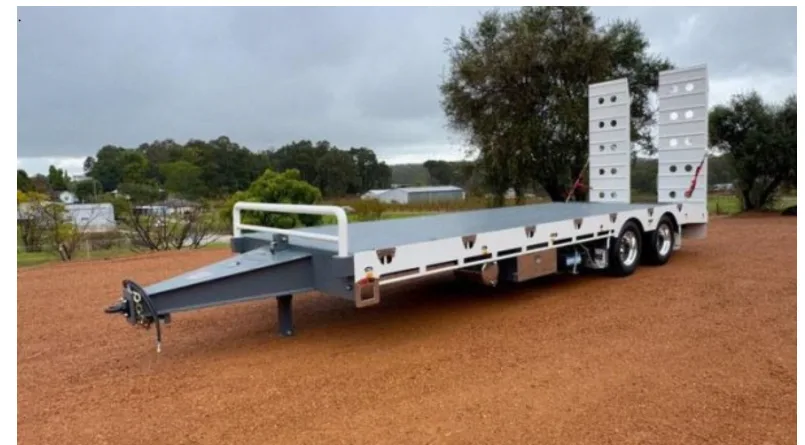
When a load is too tall or too heavy for an ordinary trailer, the lowboy is the tool for the job. Sitting low to the ground with a deep drop between the gooseneck and the rear axles, a lowboy can carry oversized, heavy machinery that would be illegal or impossible to move any other way. (In Australia you’ll more often hear these called floats or low loaders, but the design and purpose are the same.) Here’s what lowboy trailers are for and how to choose the right one.
What is a lowboy trailer?
A lowboy — also known as a float or low loader — is a trailer with a very low deck height. The deck drops down close to the ground between a raised gooseneck at the front and the wheels at the rear. That low deck is the whole point: it lets you carry tall equipment and still stay under legal height limits, and it keeps the centre of gravity low for stability.
Because the deck sits so low, lowboys can haul loads that would be too tall on a flat or drop deck trailer.
What lowboys are for
Lowboys are built for heavy, tall and oversized loads, typically:
- Earthmoving and construction machinery — excavators, dozers, loaders and graders
- Industrial and mining equipment — heavy, high or awkward plant
- Oversized loads — anything that exceeds height limits on a standard deck
The combination of low deck height and high load rating is what sets them apart from flat and drop deck trailers.
Key things to consider when choosing one
- Load capacity — the single most important spec. Match the rating to your heaviest regular machine, with a sensible margin, not to the occasional extreme.
- Deck height and length — determines what height of equipment you can legally carry and how long a machine fits.
- Axle configuration — more axles spread the weight, raise capacity and affect compliance with mass limits.
- Loading method — detachable goosenecks (RGN) let machinery drive straight on at ground level; fixed-neck designs use ramps.
- Build quality and condition — lowboys take serious punishment, so the strength and state of the frame, deck and suspension matter enormously.
Don’t overlook load securement
Heavy machinery on a low deck still has to be tied down correctly — this is where a lot of serious incidents happen. Many regions set specific rules for it. In the United States, for instance, the Federal Motor Carrier Safety Administration has a dedicated rule (section 393.130) for securing heavy vehicles, equipment and machinery weighing 10,000 lbs or more, on top of its general tie-down requirements. You can review the detail on the FMCSA’s cargo securement rules page. Wherever you operate, make sure every machine is restrained to the proper standard.
The bottom line
A lowboy (or float) is the specialist choice for heavy, tall and oversized loads — its low deck is what makes moving big machinery legal and stable. Choose one on capacity, deck dimensions and build quality, match it to the gear you actually move, and factor in how you’ll load and secure each machine.
If you’re looking at heavy-haulage options, it’s worth seeing what’s on offer first — you can browse the current range of trailers to compare configurations and capacities.