Material Handling Equipment: How to Choose the Right Solution for Your Business
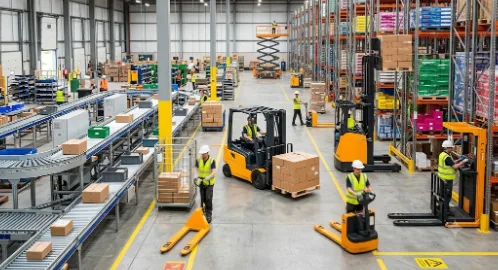
Material handling equipment supports efficient movement of goods across warehouses, factories, yards, and distribution facilities. Choosing suitable equipment requires careful assessment of loads, tasks, working conditions, and expected usage. Businesses may choose ownership or forklift rental based on operational demand and investment priorities. The right solution should suit available space, lifting needs, operator requirements, and maintenance arrangements. A clear selection process matches equipment capabilities with daily operations. It can support productivity, safety, and changing business requirements over time.
Identify Your Material Handling Needs
Start by understanding the materials and movement patterns involved in daily operations. Important factors include:
- Load Characteristics: Record the weight, dimensions, shape, packaging, and stability of materials handled during routine operations.
- Movement Volume: Estimate how many loads move during each shift and how frequently equipment performs each handling task.
- Special Handling Needs: Identify loads requiring attachments, careful positioning, or specific handling methods during movement.
These details create a practical foundation for comparing equipment capabilities with everyday business requirements.
Define the Tasks the Equipment Must Perform
Each handling task requires equipment with suitable operating characteristics. Forklifts support pallet movement, loading, and unloading in suitable operating environments. Reach trucks suit high-level racking and warehouse storage applications. Pallet trucks support horizontal movement, while stackers combine short-distance transport with lifting.
Order pickers support item retrieval from storage locations at different heights. The right warehouse handling equipment should match the intended workflow and material movement. Reviewing individual tasks helps businesses select equipment suited to travel distances, storage arrangements, and handling activities.
Assess Your Operating Environment
The workplace influences equipment dimensions, manoeuvrability, and operating features. Review these site conditions before making a selection:
- Available Space: Measure aisle widths, doorways, turning areas, overhead clearances, and approach spaces along regular travel routes.
- Floor and Route Conditions: Consider floor surfaces, gradients, ramps, and transitions between indoor and outdoor operating areas.
- Storage Layout: Check rack heights, pallet positions, bay dimensions, and available space for accurate load placement.
A site assessment helps match equipment dimensions and capabilities with the working area.
Determine the Required Load Capacity and Lift Height
Rated capacity should be adequate for regularly handled loads. Establish the heaviest expected load and required lifting height for each task. Load dimensions and load centre influence equipment suitability. This matters when materials extend beyond standard pallet dimensions during handling.
Equipment specifications state capacity under defined operating conditions. Attachments can affect a forklift’s rated capacity and load centre. Businesses should match equipment configuration with the intended load, attachment, and lifting height. This helps businesses select equipment with suitable capacity and lifting specifications.
Evaluate Equipment Usage and Workload
Usage patterns influence equipment type, fleet size, and procurement decisions. Estimate operating hours per shift, shift frequency, travel distances, and handling cycles. Consistent utilisation may support dedicated equipment, while seasonal demand can favour flexible access during periods of higher activity.
Future workload also deserves consideration when selecting equipment. Expected production growth, warehouse expansion, or changing order volumes can alter equipment requirements. Planning around likely demand helps businesses choose capacity and fleet arrangements that support evolving material movement needs over time.
Decide Whether to Rent or Buy
Ownership can suit businesses with stable workloads, predictable equipment requirements, and longer operational planning horizons. It provides direct control over asset use and maintenance planning. Purchase decisions should consider capital allocation, expected utilisation, asset life, servicing arrangements, and replacement requirements.
Forklift rental can suit seasonal demand, project work, additional shifts, or changing capacity requirements. Providers such as Godrej RenTRUST offer rental solutions for different material handling applications. Businesses can compare rental duration, equipment specifications, maintenance arrangements, and service support before choosing a provider.
Review Safety, Operator, and Maintenance Requirements
Equipment selection should address safe operation, operator capability, and ongoing upkeep. Important considerations include:
- Safety Features: Review visibility, warning systems, braking controls, access features, and protective features suited to the working environment.
- Operator Competence: Match equipment complexity with appropriate training, experience, and task knowledge for consistent daily operation.
- Maintenance Planning: Review inspection schedules, servicing needs, parts support, and maintenance responsibilities for the chosen equipment arrangement.
Together, these factors support reliable equipment performance throughout its planned working schedule and service life.
Compare the Total Cost of the Solution
A useful cost comparison should consider equipment use throughout the planned operating period. Key cost areas include:
- Acquisition or Rental: Compare purchase costs with rental charges over the planned equipment-use period.
- Operating Costs: Estimate energy or fuel consumption based on equipment type, working hours, travel patterns, and load cycles.
- Service Costs: Include servicing, parts, inspections, and maintenance requirements within the financial assessment.
- Cost Per Use: Compare total expenditure with expected operating hours and productive equipment use.
This approach connects equipment expenditure with its expected operational contribution.
Conclusion
Choosing material handling equipment starts with understanding what the business moves, where equipment operates, and which tasks it performs. Load capacity, lift height, workplace layout, usage, safety, operator skills, maintenance, and total cost can guide the selection process. Businesses should compare equipment specifications with actual operating conditions and expected workload. Procurement requirements also deserve careful consideration. Matching these factors with business needs can support efficient material movement, reliable operations, effective resource use, and suitable equipment selection over time.