Mike Feinberg on the 2.1 Million Trade Jobs America Can’t Fill — and What Houston Is Doing About It
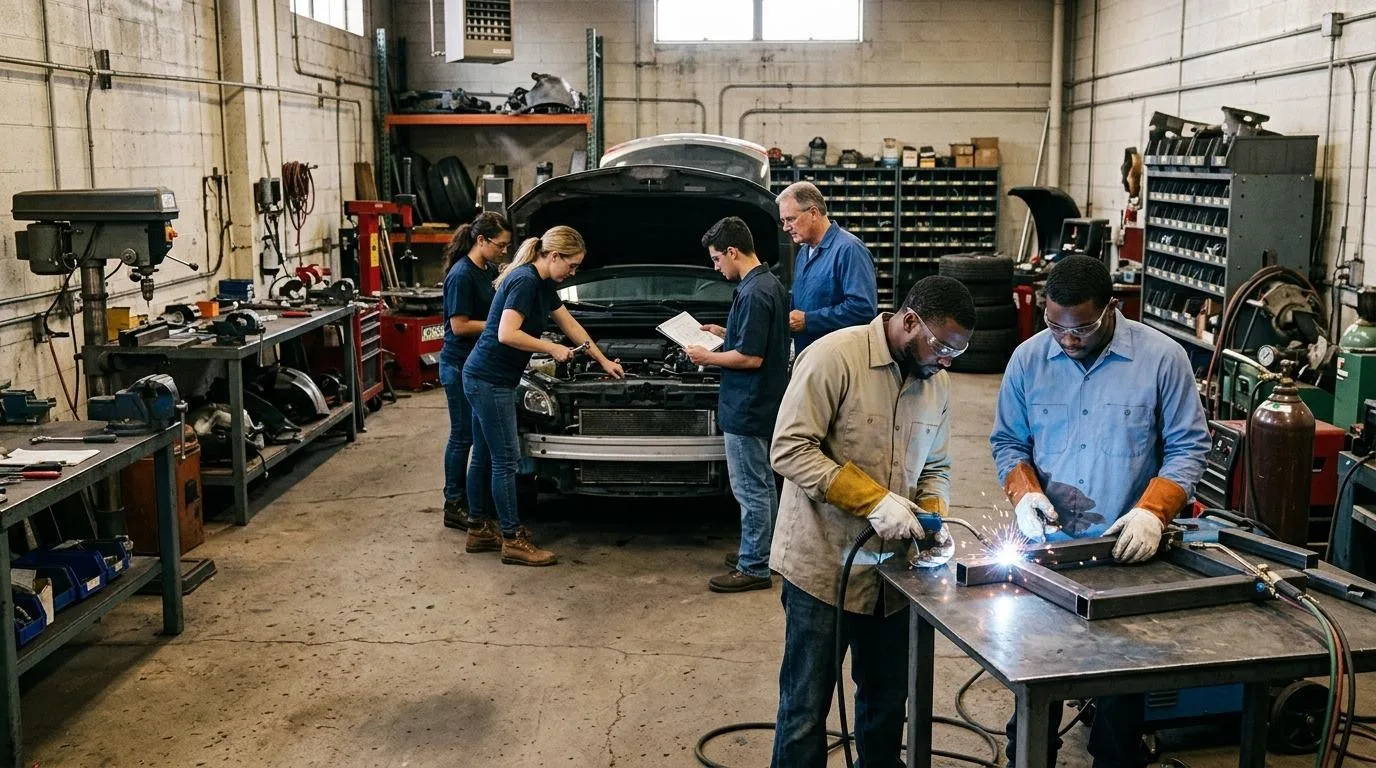
Last year, U.S. employers posted nearly 600,000 job openings in the skilled trades. About 150,000 new workers entered the trades labor pool through apprenticeship programs. The gap between those two numbers is not a rounding error. It is, according to a major new report from commercial real estate firm JLL, a structural crisis that could leave 2.1 million positions unfilled by 2030 and cost the American economy as much as $1 trillion a year.
Mike Feinberg has been working on his version of a fix since 2020.
“We are employer-focused,” says Feinberg, co-founder of WorkTexas, the Houston-based nonprofit that trains adults and high school students for careers in the skilled trades. “Our mission is to help people get jobs, keep jobs, and advance in careers.”
That mission statement is deliberate in what it leaves out. WorkTexas does not say its goal is to train people or award certificates. Feinberg designed it that way.
Why Mike Feinberg Built WorkTexas Around Employers, Not Credentials
The critique Feinberg returns to most often when describing the workforce training industry is not a policy argument. It’s a measurement problem. He asks the same question of every program that claims success: of all the students you certified, how many actually got jobs?
“You go to community colleges, trade schools, and ask them, ‘Are you successful? How do you know you’re doing a good job?'” he says. “And they say, ‘97.8% of our students earn a certificate.’ How many of those people got jobs? They don’t know. A more important question is, of those people who got jobs a year later, how many are still in their jobs, advancing in careers? They don’t know. They know that they gave out certificates. That’s what they do.”
WorkTexas was built to know. More than 100 employer partners across Houston helped shape the curriculum from the ground up. Yazmin Guerra, vice president and director of workforce development at WorkTexas, describes the process: “We start with the employer. If the employer is telling us they have a need and will hire a set number of students, we always ask, ‘If we could wave a magic wand, how many people could you hire tomorrow?’ Then we work together to establish a curriculum in a program that works for them.”
Partner companies supply job opportunities when participants complete training. WorkTexas career coaches then track graduates for at least five years, checking on employment status, wages, and job satisfaction. Adults employed for a year or more after completing the program earn an average of $23 per hour, according to WorkTexas data. The program reported an 88% adult training completion rate in 2023-24.
The Pipeline Problem Mike Feinberg’s Program Is Trying to Solve
WorkTexas operates at two Houston campuses. One occupies 15,000 square feet of Gallery Furniture, the showroom owned by Jim “Mattress Mack” McIngvale, who was KIPP’s original funder more than 30 years ago and donated the space when Feinberg brought him the WorkTexas concept. The other operates at a former juvenile detention facility repurposed as the Opportunity Center, which serves youth ages 16 and up referred through the Harris County juvenile justice system.
Between the two locations, WorkTexas served 300 adults, 90 justice-involved youth, and 70 high school students in the 2025-26 school year. The numbers are modest against the scale of the national shortage. Feinberg knows that.
His argument is not that WorkTexas alone can close a 2.1 million job gap. It’s that the model is transferable. When a Houston-based housing company wanted to train apartment maintenance technicians in Austin, they pulled together local partners, including the Texas Apartment Association’s education foundation and a local Goodwill Industries affiliate, and launched a first cohort in April 2025. The organizing logic was identical to WorkTexas: employer-first curriculum, a local anchor institution to provide space, and participating companies committed to giving graduates a fair shot at hiring.
Richard Whatcott, the regional vice president at Camden who organized the Austin effort, described his local partner at the Texas Apartment Association as the key connector. “She became the Mike Feinberg in Austin,” Whatcott said.
Feinberg has made a similar observation himself. “Every community has someone like a Mack who is a connector or a local celebrity who could play that role if the community so chose,” he has said.
The JLL research that put a $1 trillion annual price tag on the trades shortage also identified an encouraging trend: enrollment in community colleges has risen 12% over the past five years, with trades-related majors among the fastest-growing disciplines. Soaring college costs, now averaging 169% higher than in 1980 according to Georgetown University research, and growing unease about white-collar job stability are reshaping how younger workers think about their options.
Feinberg has been making the case for that reappraisal since before it was fashionable. The question he’s spending most of his time on now is not whether the trades are worth pursuing. That argument, he thinks, is largely won. The question is whether the training infrastructure to fill those 2.1 million jobs can be built fast enough to matter.