Minted Memories and Market Mastery: The Sophisticated Shift Toward Slabbed Sovereignty
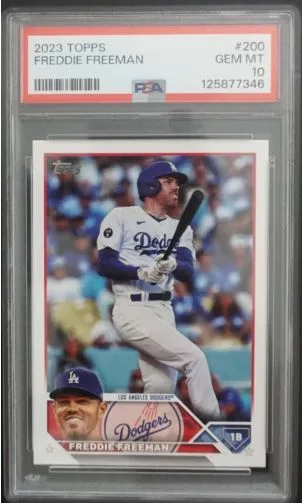
The roar of the crowd and the smell of fresh-cut grass have long been the sensory hallmarks of America’s pastime, but in the modern era, the true pulse of baseball is often felt in the quiet, climate-controlled rooms of serious collectors. The transition of a simple piece of cardboard from a shoebox to a sonically welded plastic slab represents more than just a change in storage; it is a financial and cultural transformation. For those looking to build a legacy or a high-performing portfolio, the pursuit of psa graded baseball cards has become the definitive gold standard. This specialized market requires a blend of historical reverence, eagle-eyed inspection, and a disciplined approach to asset management.
The Psychology of the Slab
What exactly happens when a card is encapsulated? Beyond the physical protection, the process of grading provides a universal language for a hobby that was once purely subjective. Before the advent of professional authentication, one man’s “mint” was another man’s “excellent.” By introducing a standardized 1-to-10 scale, the market gained the liquidity necessary to treat these items as alternative assets.
The value of a card is no longer just about the player depicted; it is about the “population report”—the data-driven reality of how many copies exist in a specific condition. A 1952 Topps Mickey Mantle is a treasure in any form, but the price discrepancy between a PSA 1 and a PSA 9 is a chasm measured in millions of dollars. This precision is why veteran hobbyists and new institutional investors alike prioritize psa graded baseball cards when looking to secure their capital.
Technical Mastery: What Graders Actually See
To the naked eye, a card might look perfect. However, under 10x magnification and high-intensity lighting, a different story emerges. Professional graders evaluate four primary pillars of condition:
- Centering: This is often the most scrutinized element. It refers to how well the image is positioned within the borders. A 50/50 split is the holy grail.
- Corners: Are they “razor sharp,” or is there microscopic fraying? Even a slight touch to a corner can drop a card from a 10 to a 6.
- Edges: Graders look for chipping or “whitening” along the sides, which often occurs during the original factory cutting process.
- Surface: This includes everything from print dots and wax stains to subtle scratches that are only visible when the card is tilted against a light source.
The 1951 Bowman Mickey Mantle
Consider the trajectory of the 1951 Bowman Mickey Mantle #253, his true rookie card. Recent market analysis shows that while the broader collectibles market faced corrections in 2022 and 2023, iconic vintage cards in specific tiers remained remarkably resilient. For instance, a PSA 6 specimen of this card rose from approximately $38,000 in early 2022 to over $51,000 by the end of 2023.
This case study illustrates a vital principle in the hobby: accidental scarcity. Unlike modern cards, where “1-of-1” parallels are manufactured to create value, vintage scarcity occurred naturally. Most of these cards were thrown away, tucked into bicycle spokes, or damaged by rubber bands. Finding a high-grade survivor today is an anomaly that the market rewards with exponential premiums.
Strategic Consolidation: The Move Toward “Grail” Assets
As we progress through 2026, a distinct trend has emerged among elite collectors: the “Quality Over Quantity” shift. Rather than holding hundreds of mid-tier cards, the “smart money” is moving toward consolidation. This involves liquidating larger volumes of common or semi-rare items to fund the acquisition of a single, high-grade masterpiece.
- Lower Volatility: High-end, “grail-level” cards tend to hold their value better during economic downturns compared to ultra-modern prospects.
- Simplified Management: Managing one $50,000 card is significantly easier than tracking fifty $1,000 cards.
- Legacy Building: These pieces are increasingly viewed as generational wealth, often passed down as part of an estate.
According to recent market outlook reports, the distinction between “manufactured scarcity” and “historical scarcity” will be the primary driver of value in the coming decade. Collectors are becoming more sophisticated, often ignoring the numerical grade on the label to focus on “eye appeal”—a subjective but powerful factor where a perfectly centered PSA 7 might outsell an off-center PSA 8.
The Economics of the Flip: Buying Raw vs. Buying Slabs
For those with a higher risk tolerance, the “raw to graded” pipeline remains a popular way to generate a return on investment. This involves scouring local shows, estate sales, or online marketplaces for unauthenticated cards that appear to be in pristine condition.
However, the math of grading must be considered carefully. One must account for:
- The raw purchase price.
- The grading fee (which varies based on the declared value and turnaround time).
- Shipping and insurance costs.
- Selling fees on platforms like eBay or specialized auction houses.
If a raw card costs $100 and the grading/selling costs total $50, the card must realistically achieve a grade that commands at least a $200 market value to justify the effort. Overestimating the “Gem Probability” is the most common mistake made by newcomers. Even the most seasoned pros expect a “Gem Mint” rate of only about 50% on their submissions.
The Role of Registry Competition
One of the hidden engines driving the value of these cards is the Set Registry. This is a platform where collectors compete to have the highest-ranked sets in the world. When two billionaire collectors are both missing a PSA 10 1968 Topps Nolan Ryan to complete their “Hall of Fame Rookie” run, the resulting bidding war can defy all logic and previous price points. This competitive ecosystem ensures that the ceiling for top-pop (lowest population) cards remains incredibly high.
Authenticity in an Age of Sophistication
As values rise, so does the sophistication of counterfeiters. From “retrimmed” edges to high-resolution reprints, the dangers are real. This is where the trust of a third-party grader becomes an insurance policy. A slabbed card features tamper-evident technology, holographic labels, and a unique certification number that can be verified against an online database. This level of security is why the secondary market for unslabbed, high-value cards has largely evaporated; buyers simply aren’t willing to take the risk without a professional guarantee.
Conclusion
The world of sports collectibles has evolved far beyond a childhood pastime. Today, it is a disciplined asset class that rewards patience, research, and an uncompromising eye for quality. Whether you are drawn to the lithographic beauty of the T206 era or the chromium shine of modern “Superfractors,” the cornerstone of a secure collection remains the same: professional authentication. By focusing on historical significance and the nuances of condition, you can transform a passion for the game into a robust and enduring portfolio.
Frequently Asked Questions
How long does it take to get a card graded?
Turnaround times vary significantly based on the service level selected. Value tiers can take 45 to 75 business days, while premium “Walk-Through” services can be completed in as little as a week.
Is it worth grading a card if it won’t get a 10?
Absolutely. For vintage cards (pre-1980), even a PSA 1 or 2 provides essential authentication. For modern cards, a PSA 9 often covers the cost of grading, though the real profit is usually found in the 10s.
What is a “qualifier” on a grade?
Sometimes a card is in perfect condition but has one specific flaw, such as being severely off-center (OC) or having a print stain (ST). PSA may assign a grade like “PSA 8 (OC),” which indicates the card is an 8 aside from that one specific issue.
Can I crack a card out of its slab?
While possible, it is not recommended for beginners. Collectors sometimes “crack and resubmit” in hopes of a higher grade, but they risk damaging the card or receiving a lower grade upon resubmission.
Does a signature on a card affect the grade?
If the card was signed after it was manufactured (and wasn’t an official “autograph issue”), it is typically graded as “Authentic Auto” or dual-graded for both the card’s condition and the signature’s quality.