Mobile leads, PC and console keep growing: the device story behind global online gaming in 2026
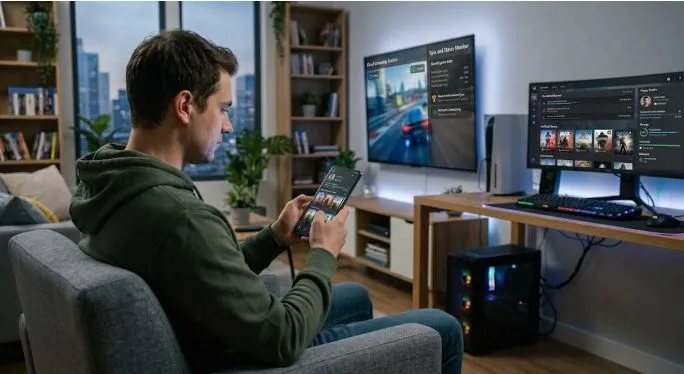
In 2025, the gaming industry brought in an estimated $188.8 billion. When looking at the industry this way, there are three main categories of devices: mobile, console, and PC. Of the three, mobile gaming was by far the most popular, bringing in about $103 billion, or 55% of the industry’s total revenue. Console gaming brought in about $45.9 billion, and PC gaming brought in about $39.9 billion. It is estimated that about 3.6 billion people are mobile, console, and PC gamers combined. It is also estimated that the industry has a dominant digital distribution model, meaning that physical copies of video games are not as common. Of the three device categories, console gaming is by far the fastest growing, and new industry models are expanding, leading many to believe that in the future the type of device a person uses to game will be less important than the connection the device has.
The statistics do not lie, but they can be interpreted in many different ways. What is dominant in Seoul is not what is dominant in São Paulo or Stockholm. The same can be said for the industry’s growth, what platform a player uses, and how a player interacts with different devices. What the industry’s statistics do show is how large digital gaming has become. It has become a major category of entertainment around the world, and the differences that each region has established within this reality are where many of the industry’s important observations can be made.
Screens everywhere: the device split driving a $187.7 billion market
Romania’s trajectory makes the eastern European picture concrete. The mobile gaming boom in Romania resulted in an 85% revenue growth for iGaming between 2020 and 2023, bringing the industry from €200 million to €370 million. By 2024, the industry’s gross gaming revenue had reached €752.8 million, with an annual growth of around 12% in the previous years. It is estimated that more than 60% of the online players in Romania access gaming platforms from smartphones and tablets. Players in Romania access online platforms from desktops and mobiles, which are also used for streaming, social apps, and other casual games. Don.ro Casino is where that daily habit meets casino content, slot and table games, which are absorbed into the gaming routine rather than standing apart from it. The mobile-based growth of iGaming in Romania between 2020 and 2023 took the industry from €200 million to €370 million, and by 2024, it was expected to reach €752.8 million with an annual growth of around 12% in the previous years. In the Romanian market, slots dominate casino games, and table games occupy the secondary position. It is in this device-based shift that casino content is absorbed into the routine rather than standing apart from it.
In the broader Europe region, online casino games make up 45% of the gross gaming revenue, with online sports and events betting making up 29% and online lottery products making up 15% of the market. This shows that online casino gaming has a structural significance in the digital gaming economy of the continent. Online casino gaming uses the same devices and broadband infrastructure as other forms of gaming.
The statistics for 2024 serve as a basis for the analysis, with the estimates for 2025 serving as a projection. In 2024, the global gaming market was valued at $187.7 billion, representing a 2.1% increase from the previous year. Of that figure, mobile gaming accounted for $92.6 billion, or 49% of the total market, with gaming consoles accounting for $51.9 billion and PC gaming accounting for $43.2 billion. In 2024, the 3.42 billion gamers represented roughly 42% of the world’s population. 2015 was the year mobile gaming surpassed console gaming, with 2018 being the year mobile gaming surpassed the combined console and PC gaming market, securing mobile gaming’s dominance as the main gaming platform of the world’s largest gaming audience.
Physical media has mostly become a historical footnote in the industry. Digital downloads and streaming make up approximately 95% of all game sales. Distribution infrastructure, such as app stores and platform libraries, broadband connections, and hardware, helps shape the market. Cloud gaming demonstrates this concept. The segment is projected to reach $21.04 billion by 2030, growing at a compound annual growth rate of 44.3%, from its 2024 value of $2.27 billion. This growth rate is higher than all other sub-segments, demonstrating an interest in device-agnostic play, as well as the expansion of fast internet and the continued high cost of owning a gaming PC or console.
Of the three main devices, mobile is the most popular and the most profitable, with consoles in the premium tier and the fastest growing segment. PCs maintain a dedicated gaming community and are region and genre specific. All three are growing.
Europe is a continent of many gaming cultures.
The 2023 gaming industry numbers for Europe show a total of €25.7 billion with a 5% annual increase. Consoles and mobile each accounted for 41% of the revenue, with PC taking 14% and streaming services taking the remaining 3%. The even console and mobile split is unusual, but it illustrates the coexistence of mobile-dominant and hardware-invested markets.
The UK had the largest single-country share on the continent at 29.1% in 2024 with a mature console and PC base, high digital spend on in-game purchases and subscriptions, and a mobile audience who has no issue paying for content like their console owning peers. Germany is mobile leaning, with 2024 stats showing 22.9 million people playing mobile games, making it the country’s prevailing gaming platform, with PC gaming having a dedicated community because of its long standing history with strategy games and esports. On the other hand, Spain is expected to be the fastest growing gaming market in Western Europe with an estimated compound annual growth rate of 10.2% with its young population and rapidly improving mobile infrastructure.
PC Gaming Still Dominates in Specific European Markets
The European MMO market shows PC gaming holding onto specific segments. PC had a 44.7% share of the market in 2025, with the Steam Hardware Survey in early 2024 showing that over 60% of Europeans preferred PCs for multiplayer online gaming, with respondents saying they preferred PCs for MMOs because of the customization and performance. Europe is genuinely plural; the device story here is one of multiple viable platforms coexisting market by market.
The Mobile First Approach of the Asia-Pacific Region
More gaming revenue is generated in the Asia-Pacific region than any other region, and mobile gaming dominates that revenue, with China, India, Southeast Asia, and Japan being the main markets contributing to that figure. While there are differences in the device mix among the countries, mobile reach is far greater than console or PC penetration.
Mobile gaming dominates China’s vast gaming market, which makes it the largest in the world by player count. The prevailing trends in gaming in China have their roots in a past shaped by PC gaming through LAN centers and by mobile gaming. Japan’s gaming market has a healthier split between console and mobile gaming. Similar to China, mobile gaming in Japan has grown to match the revenue generated by console gaming. South Korea’s gaming market also has a strong PC gaming culture, thanks to a long standing presence of PC bangs.
India is the fastest growing market in the region. Tremendous growth in the smartphone market, driven by affordable hardware and mobile data, created an infrastructure for mobile gaming. The incredibly large population of India means that even modest gains in mobile adoption result in a large player base. The gaming market of India is developing at a faster rate than most of the more established markets in the region.
Mobile gaming is the most popular form of gaming in Southeast Asia (Indonesia, Vietnam, Thailand, the Philippines), with more affluent urban populations being the demographic most able to support console and PC gaming. The Asia-Pacific region leads the rest of the world in mobile gaming, with the strongest revenue generation by far.
North America: Console Strength Meets PC Loyalty
North America has a unique mix. The United States and Canada have the most developed console market in terms of hard and soft infrastructure. Console markets in other regions can’t rival the scale and breadth of the major platform holders’ subscriber bases and the North American market for sports, action-adventure, and shooter games, which are some of the most financially successful console titles.
North America has a distinctive PC gaming scene as well. The console rivalries that dominate other regions aren’t as strong up north. Real-time strategy games, competitive first-person shooters, and simulation games, which are some of the most popular PC gaming titles, have a strong commercial presence. The PC gaming landscape has changed a lot in the last ten years. The release of subscription services and digital stores allowed for easy and affordable library expansion.
Compared to other regions, North America has a more established mobile gaming market. While mobile gaming in developing regions is dominated by an influx of new, predominantly ‘mobile-first’ players, the North American market is more profitable per user due to its higher average spend. Mobile gaming’s focus on in-app purchases, battle passes, and live service economies makes North America a lucrative market despite console and PC gaming’s cultural dominance.
North American broadband improvements and the aggressively expanding cloud gaming market mean all major platform holders are investing in streaming options.
Latin America: the smartphone boom
Mobile infrastructure and a young population have shaped Latin America’s gaming story. Of this region, Brazil has the largest gaming revenue and player base. Mexico, Argentina, Colombia, and Chile have significant player bases as well. In all of these countries, the smartphone is the main gaming platform for the overwhelming majority of players.
It makes economic and infrastructural sense for the population to use smartphones for gaming. Console and gaming PC price tags are a significant multiple of the average household income in Latin American countries, while mid-range smartphones are affordable for a wider income band. Lower mobile data costs, combined with fixed broadband access, have given tens of millions of people the ability to game who would not have been able to otherwise.
The large number of players in Latin America means that, despite the dominance of free-to-play games, mobile gaming has a strong economic base due to a high volume of low-value transactions. The same is true for mobile esports, which have gained in popularity and have large live audiences.
Latin America’s gaming market is projected to experience some of the most vigorous growth in the coming years. With a large population, an expanding middle class, and ongoing mobile network investments, the conditions are ripe for both increased player numbers and spending. Brazil is considered a strong-performing market that is on the cusp of reaching the same levels of more established gaming markets.
Middle East and Africa: rapid growth, limited device access
The Middle East and Africa region has the most internal diversity of any of the major gaming regions. The Gulf Cooperation Council (GCC) countries of Saudi Arabia, the United Arab Emirates, and Qatar have strong consumer markets for gaming, as do Western Europe and North America, because of their console markets and stronger economic growth. The Gulf region has invested in Esports in the last few years, and there have been a number of tournaments and gaming facilities that reflect the interest in gaming, as well as the investment by the government in the Gulf region.
Africa’s market is mobile-dominated, like much of South and Southeast Asia.
The Middle East and Africa region is one of the younger and more rapidly developing gaming regions of the world. With large parts of Africa and the Middle East having younger populations, there are large numbers of potential gamers who will reach their peak gaming years in the next 10 years. Mobile infrastructure in several African countries has been substantially improved, and the costs of phones that can support gaming continue to fall, encouraging more people to buy them. The combined revenue of the region is still less than that of Asia-Pacific, North America, or Europe, but it is expected to grow at a rate that is among the highest tracked by market analysts.