Motorcycle Vinyl Wrap: The Ultimate Guide to Customizing Your Ride
Motorcycle culture has always been built on individuality. Riders don’t just want reliable machines—they want bikes that reflect their personality, style, and the feeling they get every time they hit the throttle. That is exactly why motorcycle vinyl wrap has exploded in popularity within the custom bike community. It gives riders the power to transform their bikes—visually, creatively, and affordably—without the cost or commitment of paint.
In this in-depth guest post, we explore everything you need to know about motorcycle vinyl wraps: how they work, why they’re so popular, how much they cost, the best materials to choose, different design styles, installation tips, durability, and maintenance. Whether you’re a seasoned rider, a first-time owner, or a shop owner looking to educate customers, this 1,500-word guide will walk you through the full world of motorcycle vinyl wrapping.
What Is a Motorcycle Vinyl Wrap?
A motorcycle vinyl wrap is a thin, durable adhesive film applied to the bike’s body panels. Instead of repainting your motorcycle, you simply wrap the fairings, tank, or trim pieces with vinyl that comes in thousands of colors, finishes, and printed designs.
In recent years, motorcycle vinyl wrap has become the go-to solution for:
- Riders who want custom graphics
- Owners who want to protect their original paint
- People who want a reversible modification
- Fans of anime, racing, camo, chrome, or stealth designs
- Riders who want a fresh look without the price of custom paint
A wrap gives you the creative freedom of paint, but with much less risk and no permanent changes.
Why Are Motorcycle Vinyl Wraps So Popular?
Motorcycle vinyl wrapping has grown into a global trend because it solves many of the problems that come with traditional paint jobs. Here’s why so many riders prefer wrapping over painting:
1. Price
A full custom paint job can easily run into the thousands.
A motorcycle vinyl wrap? Often a fraction of that price.
2. Customization
Paint options are limited unless you pay for advanced airbrushing.
Vinyl, on the other hand, offers:
- Thousands of solid colors
- Chrome
- Carbon fiber
- Brushed metal
- Neon
- Camo
- Anime and pop-culture designs
- Racing graphics
- Full custom printed wraps
There are virtually no limits.
3. Reversible
Not happy with the style? Peeling off vinyl is easy.
Want to sell the bike and restore its original look? No problem.
4. Protection
Vinyl acts as a protective layer. Your original paint stays safe from:
- UV damage
- Light scratches
- Road debris
- Fading
When removed, the fairings look nearly brand-new.
5. Fast Installation
A pro paint job can take weeks.
A motorcycle vinyl wrap typically takes 1–3 days.
How Much Does a Motorcycle Vinyl Wrap Cost?
Prices depend on bike style, vinyl type, and installation complexity, but on average:
Full Motorcycle Vinyl Wrap
- $600–$2,000+
Sport bikes with many curved fairings often cost more.
Adventure bikes, cruisers, and naked bikes generally cost less.
Partial Wrap
- Tank: $120–$250
- Side fairings: $150–$300
- Tail section: $60–$150
- Front fender: $40–$100
- Helmet wrap: $120–$250
Custom Printed Wrap
- $700–$2,500+ depending on artwork
Anime, gaming, racing, and graffiti-style wraps typically require custom print files.
While cost varies, it’s still more affordable than high-end paint jobs, which can start at $2,500 and reach well over $8,000.
Best Vinyl Materials for Motorcycle Wrapping
Material quality significantly affects installation, durability, and final appearance. The top options include:
1. 3M 2080 Series
- Premium cast vinyl
- Excellent stretch and air-release technology
- Perfect for complex curves
2. Avery Dennison SW900
- Very conformable
- Smooth finish
- Long-lasting and easy to remove
3. KPMF & APA
- Known for brilliant color effects and color-shift films
4. TechWrap
- More budget-friendly
- Great for hobbyists
- Thicker and slightly harder to stretch on tight curves
Cast vs. Calendered Vinyl
- Cast vinyl is lightweight, flexible, and ideal for motorcycle fairings.
- Calendered vinyl is heavier and better for flat surfaces only.
For a motorcycle vinyl wrap, cast vinyl is highly recommended for the best fit and finish.
What Parts of a Motorcycle Can Be Wrapped?
One of the advantages of vinyl is its flexibility. You can wrap nearly any painted surface on a motorcycle, including:
- Gas tank
- Front fairing
- Side fairings
- Tail fairings
- Rear cowl
- Fenders
- Side panels
- Radiator shrouds
- Windscreen (using tint vinyl only where legal)
- Hand guards
- Helmets
Many riders choose to wrap both their bike and their helmet for a matching theme.
Popular Design Styles for Motorcycle Vinyl Wraps
Riders choose vinyl wraps not just for protection but for self-expression. Here are the most popular design directions in the motorcycle community:
1. Matte & Satin Solid Colors
Clean, modern, and aggressive.
2. Gloss Colors
Loud, shiny, and classic—like a fresh paint job.
3. Chrome & Metallic Finishes
Super reflective and eye-catching, especially at shows.
4. Carbon Fiber
A favorite for sport bikes and race builds.
5. Camo Wraps
Urban camo, digital camo, and desert camo are all trending.
6. Color-Shift Films
Colors that shift with the light—blue/purple, gold/orange, green/black.
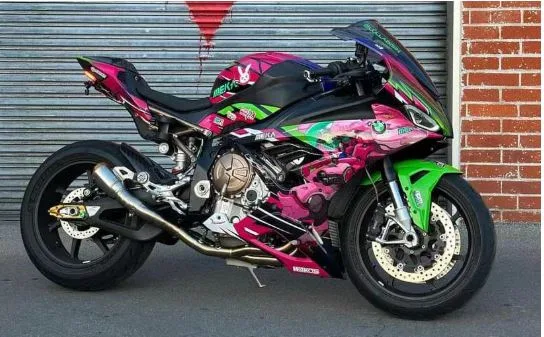
7. Anime & Itasha Motorcycle Wraps
Exploding in popularity. Riders choose characters from:
- Demon Slayer
- Blue Archive
- Genshin Impact
- One Piece
- Jujutsu Kaisen
- Chainsaw Man
These wraps turn your motorcycle into rolling fan art.
8. Custom Printed Designs
Your imagination is the limit.
People often choose:
- Graffiti
- Abstract geometry
- Flames and skulls
- Racing liveries
- Vintage pin-up art
- Tactical military themes
If you can visualize it, a print shop can create it.
How Long Does a Motorcycle Vinyl Wrap Last?
A high-quality motorcycle vinyl wrap can last:
- 3–7 years outdoors
- Up to 10 years if stored indoors or garage kept
The lifespan depends on:
- Climate
- UV exposure
- Vinyl brand
- Installation quality
- How well the wrap is maintained
Riders in hot, sunny regions may see slightly shorter life spans.
Maintenance Tips for Motorcycle Vinyl Wraps
Vinyl is durable, but proper care greatly extends its lifespan.
The Basics
- Hand wash only
- Avoid harsh chemicals
- Do not use abrasive sponges
- Use vinyl-safe cleaning products
- Dry the bike with soft microfiber towels
Avoid
- Constant pressure washing
- Gasoline spills on vinyl
- Parking long hours under harsh sun
- Rubbing edges aggressively
Protective Products
Using vinyl-safe ceramic coatings gives your wrap:
- UV protection
- Water beading
- Easier cleaning
- Enhanced shine
This can add 1–2 years to the wrap’s life.
Motorcycle Vinyl Wrap vs Paint: Which Is Better?
Both wrap and paint have advantages depending on your goals.
Advantages of Vinyl Wrapping
- Lower cost
- Reversible
- Protects original paint
- Thousands of color options
- Unique textures and finishes
- Faster installation
- Easy to repair small areas
Advantages of Paint
- Permanent
- Smooth, factory-like finish
- Better for restorations
- No seams or edges
Verdict
For most modern riders, wrapping provides more creativity and flexibility.
Paint is ideal only when you want a permanent, long-term finish.
DIY vs Professional Installation
Should you wrap your motorcycle yourself?
It depends.
DIY Wrapping Makes Sense If:
- Your bike has large flat areas
- You’re only wrapping small parts
- You have heat gun and vinyl experience
- You’re using simple colors
Professional Installation Recommended For:
- Full wraps
- Sport bikes with curved fairings
- Chrome or metallic vinyl
- Printed custom designs
- Perfect edge sealing and long-term durability
Curved sport bike fairings are especially difficult. Most riders prefer pros for a flawless finish.
The Motorcycle Vinyl Wrap Installation Process
Here’s what a typical pro installation looks like:
1. Panel Removal
Fairings are removed for maximum access and clean edges.
2. Deep Cleaning
Surfaces are degreased, clay-barred, and stripped of wax.
3. Vinyl Measuring & Cutting
Pieces are mapped out to minimize seams.
4. Application
Installers stretch, heat, and squeegee the vinyl around contours.
5. Post-Heating
Final heat application ensures adhesion and prevents peeling.
6. Reassembly
Fairings are reattached, inspected, and cleaned.
The result is a finish that looks almost like paint—sometimes better.
Who Should Consider a Motorcycle Vinyl Wrap?
Vinyl wraps are perfect for:
- Riders who want a fresh look
- Commuters protecting factory paint
- Sport bike owners wanting a race-inspired theme
- Show-bike builders
- Fans of anime and Itasha culture
- Riders who frequently change styles
- Resale-focused owners who want to preserve original paint
If you love customizing your bike, wrapping is one of the best creative tools available.
Future Trends in Motorcycle Vinyl Wrapping
The industry is evolving quickly. Up-and-coming trends include:
1. Hybrid Wraps
Mixing paint and vinyl for multi-layer effects.
2. Reflective Wraps
Improving night visibility while adding style.
3. 3D Textured Films
Brushed aluminum, leather texture, forged carbon.
4. Anime/Itasha Growth
Entire communities are dedicated to themed vinyl wraps.
5. Rider-Matching Gear
More riders are wrapping their:
- Helmets
- Windshields
- Luggage boxes
- Tank bags
to match their bike’s theme.
6. Eco-Friendly Vinyl
Manufacturers are exploring recyclable films and low-VOC adhesives.
The customization scene is only getting bigger—and motorcycle vinyl wraps are at the center of it.
Conclusion
A motorcycle vinyl wrap is one of the most powerful ways to customize your bike. It combines creativity, affordability, paint protection, and freedom of expression into one upgrade. Whether you ride a sport bike, cruiser, adventure bike, or café racer, a wrap can transform your machine into something entirely unique.
From simple matte finishes to fully printed designs, vinyl wraps offer unlimited potential. They’re reversible, customizable, and built to last. As the world of customization continues to evolve, motorcycle vinyl wraps stand out as one of the most exciting and accessible modifications for riders everywhere.
If you want a wrap that reflects your personality, protects your paint, and makes your motorcycle stand out on the road, a vinyl wrap is the perfect choice.