Natural Expectorants That Actually Clear Phlegm and Chest Congestion
By Montoya Sigafoose, founder of Home Remedy Shop
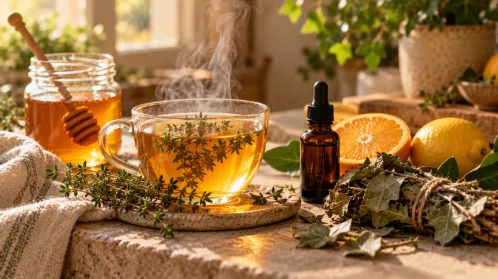
The natural expectorant that works best, in my experience, is thyme tea with a drop of food-grade thyme essential oil, taken with extra vitamin C. Add steam, warm fluids and ivy leaf, and most chest congestion starts to loosen within a day or two.
At Home Remedy Shop, our guide on how to get rid of phlegm explains what the colour of your phlegm means and why it keeps coming back. Our natural expectorants guide and our page on chest congestion relief cover the herbs and habits that help clear it.
These are remedies my family has relied on for three generations. Here is what each one does.
What an expectorant does
An expectorant thins the mucus in your airways so you can cough it up more easily. It works with the cough, not against it. That matters: the phlegm is carrying the infection out, so the goal is to move it, not to keep it in.
The natural expectorants that work
- Thyme tea with thyme oil and vitamin C. Steep a teaspoon of dried thyme (or a handful of fresh) in hot water for 10 minutes. Let it cool until warm, add one drop of food-grade thyme essential oil and a spoon of raw honey. Take extra vitamin C through the day. This is my first choice for a wet cough in adults.
- Ivy leaf. A traditional European herb for chest coughs, available as a tea or a ready-made syrup.
- Steam with eucalyptus. A few drops of eucalyptus oil in a bowl of hot water, a towel over your head, five to ten minutes. For adults and children over 2 only.
- Ginger and lemon. Fresh ginger in hot water with lemon juice warms the chest and helps loosen mucus.
- Warm fluids all day. Water, broth and herbal teas keep mucus thin. Dehydration makes phlegm thick and sticky.
- Gravity and movement. Gentle walking, lying on your side and light tapping on the back help shift mucus from the lungs.
What your phlegm colour tells you
| Colour | What it usually means |
| Clear | Allergies, post nasal drip or the start of a cold |
| White or grey | Congestion, often viral |
| Yellow or green | Your immune system is fighting an infection |
| Brown or rusty | Old blood or pollution; get it checked if it continues |
| Red or pink | Blood; see a doctor |
When chest congestion needs a doctor
Chest congestion isn’t always from the lungs. It can also come from the heart, so see a doctor if it comes with swollen ankles or breathlessness when lying flat. Go also for a high fever, chest pain, wheezing, blood in the phlegm, or congestion that lasts more than three weeks.
FAQ
What are the most effective natural remedies for a persistent cough?
For a wet cough with phlegm: thyme tea with food-grade thyme oil and extra vitamin C, ivy leaf, eucalyptus steam and plenty of warm fluids.
How do you make a homemade cough syrup with kitchen ingredients?
Simmer fresh thyme and sliced ginger in water for 10 minutes, strain, cool until warm and stir in an equal amount of raw honey. Keep it in the fridge for up to two weeks.
Where can I buy quality ingredients for DIY cough remedies?
Organic dried thyme from a herbalist, food-grade thyme oil from a supplier that tests its oils, pure eucalyptus oil for steam, and raw honey from a local beekeeper.
What are the best over-the-counter home remedies for cough relief?
Ivy leaf syrup, thyme-based expectorant syrups, eucalyptus for steam and saline nasal sprays, rather than cough suppressants when your cough is wet.
Montoya Sigafoose is the founder of Home Remedy Shop, where she shares natural remedies that have worked in her family for three generations.