Next Generation Robotics: Intelligent Gripping Systems Transforming Industrial Automation
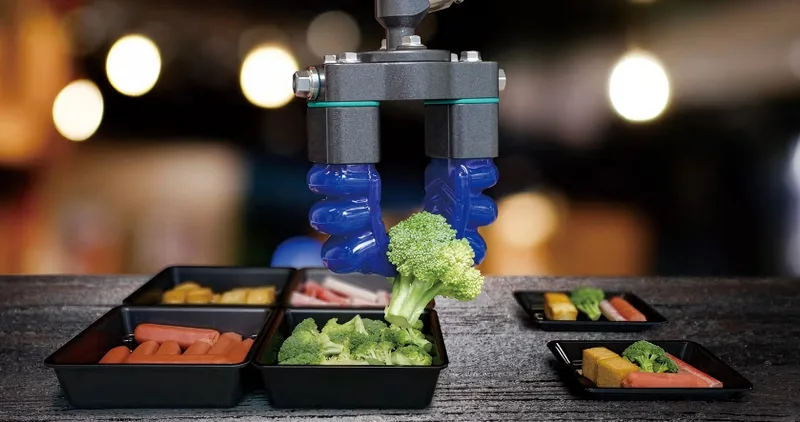
Industrial automation is evolving faster than ever before, and robotics is at the center of this transformation. One of the most critical components in any robotic system is the gripper, which determines how effectively a robot can interact with real-world objects. From manufacturing lines to smart warehouses, gripping technology is shaping the future of automation.
Modern industries now require more than just speed—they demand precision, adaptability, and safety. Traditional rigid grippers are no longer enough for complex tasks involving delicate, irregular, or mixed materials. This is where advanced soft and hybrid gripping technologies are making a major impact.
Companies like SRT Soft Gripper are contributing to this evolution by developing next-generation gripping systems that combine flexibility, intelligence, and industrial strength. These systems are helping businesses improve productivity while reducing errors and product damage.
This article explores modern robotic gripping technologies, their industrial uses, and how they are reshaping automation across different sectors.
Evolution of Industrial Gripping Systems
Early robotic systems were designed for repetitive tasks in controlled environments. They used simple mechanical claws that could pick and place uniform objects. While efficient, they lacked adaptability and could not handle fragile or irregular items.
As industries expanded, automation requirements became more complex. This led to the rise of advanced Robot Gripper Manufacturers, who began focusing on adaptive gripping solutions capable of handling different shapes, textures, and weights.
One of the most important innovations in this field is the Soft Gripper Robot, which uses flexible materials to gently hold objects without causing damage. This development opened new opportunities in industries like food processing, healthcare, and electronics.
Rise of Soft Robotic Technologies
Soft robotics has completely changed how machines interact with physical objects. Instead of rigid metal components, soft robotic systems use flexible materials such as silicone, rubber, and pneumatic structures.
The Soft Robotic Gripper is one of the most widely used innovations in this category. It allows robots to grip fragile items like glassware, fruits, and medical instruments safely and efficiently.
A more powerful version, the Strong Soft Robotic Gripper, combines flexibility with higher load capacity. This makes it suitable for industrial environments where both strength and delicate handling are required.
These systems are improving automation efficiency while significantly reducing product damage and operational risks.
Human-Like Dexterity in Robotics
One of the most exciting areas of robotics is the development of systems that mimic human hand movements. Soft Finger Robotics is based on this concept, enabling robots to grip objects with finger-like precision.
This technology is especially useful in applications where objects vary in shape and size. Unlike traditional grippers, soft finger systems can adjust dynamically, providing a more natural and controlled grip.
These systems are increasingly being used in assembly lines, laboratories, and research facilities where precision is critical.
Advanced Gripper Technologies in Industry
Modern automation uses different types of specialized grippers depending on the application.
The Robot Vacuum Gripper uses suction-based technology to handle flat and smooth surfaces. It is widely used in packaging, logistics, and automated warehousing systems where speed and consistency are important.
The Robot Suction Gripper is another popular solution for handling cartons, boxes, and lightweight products. It plays a major role in e-commerce fulfillment centers where fast picking and placing is required.
In heavy-duty applications, the Pneumatic Magnetic Gripper offers a powerful combination of air pressure and magnetic force. This system is ideal for handling metal parts in automotive and industrial manufacturing environments.
Smart Engineering and Automation Integration
Modern robotic systems are no longer purely mechanical. They are equipped with sensors, control systems, and intelligent algorithms that allow them to adapt in real time.
The Soft Robotic Gripper plays a key role in this transformation by providing feedback-based gripping control. It can adjust pressure depending on the object being handled, ensuring safety and precision.
Advanced robotics companies are now integrating artificial intelligence and machine learning into gripping systems to improve decision-making and adaptability in unpredictable environments.
SRT Soft Gripper has been involved in developing such intelligent systems that improve industrial efficiency and reduce manual intervention.
Key Advantages of Modern Gripping Systems
Advanced robotic gripping technologies offer several important benefits to industries.
They increase production speed by automating repetitive handling tasks. They also improve accuracy, ensuring that products are handled with care and precision.
Safety is another major advantage, as robots can perform dangerous or heavy tasks that would otherwise require human effort. This reduces workplace injuries and improves overall operational safety.
Systems like the Soft Gripper Robot and Strong Soft Robotic Gripper are especially useful in industries where both safety and precision are required simultaneously.
Challenges in Gripping Technology Development
Even though robotic gripping technology has advanced significantly, there are still challenges that need to be addressed.
One of the main challenges is improving the durability of soft materials without losing flexibility. Soft components can wear out faster under continuous industrial use.
Another challenge is optimizing energy efficiency in pneumatic and vacuum-based systems. Engineers are working to reduce power consumption while maintaining strong performance.
Developing fully adaptive systems like Soft Finger Robotics that can replicate human dexterity with high accuracy is also an ongoing research area.
Future of Robotic Gripping Systems
The future of gripping technology lies in hybrid systems that combine multiple gripping methods into one intelligent solution.
Technologies like the Robot Vacuum Gripper and Robot Suction Gripper are expected to become more advanced with AI-based control systems that can automatically adjust suction strength and grip timing.
The Pneumatic Magnetic Gripper will also evolve to handle heavier loads with improved energy efficiency and better safety controls.
Soft robotics will continue to expand, making systems like the Soft Robotic Gripper and Soft Gripper Robot more widely used across different industries.
Industrial Growth and Market Demand
The global demand for automation is increasing rapidly, especially in sectors like e-commerce, automotive, pharmaceuticals, and food processing.
As industries grow, the need for efficient Robot Gripper Manufacturers is also rising. Companies are focusing on customized solutions that meet specific operational needs.
Warehouse automation is heavily relying on suction and vacuum-based systems, while manufacturing industries are adopting hybrid gripping technologies for better performance.
SRT Soft Gripper continues to play an active role in this market by providing advanced gripping systems designed for modern industrial challenges.
Conclusion
Robotic gripping technology is revolutionizing industrial automation by making it faster, safer, and more intelligent. From simple mechanical systems to advanced adaptive solutions, the evolution has been significant.
Innovations such as the Soft Robotic Gripper, Soft Gripper Robot, and Soft Finger Robotics are transforming how robots interact with objects. At the same time, technologies like the Robot Vacuum Gripper, Robot Suction Gripper, and Pneumatic Magnetic Gripper are expanding industrial capabilities across multiple sectors.