NFL’s Record Nine Global Games Reshape Fan Access in 2026
By Marcus T. | Sports business reporter, 11 years covering league expansion and media rights. Filed September 2026.
Nine International NFL Games in 2026: How the League’s Global Expansion Is Reshaping Fan Access
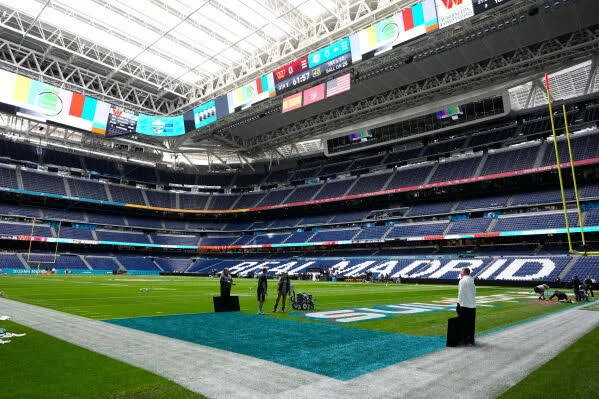
Seven countries. Four continents. Nine games that don’t touch American soil until the broadcast reaches your living room. The NFL didn’t just tweak its international schedule this year, it blew past every previous benchmark. London gets three games again. São Paulo, Berlin, and Madrid all keep their slots. Melbourne joins the rotation for the first time, and Mexico City returns after a hiatus.
This isn’t a marketing gimmick anymore. It’s infrastructure. The league has spent a decade building toward a season where “home field” is a genuinely global concept, and 2026 is the year that bet paid off. According to NFL.com’s official 2026 international schedule release, the nine-game slate spans dates from early September through mid-November, with kickoff times staggered to hit prime viewing windows on three separate continents simultaneously.
The bigger question isn’t whether the NFL can pull off nine international games. It’s what happens to the fans caught in between. Overseas supporters who’ve waited years for a home game. American fans trying to track a season that now runs on London time half the month. Everyone in between who just wants to watch.
Why the League Keeps Doubling Down Overseas
London has hosted NFL games since 2007, but the economics only recently caught up to the ambition. A report confirmed by Pro Football Hall of Fame’s coverage of the 2026 slate puts this year’s international footprint at a genuine record: nine games, seven countries, four continents. That’s not incremental growth. That’s a structural shift in how the league allocates its regular season.
Money explains most of it. Wembley Stadium games alone have generated an estimated $2.6 billion in cumulative economic impact for London since the series began, according to NFL.com reporting via the Associated Press. Brazil’s first-ever game in 2024 sold out in hours. Germany’s Frankfurt and Munich stops have drawn crowds that rival any AFC North matchup. The league saw the receipts and expanded the map.
But there’s friction underneath the growth story. A NBC 5 Dallas-Fort Worth report on ticket sales found that unsold seats have become a real issue in London this year, with fans citing steep ticket prices and what one supporter called “team fatigue” after nearly two decades of the same handful of franchises rotating through Wembley. Saturation is a real risk when you’re asking the same market to show up for its ninth or tenth game in a stadium that seats 90,000.
Where American Fans Actually Watch and Play During an International Slate
Here’s the part that gets overlooked in the schedule-release headlines. When a Sunday game kicks off at 9:30am Eastern from Munich, the entire rhythm of a fan’s week changes. Pregame rituals shift. Watch parties start before brunch. And for fans in states where regulated online platforms exist, the way people track and engage with the season has become just as fragmented as the schedule itself.
Washington sits in an unusual spot here. The state has strict rules around traditional sports wagering, but that hasn’t stopped residents from following the international slate closely, whether through fantasy leagues, prediction contests, or the broader universe of legal online gaming. For players in the state looking at where the season’s activity actually happens, sites to play for real money have become part of how fans stay engaged across a schedule that no longer runs on a predictable Sunday-to-Sunday clock.
Gambling carries real risk, and anyone playing should only wager what they can comfortably afford to lose. If it stops feeling like entertainment, BeGambleAware.org and similar resources are there.
That regional variation matters more this season than in years past. A Frankfurt kickoff at 9:30am Eastern is a completely different viewing experience than a 1pm Sunday slate, and fans have had to build new habits around checking scores, catching highlights, and staying looped into a season that increasingly plays out on foreign time zones.
The Business Case Behind the Scheduling Math
The league isn’t just chasing ticket revenue in new markets. It’s building media rights value. Each international game creates a new broadcast window, a new local rights conversation, and a new audience the NFL didn’t previously have consistent access to. Melbourne’s addition to the 2026 slate, for instance, opens a genuine Australian market conversation that didn’t exist five years ago.
There’s a longer trajectory here worth noting. CBS Sports traced the league’s expansion path back to the São Paulo debut in 2024, which the league treated as a proof of concept before scaling to Madrid and Melbourne. Each new market gets one test game before the NFL commits to a multi-year run. It’s a deliberate, almost franchise-like rollout, testing demand city by city rather than flooding the calendar all at once.
Not every experiment sticks. Toronto hosted Bills games for years before that arrangement quietly dissolved. The league has shown it will walk away from a market that doesn’t deliver, which suggests the current nine-game slate isn’t guaranteed to hold at nine forever. It could grow. It could also contract if ticket fatigue in cities like London becomes a persistent trend rather than a one-season blip.
What Nine Games Signals About the Next Decade
Commissioner Roger Goodell has floated the idea of a full international game every week of the season eventually, though league sources have consistently downplayedu any firm timeline. What’s clear from the 2026 slate is the direction of travel. Nine games is roughly a third of a full regular-season week’s worth of matchups, spread across markets that didn’t exist on the NFL calendar a decade ago.
For fans, that means the season itself has become a genuinely global experience rather than an American product exported occasionally. Kickoff times will keep shifting. Time zones will keep colliding with tradition. And the audience tracking all nine of these games, whether from a pub in London, a viewing party in São Paulo, or a living room in Seattle, is proof the league’s bet on going global actually worked.
Frequently Asked Questions
How many international NFL games are there in 2026? The league scheduled a record nine international games in 2026, spread across seven countries and four continents, including stops in London, São Paulo, Berlin, Madrid, Mexico City, and Melbourne’s first-ever appearance on the international slate.
Why does the NFL keep adding international games? Economic impact is the biggest driver. London’s Wembley games alone have generated an estimated $2.6 billion cumulatively, and sellout crowds in newer markets like Brazil and Germany have convinced the league the international appetite is real and growing.
Are international NFL games affecting ticket sales in host cities? Yes, to a degree. Reports out of London this year point to unsold seats and fan-cited “team fatigue,” suggesting some markets may be approaching saturation after nearly two decades of hosting the same rotating pool of franchises.
Will the NFL add more countries in future seasons? The league has historically tested new markets with a single game before committing further, as it did with Brazil in 2024 ahead of a fuller 2025-2026 rollout. Melbourne’s 2026 debut suggests Australia could see additional games if this year’s turnout holds up.
What time do international NFL games typically kick off for US viewers? Kickoff times vary by host city but often land in the 9:30am to 1pm Eastern window to hit prime local viewing hours overseas, meaning US fans frequently watch these matchups earlier in the day than a typical Sunday slate.