Norway’s Royal Family: Roles, Traditions and Modern Challenges
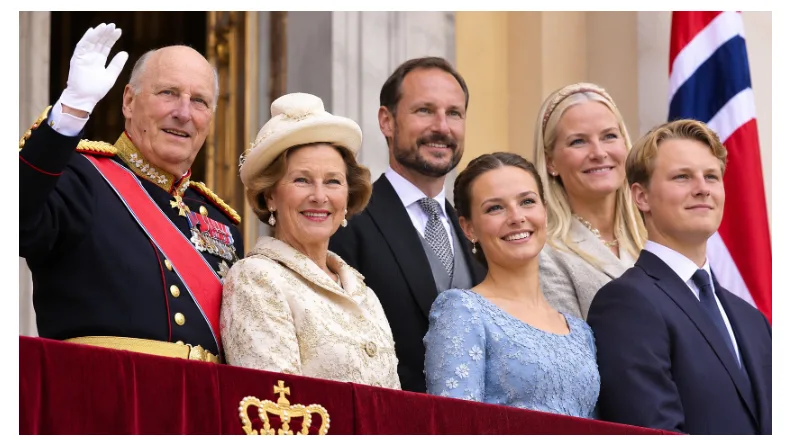
Norway is one of the most democratic countries in the world. It also has a king. For many visitors, that combination seems odd. How does a modern, equal society keep a monarchy, and why do most Norwegians still support it?
The answer lies in history, in the way the royal family does its job, and in a long tradition of keeping the monarchy close to ordinary people. Recent years have tested that tradition harder than ever, though.
A Constitutional Monarchy Explained
Norway’s constitution was signed at Eidsvoll on 17 May 1814, and it is one of the oldest written constitutions still in use. It makes Norway a constitutional monarchy. In practice, that means the King is head of state, but real political power sits with the Storting (parliament) and the government.
The King formally appoints the government and opens the new session of parliament each autumn. He presides over the Council of State, where formal decisions are signed, usually on Fridays at the palace. But he does not make political choices himself. Decisions are made by elected politicians, and the King signs them. You can read how this works in practice on the Storting’s website.
Norway’s modern monarchy began in 1905, when the union with Sweden ended. Prince Carl of Denmark was invited to become King, but he asked for a referendum first. Norwegians voted clearly in favour, and he took the name Haakon VII. That vote still gives the monarchy a kind of democratic legitimacy that many people point to today.
King Harald and Queen Sonja
King Harald V has been on the throne since 1991. Born in 1937, he is one of the oldest reigning monarchs in the world. He was the first Norwegian prince born in Norway in more than 500 years.
Harald’s own story includes a small rebellion. He fell in love with Sonja Haraldsen, a shopkeeper’s daughter from Oslo, and refused to marry anyone else. For years the relationship was kept quiet. In the end, his father King Olav V agreed, and the couple married in 1968. Queen Sonja became a popular figure in her own right, known especially for her love of art and mountain hiking.
The King is famous for speeches that speak directly to ordinary people. His 2016 speech about who Norwegians are, mentioning people from different backgrounds, faiths and sexual orientations, went viral around the world. In recent years his health has limited his schedule, and Crown Prince Haakon has taken on more duties.
Crown Prince Haakon and Princess Ingrid Alexandra
Crown Prince Haakon married Mette-Marit Tjessem Høiby in 2001. Like his father, he chose a partner from outside royal circles, and the marriage was controversial at first. Over time, Mette-Marit won broad respect, especially for her work on mental health, literature and social inclusion. She has spoken openly about living with a chronic lung disease, which has sometimes limited her public role.
The couple have two children. Princess Ingrid Alexandra, born in 2004, is second in line to the throne and will one day become Norway’s first reigning queen since the Middle Ages. She completed military service and has studied abroad. Prince Sverre Magnus, born in 2005, has taken a less public path.
Princess Märtha Louise, the King’s daughter, gave up her official royal duties in 2022 and married American Durek Verrett in 2024. Her alternative spiritual business has caused plenty of debate in the media over the years.
Royal Residences and Where the Family Lives
The most famous royal building is the Royal Palace in Oslo, which sits on a small hill at the top of Karl Johans gate, the city’s main street. It was completed in 1849 and is the King’s official residence. The palace park around it is open to the public, and in summer there are guided tours of the main rooms. The changing of the guard happens every day at 13:30, and it is a popular stop for tourists.
Crown Prince Haakon and his family live at Skaugum, an estate in Asker, just outside Oslo. It has been the home of the heir to the throne for generations. The royal family also uses Bygdøy Kongsgård, a royal farm on the Bygdøy peninsula, and Oscarshall, a small romantic palace by the Oslofjord that is open to visitors in summer.
Outside the capital, the family has residences in Trondheim and Bergen. Stiftsgården in Trondheim is one of the largest wooden buildings in Scandinavia, and Gamlehaugen in Bergen is a fairy tale villa by a lake. The royal yacht, K/S Norge, is used for official visits along the coast and abroad.
Many of these properties are owned by the state rather than the royal family privately, and they are maintained through the state budget. That arrangement is part of what makes the monarchy feel like a public institution rather than a private family business.
Royal Duties Through the Year
A large part of royal life is routine, and much of it is closely tied to national traditions:
- 17 May: The royal family waves to the children’s parade from the palace balcony in Oslo. It is one of the most recognisable images in Norway.
- Opening of the Storting: The King reads the throne speech each autumn.
- Official visits: State visits abroad and visits to Norwegian counties and towns.
- New Year’s speech: The King’s speech on 31 December is watched by a large part of the population.
- Holmenkollen: Royals often attend the famous ski festival in Oslo in March.
The official calendar and news from the royal household are published on kongehuset.no.
Controversies and Public Trust
For decades, the Norwegian royal family enjoyed very high approval. Recent years have been more difficult.
The biggest blow has been the criminal case against Marius Borg Høiby, Crown Princess Mette-Marit’s son from a previous relationship. He does not have a royal title and is not a member of the Royal House, but he grew up in the family and was often seen with them. In June 2026, an Oslo district court convicted him of two counts of rape, as well as domestic violence and drug offences, and sentenced him to four years in prison. He was acquitted on other charges, and his lawyer said he would appeal. The royal household said only that the courts had considered the matter and it had no comment on the outcome. International coverage, such as reporting from the BBC, followed the trial closely.
At the same time, the Crown Princess apologised for past contact with the late American financier Jeffrey Epstein after documents about it became public. Together, these stories have hurt the family’s popularity. Norwegian media have run many polls on support for the monarchy, and there has been more open debate than usual. Sites such as norgefokus.no have followed the debate and the court case as they unfolded.
Still, support for keeping the monarchy has remained in the majority in most surveys. Many Norwegians separate the institution from the individuals, and King Harald personally is still widely respected.
The Monarchy’s Future
Every few years, a proposal to abolish the monarchy is debated in the Storting. So far, these proposals have always been voted down by a clear margin. Changing the constitution needs a two-thirds majority across two parliamentary terms, so any change would be slow.
The future of the monarchy will likely depend on Crown Prince Haakon and, later, Princess Ingrid Alexandra. Both are seen as serious and hard working. The challenge will be rebuilding trust after a difficult period while staying relevant to younger Norwegians, who are less attached to tradition than older generations.
The Norwegian royal family has always survived by being modest, accessible and close to the people. King Olav V famously took the tram to go skiing during the oil crisis in 1973, paying his fare like everyone else. That image, a king who rides public transport, still says a lot about what Norwegians expect from their royals. If the family can keep that spirit, the monarchy will probably be around for a long time yet.