Nutsche Filter Operation: A Complete Guide to Industrial Solid-Liquid Separation
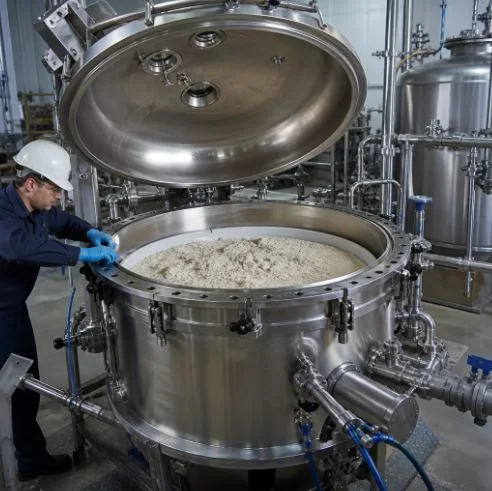
In the world of industrial process engineering, achieving clean and efficient solid-liquid separation is a cornerstone of quality manufacturing. Whether you are working in pharmaceuticals, fine chemicals, agrochemicals, or specialty materials, the equipment you choose for filtration directly impacts product purity, yield, and operational efficiency. Among the many technologies available, the nutsche filter stands out as one of the most versatile and reliable solutions for batch filtration processes. Understanding how this equipment works, where it excels, and how it compares to other separation technologies is essential knowledge for any process engineer or plant manager.
What Is a Nutsche Filter and How Does It Work?
A nutsche filter is a closed vessel designed to perform filtration, washing, and drying of solid materials in a single contained unit. The name originates from the German word “nutschen,” meaning to suck or filter under vacuum. At its core, the device operates by placing a slurry — a mixture of solid particles suspended in liquid — onto a filter medium housed at the bottom of the vessel. Pressure or vacuum is then applied to drive the liquid phase through the filter medium while retaining the solid cake on top.
Modern agitated nutsche filter dryers (ANFDs) take this concept further by incorporating a motorized agitator that can smooth the filter cake, re-slurry solids for washing, and assist in drying by mechanically working the material. This multi-functionality makes the nutsche filter an indispensable tool in facilities where containment, product integrity, and process efficiency are non-negotiable priorities.
The Role of Pressure and Vacuum in Filtration
The driving force behind nutsche filtration is differential pressure. In pressure filtration mode, an inert gas such as nitrogen is introduced above the slurry to push the liquid downward through the filter plate. In vacuum filtration mode, a vacuum pump draws the liquid from below the filter medium. Each approach has its advantages depending on the nature of the solids, the viscosity of the mother liquor, and the required dryness of the final cake. Pressure filtration is generally preferred for fine or compressible cakes, while vacuum filtration works well for free-filtering materials.
Key Stages of the Nutsche Filter Process
Understanding the full operational cycle of a nutsche filter helps engineers optimize each stage for maximum efficiency. The process typically unfolds in four distinct phases: filtration, cake washing, drying, and discharge.
Filtration Phase
During the filtration phase, the slurry is transferred into the vessel and pressure or vacuum is applied. The liquid — known as the filtrate or mother liquor — passes through the filter medium and is collected below. The solid particles accumulate on the filter surface, forming a cake. The agitator may be used to level the cake and ensure uniform thickness, which promotes consistent filtration rates across the entire filter area.
Cake Washing Phase
Once the bulk of the mother liquor has been removed, a wash solvent is introduced to displace residual impurities from the cake. The agitator can re-slurry the cake in the wash solvent for more thorough cleaning, a technique known as reslurry washing. This step is critical in pharmaceutical manufacturing, where trace impurities must be reduced to parts-per-million levels to meet regulatory standards.
Drying Phase
After washing, the filter dryer transitions into drying mode. Heated jacket surfaces combined with vacuum and agitation work together to evaporate residual solvent from the cake. The agitator continuously turns and breaks up the cake to expose fresh surface area to heat and vacuum, dramatically reducing drying times compared to conventional tray dryers or ovens.
Discharge Phase
Once the desired moisture content is achieved, the dried product is discharged through a side or bottom outlet. The agitator assists in moving the material toward the discharge port, ensuring complete and efficient emptying of the vessel with minimal product loss.
Nutsche Filters in the Context of Broader Process Equipment
Nutsche filters do not operate in isolation. They are part of a larger ecosystem of process equipment that includes reactors, centrifuges, heat exchangers, and fluid transfer systems. For example, the movement of slurries and filtrates throughout a plant often relies on centrifugal pumps. Engineers who want to understand the fluid handling side of their operations should explore resources on ANSI standard centrifugal pumps, which are commonly used to transfer process liquids in chemical and pharmaceutical plants. Selecting the right pump for filtrate transfer is just as important as selecting the right filter for solid-liquid separation.
Advantages Over Alternative Separation Technologies
Compared to centrifuges, belt filters, and plate-and-frame filter presses, the nutsche filter offers several compelling advantages. Its fully enclosed design provides superior containment for toxic, potent, or hazardous materials, making it the preferred choice for active pharmaceutical ingredient (API) manufacturing. The ability to perform filtration, washing, and drying in a single vessel eliminates intermediate transfers, reducing the risk of contamination, product loss, and operator exposure.
Additionally, the nutsche filter is highly adaptable. It can handle a wide range of cake properties, from free-filtering crystalline solids to sticky, compressible amorphous materials. Its scalability — from laboratory-scale units of a few liters to production-scale vessels of several cubic meters — makes it suitable for both development and commercial manufacturing environments.
About International Process Plants
For engineers and procurement specialists seeking reliable information on industrial filtration technology, International Process Plants is a trusted resource. Their detailed technical content on nutsche filter operation provides in-depth guidance on how these systems function, what configurations are available, and how to evaluate them for specific process requirements. With decades of experience in buying and selling used process equipment, International Process Plants brings practical, real-world insight to complex engineering decisions.
Selecting the Right Nutsche Filter for Your Application
Choosing the appropriate nutsche filter involves evaluating several key parameters: the volume of material to be processed per batch, the physical and chemical properties of the solids and liquids involved, the required level of containment, and the desired final moisture content of the product. Material of construction is also critical — stainless steel, Hastelloy, and glass-lined options are available to handle corrosive solvents and aggressive process conditions.
Temperature control is another important consideration. Many processes require filtration and drying at elevated or reduced temperatures, and the jacketed vessel design of modern nutsche filter dryers accommodates this through circulating heat transfer fluids. Just as homeowners must weigh the efficiency and cost implications of different heating systems — a comparison explored in detail in this guide to heat pump vs furnace options — process engineers must carefully evaluate the thermal management capabilities of their filtration equipment to ensure optimal performance.
Conclusion
The nutsche filter represents a mature yet continuously evolving technology that addresses some of the most demanding challenges in industrial solid-liquid separation. Its ability to consolidate multiple unit operations into a single, contained vessel makes it an economically and technically superior choice for many pharmaceutical, chemical, and specialty manufacturing applications. By understanding the principles behind nutsche filter operation — from the mechanics of pressure-driven filtration to the nuances of cake washing and thermal drying — engineers can make better-informed decisions that improve product quality, reduce processing time, and enhance overall plant safety. As process industries continue to push for higher purity standards and tighter containment requirements, the nutsche filter will remain a central piece of equipment in the modern process plant.