
OEM vs. ODM Eyewear Manufacturing in China: Which Model Is Better for Growing Eyewear Brands?
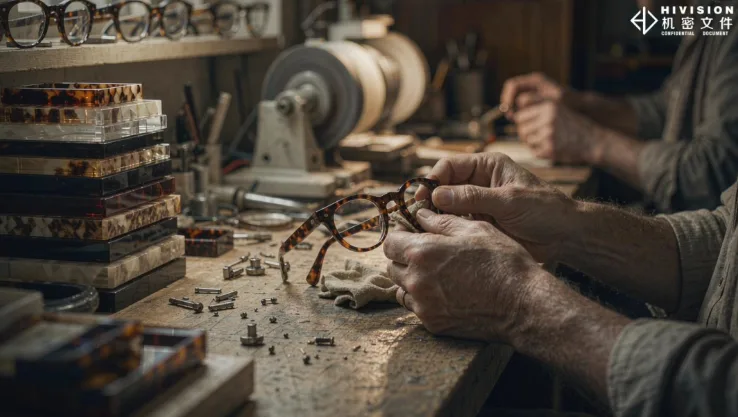
The Decision That Shapes Your Eyewear Business
Imagine two brands preparing to launch their first optical collection. One has original frame designs, technical drawings, and a clear product identity. The other understands its target customers but has limited design resources and wants to enter the market quickly.
Both need a manufacturing partner in China, but they probably should not follow the same production model.
When comparing eyewear manufacturers in china, buyers often focus on price, MOQ, and factory capacity. Yet one earlier decision can influence all three: whether to choose OEM or ODM.
The right model affects development costs, product differentiation, intellectual property, production timelines, and how easily a brand can expand its collection.
OEM Eyewear Manufacturing: When Your Brand Owns the Design Direction
OEM (Original Equipment Manufacturing) means the buyer provides the design concept, technical specifications, drawings, or reference samples, and the manufacturer produces frames according to the approved requirements.
For example, a premium eyewear brand may want a distinctive acetate frame with a particular front shape, temple construction, hinge, color combination, and logo placement. The manufacturing partner evaluates whether the design can be produced reliably and develops samples before mass production.
This approach is particularly suitable for brands with established design teams or a strong identity they want to protect.
A capable china eyewear manufacturer should help assess material selection, frame dimensions, construction feasibility, tooling requirements, and production costs—not simply accept a drawing and start manufacturing.
However, OEM usually requires more development work. New tooling, multiple sampling rounds, and technical adjustments can increase upfront investment and extend the launch timeline.
ODM Eyewear Manufacturing: A Faster Route to Market
ODM (Original Design Manufacturing) works differently. The manufacturer offers existing designs or develops product concepts based on the buyer’s requirements. The brand selects suitable styles and may customize colors, finishes, logos, components, and packaging.
For a growing business, this can reduce the time and resources needed to develop a collection from scratch.
Consider a retailer launching a private-label optical range. Instead of commissioning 20 entirely new designs, it could select suitable frames from an existing collection, customize several colorways, and test customer demand.
This is where china acetate eyewear manufacturers, metal-frame suppliers, and injection-frame specialists can offer useful product-development options.
ODM does not automatically mean generic or low-quality products. The value depends on the manufacturer’s design range, customization flexibility, material knowledge, and ability to maintain consistent production.
What Actually Changes Between OEM and ODM?
| Decision factor | OEM | ODM |
| Design source | Buyer provides the design | Manufacturer provides or develops the base design |
| Customization | Extensive, subject to feasibility | Usually based on existing designs and available options |
| Initial investment | Often higher | Often lower |
| Development time | Usually longer | Usually shorter |
| Differentiation | Greater potential for exclusivity | Depends on customization and exclusivity agreements |
| Best suited for | Established or design-led brands | Startups, retailers, and brands testing demand |
One important point: neither model has a universal MOQ or lead time. These depend on the material, construction, order quantity, tooling, and factory’s production arrangements.
For example, acetate and metal frames generally involve different production requirements from injection-molded products. Buyers evaluating china acetate and metal eyewear manufacturers should therefore request separate quotations and development schedules for each category.
Material Selection: Why the Manufacturer’s Capabilities Matter
A supplier may offer both OEM and ODM services but have different strengths across materials.
- Acetate: Suitable for brands seeking distinctive colors, patterns, and substantial frame construction. Evaluate the supplier’s acetate processing, shaping, polishing, and finishing capabilities.
- Metal: Useful for slim, lightweight, and refined designs. Check component precision, welding, plating, hinge quality, and surface finishing.
- Injection materials: TR90 and other engineering plastics can support lightweight and flexible constructions. Ask about mold development, material specifications, and production consistency.
A specialist china injection eyewear manufacturer may be better equipped for a complex injection project than a supplier whose main expertise is acetate.
Likewise, brands looking for premium metal collections should evaluate a china metal eyewear frames manufacturer based on its actual engineering and finishing capabilities.
The important lesson is to select a supplier according to the product you intend to manufacture—not simply the number of categories displayed in its catalogue.
The Hybrid Approach: How Growing Brands Can Use Both Models
Does a brand have to choose OEM or ODM permanently? No.
A practical strategy is to begin with ODM to test market demand, identify successful shapes and price points, and understand customer preferences. Once sales become more predictable, the brand can invest in OEM development for signature designs.
For example, a business might launch an initial collection using selected acetate and metal styles, then commission exclusive frames after identifying its strongest-selling categories.
Some suppliers also support handmade acetate development. Buyers searching for a china odm handmade eyewear manufacturer or china oem handmade eyewear manufacturer should clarify exactly which operations are performed by hand, which are machine-assisted, and how finishing standards are controlled.
The label alone does not establish craftsmanship or exclusivity.
Choosing an Eyewear Manufacturer in China: Questions Beyond Price
Whether you need an eyewear frames manufacturer china partner for OEM, ODM, or both, evaluate the supplier through a structured process:
- Request material-specific product examples and technical information.
- Confirm whether designs are existing, modified, or exclusive.
- Clarify tooling ownership, design ownership, and confidentiality terms.
- Request samples and approve written specifications before production.
- Understand MOQ, sampling charges, payment terms, and production lead times.
- Ask how incoming materials, production stages, and finished products are inspected.
A reliable partner should explain the trade-offs rather than promise that every project will be fast, inexpensive, and fully customized.
For brands seeking quality eyewear manufacturing in china, this transparency is often more valuable than an attractive initial quotation.
Where Hivision Fits into the OEM and ODM Decision
Wenzhou Hivision Eyewear, established in 2006, describes itself as an integrated eyewear industry and trade company with more than 500 staff. Its production lines cover acetate, metal, titanium, and injection materials, including TR90 and Ultem.
The company supports OEM and ODM projects across optical frames, sunglasses, and reading glasses. Its published custom-order guidance lists general minimums of 150–200 pieces per color for metal and acetate, and 200–300 pieces per color for injection frames. New orders are generally listed at 90–120 days, with reorders at 70–90 days; confirm the requirements for each project.
Brands comparing eyewear manufacturer china options can explore Hivision’s optical frame collections, review its manufacturing and company profile, or contact the team to discuss a specific project.
The final decision is straightforward: choose ODM when speed, lower initial development investment, and market testing are priorities. Choose OEM when original designs, stronger differentiation, and greater control are central to your strategy. For many growing brands, combining both models at different stages offers the most commercially flexible route.