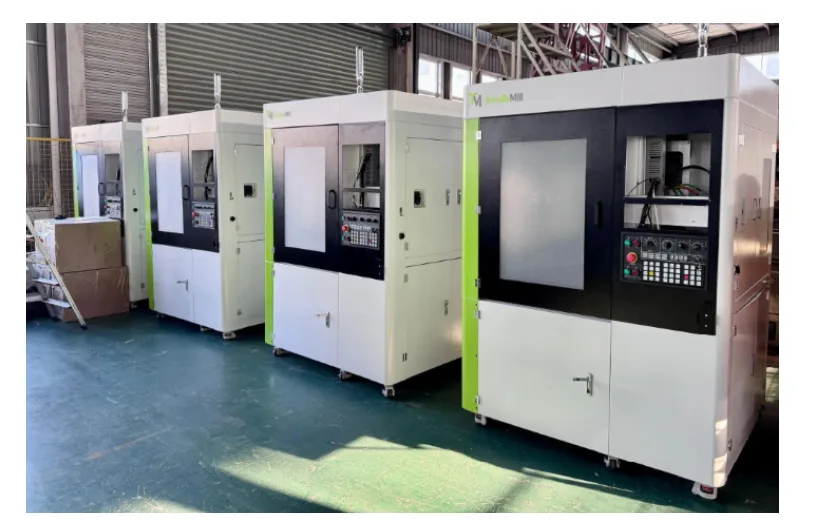
One Workflow for Tensile and Charpy Specimen Prep Is Replacing Two-Machine Setups
Many materials labs live in two worlds. One is tensile testing, where specimen geometry often follows ASTM E8/E8M or ISO 6892-1. The other is notched-bar impact testing, usually Charpy or Izod under ASTM E23. Both programs can be routine. The prep work rarely is.
In practice, the slowest step often comes before the test frame. Shops and labs bounce between two machining routes, two fixture habits, and two sets of “how we do it here” rules. That is where delays build. Interpretation errors also creep in. A small change in gauge geometry, edge condition, or notch handling can show up later as scatter.
Some labs are now pushing toward a single CNC-based prep route that covers both specimen families. The idea does not change what the standards ask for. It changes how consistently the lab reaches that geometry, shift after shift, before the sample is ever pulled or struck.
Why Two Separate Prep Routes Slow Down Testing Labs
In many labs, the test method is not the weak link. The frame runs the same routine each day. Operators know the standard steps. Still, the workflow upstream can stay messy. When tensile specimens and impact bars run on different machines, two queues form fast.
Most errors show up during handoffs. A tensile coupon may be referenced from one edge. An impact blank may be referenced from a different face. That change in datum logic often goes undocumented. Fixtures can also locate parts differently from one setup to the next. Even small shifts in support and clamping can change edge condition.
The standards do not leave much room for guesswork. Tensile specimen geometry is commonly tied to ASTM E8/E8M. Notched-bar impact work is commonly tied to ASTM E23 for Charpy and Izod testing of metals. Those documents do not tell labs what machine to buy. They do push labs toward consistent geometry and traceable preparation steps.
A simple example is gauge length convention for many round tensile specimens. ASTM E8 often uses a 4D gauge length. ASTM E8M commonly uses 5D. On paper, that difference is easy to track. In a busy prep area, it can turn into a template mix-up that nobody notices.
The risk is rarely a dramatic failure. It is quiet variation that shows up as scatter. That is why some labs are moving toward dual specimen-prep equipment for preparation of both tensile and impact specimens in one controlled workflow.
How Hybrid CNC Prep Uses One Datum Strategy for Two Specimen Families
In specimen machining, “hybrid” does not mean a new test method. It describes a prep workflow that runs on one CNC-based platform. The same base machine supports flat tensile geometries and impact specimen blanks. The same fixture logic is used. The same datum plan is carried from one program to the next. The setup changes, but the reference strategy stays consistent.
That consistency matters because many labs lose time in transitions. Two-machine setups force frequent changeovers and extra scheduling. They also create interpretation gaps. One operator may prefer a different locating surface. Another may clamp the part slightly differently. Over a long program, those choices add up.
In many labs, the shift is toward a single, CNC-based specimen-prep workflow that can cover both tensile coupons and impact-bar blanks. The aim is not to collapse two standards into a shortcut. It is to make the preparation steps repeatable and traceable, even when staffing and schedules change.
Software and templates are part of the story. Many systems now use pre-programmed libraries that reflect common ASTM, ISO, DIN, or JIS specimen families. Instead of building programs from scratch, operators start from a known geometry template and enter guided dimensions. That reduces the chances of an unnoticed offset, a swapped gauge length convention, or a radius that drifts over time. It also supports version control. The template name and revision can be logged like any other controlled document.
Guided inputs also help across shifts. A lab should not need one “go-to” machinist to keep specimen geometry consistent. When dimensions and datums are defined in a shared template, the workflow is less dependent on memory and local habit. That usually means fewer silent edits, fewer rework loops, and fewer arguments about whose setup was “right.”
Batch Machining Raises Throughput Without Turning Tolerances Into Guesswork
Throughput in specimen prep is often constrained by setups, not spindle time. Machining a single coupon can look simple on paper. The day disappears in repetition. Each part still needs to be loaded, located, clamped, checked, and unloaded. When tensile and impact work sit on separate routes, those setups multiply.
Batch and stack machining is one response. Multi-part clamping lets a lab run several blanks in one cycle using fixed stops and repeatable locating features. That can be useful in quality-control labs running recurring tensile and impact programs. The logic is straightforward. Fewer touchpoints per specimen can raise output without forcing shortcuts on inspection.
Still, batch work brings its own failure modes. Stacked tolerances can appear if parts do not seat the same way. Clamping pressure can vary across a fixture. Burrs can build as tools wear. Chatter marks can show up when the cut is pushed too hard. Those issues are easy to miss if the lab only checks the first part in a batch.
Unified toolpaths help by keeping the machining logic consistent across operators. One person’s “small tweak” is often another person’s unknown variable. When a single workflow controls datums, tool engagement, and finish passes, variability sources tend to shrink. It does not make mistakes impossible. It makes drift less likely to go unnoticed.
The cost argument is often simple. One platform can replace two prep routes, which reduces labor hours, queue time, and rework. Some labs run the numbers with a ROI calculator before changing equipment plans.
Even then, tensile prep is only part of the story. Impact testing adds notch requirements, and that step needs its own controlled method and verification.
Charpy Specimen Prep Still Depends on Notch Quality and Verification
ASTM E23 covers Charpy and Izod notched-bar impact testing of metallic materials. It is a pendulum test. The specimen is notched on purpose. That notch is part of the method, not an optional feature.
In most labs, the workflow is easiest to manage when it is treated as three distinct steps. First, machine impact specimen blanks, often on the same CNC platform used for tensile coupons. Second, cut the U- or V-notch using a dedicated notching method or a dedicated attachment or process that is set up for notch work. Third, verify notch geometry and key dimensions before the specimen goes anywhere near the pendulum.
Notch handling cannot be casual because small differences can shift results. E23 itself flags that notch dimension variation affects test outcomes. For heat-treated materials, the usual expectation is that finish machining, including notching, happens after the final heat treatment unless equivalence can be demonstrated. That sequence matters because heat treatment can change surface condition and local response near the notch.
Defensible specimen prep checklist
- Specimen template/version used (E8/E23 geometry reference)
- Fixture setup/datum method
- Batch size and cycle time per specimen
- Dimensional inspection points (go/no-go checks, micrometer checks)
- Tool wear and change schedule
- Traceability: heat or lot, operator, date/time, program ID
Common mistakes labs still see
- Mixing E8 and E8M conventions without tracking template versions
- Marking too close to the notch region
- Skipping notch verification because “the cutter is new”
- Hand-finishing edges differently across shifts
What Labs Gain When Prep Becomes a Controlled Process, Not a Shop Tradition
Across many testing operations, the shift is less about new standards and more about tighter workflows. Labs that once treated tensile specimens and Charpy blanks as separate prep jobs are increasingly folding them into one controlled route. The machine choice varies. The common thread is a shared datum plan, shared fixtures, and programs that are treated like controlled documents.
That approach tends to change what the lab spends time on. There are fewer handoffs between machines and fewer “interpretation moments” where a setup depends on who is working the shift. Records also get cleaner. Template versions can be logged. Fixture methods can be described once and repeated. Inspection points can be tied to the same program IDs each time.
For auditors, that last part matters as much as throughput. When results drift, the first question is often whether the specimen changed before the test began. A controlled prep workflow does not remove every variable, but it narrows the list. It also makes the remaining variables easier to explain. In many labs, consistency starts at the fixture and the template, not at the result spreadsheet.
Frequently Asked Questions
- Why Are Labs Moving From Two Separate Prep Routes To One Workflow For Tensile And Charpy Specimens?
Two-machine setups usually create two queues, two fixture habits, and two “local rules” that vary by operator and shift. A unified workflow reduces handoffs and interpretation steps, which can cut delays and lower the risk of quiet geometry variation that later shows up as data scatter. - How Can One CNC-Based Workflow Support Both Tensile Coupons And Charpy Impact Bars Without Changing The Standards?
The standards still define the required geometry and verification expectations. The change is operational: one platform, one datum strategy, and controlled templates or programs that consistently produce the specified specimen families. The workflow aims to make preparation repeatable and traceable rather than dependent on memory or informal shop practice. - What Types Of Errors Become More Likely In Busy Prep Areas With Mixed Standards?
Common issues include mixing gauge length conventions (such as E8 versus E8M practices for some round specimens), swapping or misapplying templates, drifting shoulder or radius features over time, and inconsistent datums between tensile and impact routes. These errors often do not look dramatic but can introduce scatter and rework. - Does Batch Machining Improve Throughput Without Increasing Rejection Risk?
Batching can raise output by reducing load/unload and setup time per specimen, but it introduces risks such as seating variation, uneven clamping pressure, burr buildup, chatter, and tool-wear drift across a run. Labs typically manage this by using fixed locating features, consistent toolpaths, and inspection gates that extend beyond a first-piece check. - Why Is Charpy Prep Still A Special Case Even In A Unified Workflow?
Charpy testing depends heavily on notch quality. Even if blanks are machined in the same CNC route as tensile coupons, the notch step generally needs a controlled method and verification before testing. Small notch geometry differences can shift impact results, so treating notching and notch inspection as dedicated, documented steps is usually central to defensible Charpy preparation.