Opaque Monetization Rules Put Global South Creators at Risk
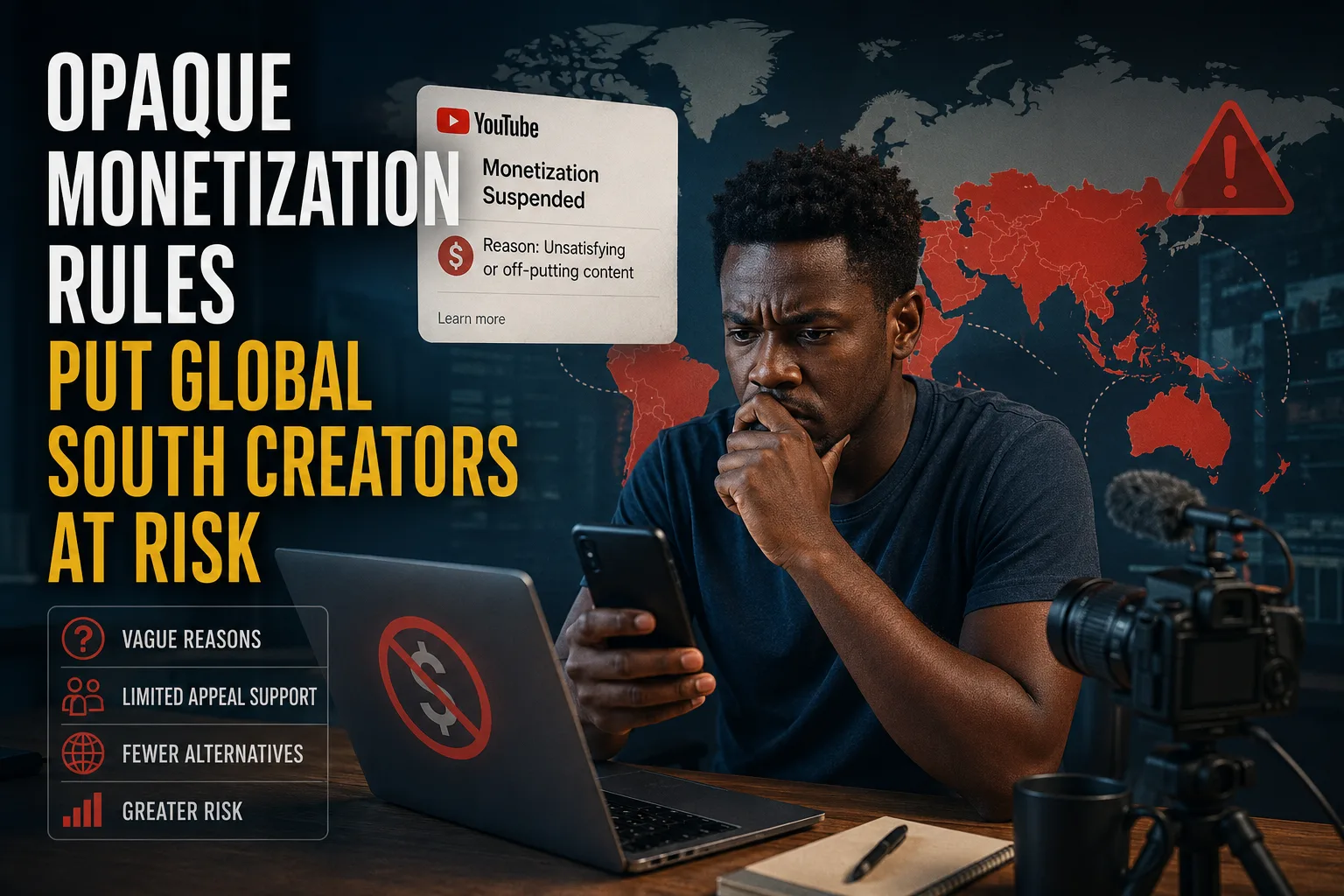
Digital platforms have given independent creators access to audiences that traditional media systems often failed to reach. They have also concentrated an extraordinary amount of economic power inside private rulebooks that can be difficult to interpret and even harder to challenge.
For a creator whose rent, production costs or staff wages depend on advertising revenue, a monetization notice is not a routine moderation message. It can be an immediate income decision. When the reason is expressed through a broad label rather than a specific example, the creator is left to guess which video, image or pattern caused the action.
That uncertainty is a global problem, but its burden is not evenly shared.
Platform income is growing while security remains weak
The creative economy increasingly depends on digital distribution. UNESCO’s 2026 report on cultural and creative livelihoods found that digital revenues now represent a significant share of creator income, while the skills and infrastructure needed to benefit from that shift remain deeply unequal between developed and developing countries.
A creator in a lower-income market may have fewer local advertisers, smaller sponsorship budgets and limited access to subscription products or payment systems. Platform advertising can therefore carry more weight in the overall business, even when the audience is substantial.
When monetization is removed, the creator may also lack the professional support available to a large production company. There may be no manager to escalate the case, no lawyer to interpret the policy and no second distribution channel capable of replacing the lost income.
A vague notice can produce the wrong public conclusion
Recent discussion around YouTube illustrates the problem. Screenshots circulated showing channels receiving an “unsatisfying or off-putting content” reason after a monetization review. The wording led some users to describe the notice as a new ban on artificial intelligence.
That conclusion goes beyond the evidence. A recent explanation of YouTube’s off-putting-content notice found that the label describes content considered emotionally manipulative, disturbing, nonsensical or otherwise low in value. It does not, by itself, establish a blanket prohibition on AI-assisted production.
The confusion is still important. If experienced creators cannot tell whether a notice addresses subject matter, presentation, automation, repetition or the overall quality of a channel, the language is not giving them enough information to correct the problem.
Broad categories may help a platform organize enforcement internally. They are less useful to the person expected to appeal or change a body of work.
The appeals process is part of the economic infrastructure
YouTube has taken steps to let creators challenge some decisions before a suspension takes effect. Passionfruit’s reporting on changes to the Partner Program appeal process documented a seven-day period in which an affected creator could submit additional information while monetization remained active during review.
That is a useful protection, but access to an appeal does not guarantee that every creator can use it equally. The person must understand the notice, prepare a persuasive response and do so within the available window. Language barriers, limited connectivity and unfamiliarity with platform terminology can all influence that process.
Meaningful due process should begin before the appeal button. A notice should identify the relevant policy, show representative examples from the channel and explain whether the problem concerns a single upload or a recurring pattern. It should also distinguish between automated detection and a completed human review where possible.
Why creators in developing markets face greater exposure
The same decision can have very different consequences depending on where a creator works. In markets with mature creator industries, an established channel may combine advertising with sponsorships, merchandise, memberships, live events and licensing.
Those alternatives are not equally available everywhere. International payment tools may be restricted. Brand budgets may be smaller. Local audiences may be willing to watch but unable to pay for subscriptions priced around wealthier economies. Currency volatility can make production equipment and software more expensive even as advertising rates remain comparatively low.
Opaque enforcement adds another layer of risk to that imbalance. A creator can meet the same audience demand, invest the same labor and still have fewer ways to absorb a temporary or permanent loss of platform income.
Transparency should travel with global reach
Platforms operating across borders need rules that can be understood across those borders. This requires more than translating a policy page. Notices should use plain language, give concrete examples and provide locally accessible support for high-impact decisions.
Regular transparency reporting could also show how often channels are removed from monetization, how many decisions are reversed and how outcomes vary by country, language and content category. Aggregate data would help regulators and researchers determine whether enforcement creates unequal effects even when the written rule is the same.
Creators also need to reduce their dependence where possible. Building an email list, maintaining a separate website and developing more than one revenue source can make a platform decision less destructive. That is prudent business practice, but it should not become an excuse for unclear governance.
A platform that invites people around the world to build livelihoods on its infrastructure assumes a corresponding responsibility. Monetization decisions may remain private commercial choices, but their consequences are public and economic. The least creators should receive is a clear reason, a fair chance to respond and a process that does not reserve meaningful support for those already powerful enough to demand it.