Orion Global Hackathon 2026 Advances Real-World Operations Research and AI Innovation Through Global Collaboration
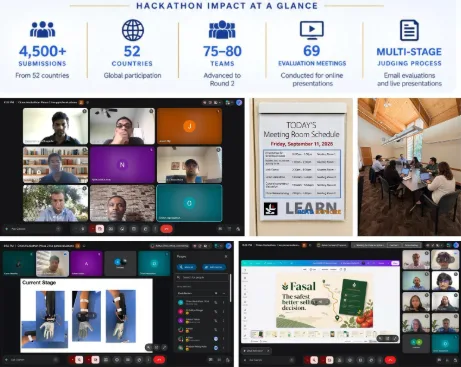
Operations research took center stage at the Orion Global Hackathon 2026, a month-long international competition that brought together students, researchers, engineers, analysts, and industry professionals to solve real-world operational challenges using optimization, analytics, and artificial intelligence. Held as a global virtual event from August 15 to September 15, 2026, the hackathon drew participants from 52 countries and established itself as one of the largest international competitions focused on Operations Research, AI, Optimization, and Analytics.
A Global Platform for Decision Science
The Orion Global Hackathon was built around a simple idea: give a worldwide community of problem solvers a set of real operational challenges and the freedom to tackle them with the full toolkit of modern decision science. Participants chose from a range of problem statements and developed solutions using techniques that included mathematical optimization, machine learning, data science, simulation, prescriptive analytics, and decision intelligence.
Rather than treating the event as an abstract coding contest, the organizers framed it as an opportunity to apply theoretical knowledge to practical industry problems. That focus on applied impact ran through every stage of the competition, from the problem statements themselves to the criteria judges used to evaluate the work.
The event was technically sponsored by the INFORMS Pacific Northwest Chapter, alongside Google Developer Groups, Whitworth, and the Google Developer Group at Eastern Washington University as organizing partners. UnsaidTalks joined as a corporate sponsor, contributing mentorship and industry connections that helped bridge the gap between academic study and professional practice.
Scale and Participation
The response to the hackathon reflected strong global interest in operations research and analytics. The competition received more than 4,500 submissions from 52 countries, spanning a diverse mix of students, academic researchers, and working professionals. From that pool, between 75 and 80 teams advanced to the second round, where they presented their solutions directly to the judging panel.
The numbers tell part of the story, but the range of participants tells the rest. Undergraduate and graduate students worked alongside experienced analysts and industry practitioners, creating a community where academic rigor met practical problem solving.
A Multi-Stage Judging Process
To keep the selection process fair and transparent at this scale, the organizers built a structured, multi-stage evaluation methodology:
- Initial screening – Every submission was first analyzed for relevance, originality, and technical merit.
- Detailed evaluation – Shortlisted projects were reviewed by expert judges against a comprehensive set of criteria.
- Online presentations – Selected teams presented their solutions in virtual meetings with the judging panel.
- Final review – The top teams presented to the jury, and after 69 detailed evaluation meetings the final winners were determined.
The judging combined email-based evaluations with live presentations, giving teams multiple ways to demonstrate the depth of their work. Judges were selected for their domain expertise, professional track record, prior evaluation experience, and demonstrated commitment to fairness and integrity.
Why It Matters
The Orion Global Hackathon 2026 stood out for its emphasis on solving problems that mirror the operational challenges organizations face every day. By centering the competition on operations research, optimization, and analytics, the event pushed participants to think beyond model accuracy and toward measurable, deployable outcomes.
For participants, the benefits went past the competition itself. The hackathon offered global recognition, industry mentorship, exposure to real-world challenges, and meaningful skill development, all within a collaborative international community.
“Your guidance and dedication have had a lasting impact on the participants and the broader innovation community,” the organizing team noted in its message to the judges who volunteered their time and expertise.
Building Toward a Connected Future
As the Orion Global Hackathon 2026 ended, the organizers pointed to a larger goal that extended well beyond the final scores: building a smarter, more sustainable, and more connected future through applied operations research and decision science. The event demonstrated how a global, virtual, and open competition can channel technical talent toward practical problems that matter.
The hackathon was led by the INFORMS Pacific Northwest Chapter leadership, including Chapter President Dharmateja Priyadarshi Uddandarao and Chapter Secretary Rohit Nagpal, working with organizing partners and sponsors across the operations research and technology community.
Disclaimer: This article is for informational purposes only and does not constitute an endorsement of the Orion Global Hackathon or its participants. Readers should independently verify event details, claims, and outcomes.