
Packing List: What to Carry for Gokyo vs. Ama Dablam
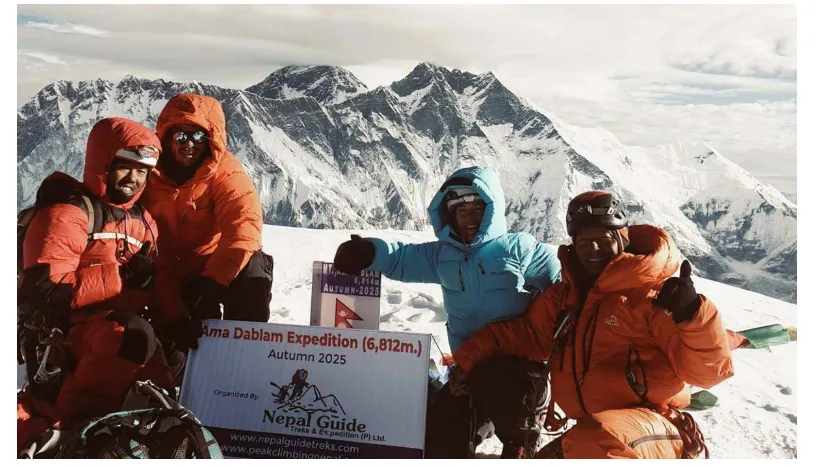
It is a form of art to pack for a Himalayan expedition. You are required to balance the minimalist needs of a hiker with the maximalist safety requirements of a high-altitude mountaineer.
For an itinerary that combines a trekking warm-up with a technical summit, you have to essentially pack for two varied sports. It is not possible to survive on a 6,000-meter vertical face with a gear that makes you comfortable walking around a turquoise lake. Conversely, with the gear required for the summit on along a dusty trail will leave you with miserable memories.
Here is the strategic breakdown of what to carry for the Gokyo Lake Trek versus the technical arsenal required for your Ama Dablam Expedition. If you want to know how to manage the logistics between the two, don’t forget to take a look.
The Strategy: The “Duffel Bag Shuffle”
You must understand the logistics before diving into the items. It is not recommended to carry everything at once.
- Bag A (The Trekking Kit): This goes with you to Gokyo. It contains lightweight, breathable layers.
- Bag B (The Climbing Kit): This is the heavy, technical gear. You hand this to your expedition operator in Lukla or Namche Bazaar. They transport it directly to Ama Dablam Base Camp by yak or porter. You do not see this bag again until you finish your trek and arrive at Base Camp.
Footwear
The biggest difference between the two phases is in your feet. What you wear builds a critical foundation for your journey. It is crucial to prioritise mobility for the Gokyo Lake Trek. Remember that you will be walking on dirt trails, loose scree, and occasional snow.
For that, you will need a sturdy hiking boot, like a B1 or B0-rated boot. Lowa Renegade or Salomon Quest will tick the boxes of being flexible, waterproof, and comfortable. Moreover, a pair of lightweight running shoes or down booties for wearing inside the teahouses in the evening will be a favourable choice.
For Ama Dablam, prioritise rigidity and warmth over flexibility. It is necessary to switch the insulation mode on here.
Having double boots is non-negotiable. Boots with a removable inner liner, like La Sportiva G2 SM or Scarpa Phantom 6000, are an ideal choice to make. Single boots are insufficient for the -30°C temperatures you will face on the summit push.
Furthermore, technical crampons are necessary to lock securely onto your double boots for vertical ice. While you might use microspikes on the trek, the climb requires 12-point steel mountaineering crampons, which are either semi-automatic or automatic.
The Layering System
Make breathability a focal point in the choice of clothes you make for Gokyo. Your goal is to avoid sweating, which chills you when you stop.
- Base Layers: Merino wool tops (150-200 weight).
- Soft Shell Pants: Stretchy, breathable trousers that block wind but allow movement.
- Mid-Layer: A fleece jacket or light synthetic hoodie (Patagonia Nano-Air style).
- Outer Shell: A lightweight Gore-Tex rain jacket. You will likely carry this in your daypack more than you wear it.
On the mountain of Ama Dablam, remember that you move slowly, and the wind chill is deadly. Warmth must be your priority.
- Down Suit (or Hybrid): Most climbers opt for a full one-piece down suit for summit day. Alternatively, massive down pants and a parka (800-fill power) work. This gear is too hot for trekking and stays in Bag B.
- Hard Shell Bibs: Rugged, waterproof pants that go over your base layers for the lower camps (Camp 1 and 2), where the down suit is too much, but trekking pants are too little.
Hand Systems
For early mornings in Gokyo, thin wool or synthetic gloves are recommended. With that, a standard ski glove while crossing the Cho La Pass is highly recommended. These gloves can also be a tremendous source of warmth during the windy afternoons at the lakes.
For Ama Dablam, your expedition mitts are the big guns. These are massive down-filled mitts like the Black Diamond Absolute Zero. Without them, you will be a victim of frostbite during long belays. However, it will be tricky to easily manipulate a carabiner with them on.
Regarding the technical climbing gloves, leather-palmed, insulated gloves are an ideal choice. It offers you hand skills for handling ropes and jumars while still providing warmth.
Hardware and “The Metal”
This category is mostly exclusive to the climbing phase. You are not recommended to carry this weight to Gokyo.
For Gokyo:
- Trekking Poles: Helps protect your knees on the long descents.
- Micro-spikes: Simple traction devices for icy patches near the lakes or the pass.
For Ama Dablam:
- The “Rack”: You will need a climbing harness, a climbing helmet, and an ascender (Jumar). Along with that, a descending device such as a Figure 8 or ATC Guide is definitely an essential. Do not forget to carry a safety lanyard (cow’s tail) and 2 locking plus 2 non-locking carabiners.
- Ice Axe: It is not a walking stick. You need a mountaineering axe with a straight shaft, sized correctly for the steep snow slopes leading to Camp 1.
Sleeping Systems
For Gokyo:
- 0°F / -18°C Sleeping Bag: Yes, you will sleep at the teahouses. However, their bedrooms are unheated. When the temperature drops below freezing, a sleeping bag will be of big help. Despite having a mattress and blankets being provided, without a solid 3-season bag, it is insufficient.
For Ama Dablam:
- -20°F / -30°C Sleeping Bag: At Camp 2, which is at an altitude of 5,900m, you will sleep on a narrow horizontal surface projecting from the cliff. This stretch is exposed to the jet stream, a narrow variable band of very strong predominantly westerly air currents encircling the globe several miles above the earth.
For that, make sure you have a high-quality expedition bag packed. Many climbers tend to bring two bags. A lighter one for Base Camp and the heavier one for High Camp. This will ease the process of carrying the bags up and down.
The Unspoken Essentials
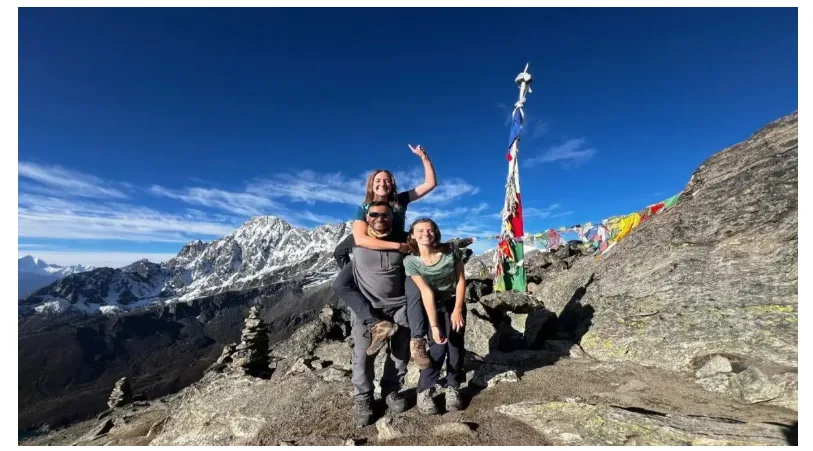
When you trek the Gokyo Valley, it is important you drink 3-4 litres a day. For purifying the water you will consume, chlorine tablets or a SteriPen are a must to carry. Also, charging electronics in lodges will cost you money. So, it is a convenient choice to not forget a power bank of 20,000mAh with you.
In Dablam, it is -25°C at 2:00 AM. Due to the strong blow of winds, it is jeopardising to leave the tent. Bring a wide-mouth Nalgene. This pee bottle will serve as a survival tool.
Regarding the hand warmers, carry at least 10 pairs. You can put them inside your mittens on summit night. Consequently, snacks like energy gels and shot blocks are not up for debate. At 6,00m, chewing a frozen Snickers bar is an impossible move. You need calories that can slide down easily.
Hence, compartmentalisation is the golden rule for your dual packing. For the Gokyo Lake Trek, do not carry more than what is necessary. Keep your backpack light and fast. Treat it as a trip where comfort is the primary objective. However, for the Ama Dablam Expedition, treat it like a military operation. Warmth and redundancy are what keep you alive here.
Segregating your gear into these two distinct kits, you are ensuring your safety, wellness and convenience. This way, an ice axe while admiring the lakes, and freezing in trekking boots while hanging off the Yellow Tower, won’t hinder your experience.