Paper Punch Cards Are Disappearing From Shop Counters. Here’s What’s Replacing Them
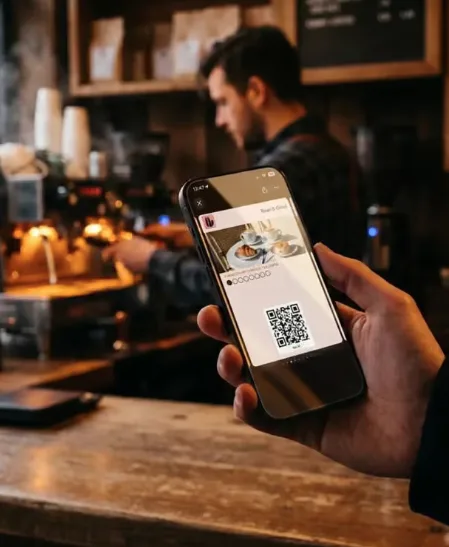
Walk into almost any independent coffee shop, bakery or barbershop in America and you will probably still find a stack of paper punch cards by the register. They are cheap, everyone understands them, and for decades they did the job. But the paper card has a quiet problem that small business owners know well: most of them never come back.
Customers lose them, run them through the wash in a jeans pocket, or leave them in a kitchen drawer. A card in a drawer does nothing for the shop that printed it. The owner has no idea who holds it, how often that person visits, or whether they stopped coming months ago. The program runs, but it runs blind.
The card moves to the phone
The replacement spreading fastest is not a new app that customers have to find in a store and install. It is the wallet already on their phone. Apple Wallet and Google Wallet were built for boarding passes and concert tickets, and they handle loyalty cards the same way. A customer scans a QR code at the counter, taps “Add”, and the card sits next to their payment cards. There is no password to remember.
For the shop, the change is bigger than it looks. A digital loyalty card updates itself. When staff add a stamp, the customer sees it on their phone a moment later. When a reward is ready, the card says so. And because the card lives where people keep the things they actually use, it is there the next time they pay.
What owners get that paper never gave them
- A list of real customers. Every card belongs to someone, so the owner can see how many regulars they have and how often they return.
- A way to reach them. A short message can go straight to the cards: a new seasonal menu, a quiet-Tuesday offer, a reminder that a free coffee is one visit away.
- Rewards that run on their own. Birthday treats, reminders before points expire, and a nudge to customers who have not visited in a while can be set up once and left to work.
- No reprinting. Changing the reward or the design no longer means throwing away a box of cards.
Why small businesses, and why now
Large chains have had loyalty apps for years, but they built them with development teams and marketing budgets. The corner café could never justify that. What changed is that the phone wallet did the hard part. The same card format airlines use is now available to a single-location bakery, and setting one up takes an afternoon rather than a project.
There is a cost argument too. Bringing a new customer through the door almost always costs more than bringing an existing one back. A loyalty program is one of the few marketing tools a small shop can run every single day without buying ads, and a card on the phone is simply more likely to be used than one in a drawer.
What to watch out for
Going digital does not fix a weak offer. A reward that takes twenty visits to earn will be ignored on a phone just as it was on paper. Owners who see results tend to keep the first reward within reach, often five to ten visits, and make sure staff mention the card at every sale, especially in the first few weeks.
It also pays to keep sign-up short. Asking for a name and an email is reasonable. Asking for a full postal address with a line forming behind the customer will cost sign-ups.
Finally, the program needs an owner. Someone should look at the numbers once a month: how many new cards, how many rewards redeemed, how many regulars have gone quiet. Those three figures say more about the health of a small shop than most reports it will ever buy.
The counter of the near future
The paper punch card will not vanish overnight, and some shops will keep theirs for years. But the direction is clear. Customers already carry their tickets, passes and payment cards on their phones, and a loyalty card is a natural addition. For small businesses, that shift turns a forgotten piece of cardboard into a direct line to their best customers.