Payroll Cash Flow Gap Solutions Should Start With the Cause
Disclosure: This article was published as part of a paid partnership with Zil Money. The author is an independent contributor.
The best payroll cash flow gap solutions depend on why the gap exists.
A business that is waiting three days for a large customer payment has a different problem from a company that runs short before every payroll cycle.
That is why the first step is not choosing a financing product. It is identifying whether the shortage is temporary, recurring, or caused by a deeper mismatch between incoming and outgoing cash.
Separate Profit From Available Cash
A company can be profitable and still have trouble funding payroll on a particular day.
Revenue recorded on an invoice is not the same as money available in the bank.
Start by reviewing accounts receivable, expected settlement dates, upcoming payroll, vendor bills, taxes, reserves, and other short-term obligations. This gives management a clearer picture of whether the business has a timing problem or a more serious working-capital problem.
If customer payments regularly arrive after payroll is due, the business may need to change invoicing, collection, reserves, or financing strategy.
If the problem is caused by one late invoice, a temporary funding option may be enough.
Review Existing Cash Sources First
Before creating a new obligation, businesses can review cash reserves, accelerated receivable collection, existing approved credit facilities, or other available business funding sources.
The objective should be to cover the payroll obligation without creating a more expensive problem after payroll is processed.
One possible option for eligible businesses is credit-card-funded payroll.
Zil Money currently supports payroll funding by business credit card. Its product documentation says employees can still be paid through supported ACH, wire, or check workflows while the card is used as the funding source.
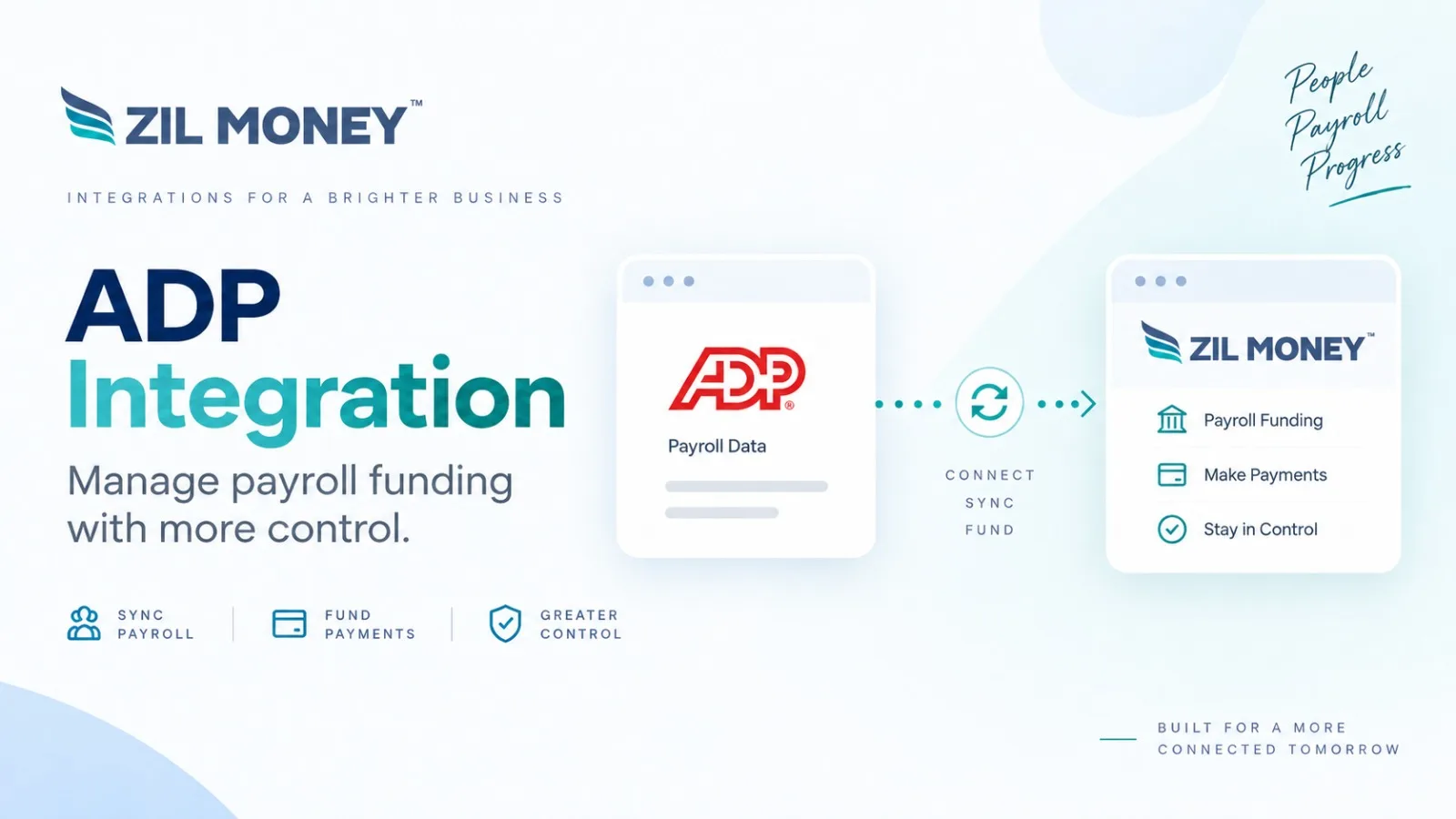
For ADP customers, Zil Money also provides an ADP integration with several processing options.
Calculate the Card-Funding Cost
As of September 2026, Zil Money’s current support documentation lists a standard 2.9% credit card processing fee. Current pricing should be checked before each decision because product fees and terms can change.
A supporting payroll document may also be required as part of the card-transaction review process.
The business should compare this cost with the operational reason for using the card.
If the payroll amount is available in the bank and keeping that cash provides little benefit, paying an additional processing fee may not make sense.
If a temporary receivable delay creates a short gap between payroll and incoming cash, management may reach a different conclusion.
Understand Card Timing Correctly
A credit card can change when the employer has to pay its card issuer, but there is no universal cash-flow period.
The CFPB explains that a grace period is the period between the end of a billing cycle and the payment due date. Credit-card companies do not have to offer a grace period on every account, and conditions can determine whether interest is charged.
A business should check the actual card agreement rather than using an assumed number of extra days.
Temporary Gap or Structural Problem?
This is the most important question.
A temporary gap may come from a delayed customer payment, seasonal timing, or an unusual expense.
A structural problem happens when the company routinely reaches payday without sufficient available cash.
In that case, continually adding short-term funding can mask the underlying problem.
Management may need to improve collections, revise customer payment terms, build reserves, adjust expenses, or discuss appropriate financing with financial professionals.
For an eligible business facing an occasional timing gap, card-funded payroll may be one tool to evaluate.
ADP users can review the current Zil Money ADP integration to understand the available workflow, costs, documentation requirements, and processing choices before deciding whether it fits a particular payroll cycle.
Zil Money, is a financial technology company, not a bank. Banking and money movement services are provided through partner financial institutions and licensed service providers. FDIC insurance coverage applies only to eligible deposit products and accounts, and is subject to applicable terms, conditions, limitations, and requirements. Additional information regarding partner institutions, products, and services is available in the applicable terms and agreements.