Pedestrian crossing button: how does it improve safety?
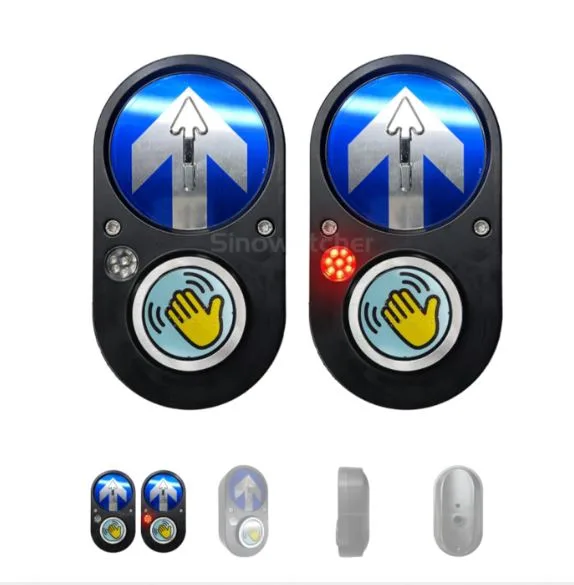
In congested junctions, even the most rudimentary pieces of infrastructure tend to bear the biggest burden. For instance, a tiny push-button at the top of a pole may seem trivial, but it controls everything from when vehicles stop and pedestrians move to the safety of the whole process at the junction. Indeed, the Pedestrian Crossing Button is more about managing conflicting points than anything else.
You see this clearly in cities where traffic volume has outgrown the original road design. Without some form of controlled request system, pedestrians either take unnecessary risks crossing mid-stream or wait longer than they should, leading to unpredictable behavior. That unpredictability is exactly what traffic engineers try to eliminate.
Pedestrian crossing button and how it improves safety
The basic mechanism of operation of the Pedestrian crossing button is based on the principle of the request signal. When you press the button, you request the right of way; a sequence of signals is activated that will allow people to walk on safely. The safety factor is not provided by pressing the button, but by changing the dynamics of crossing the pedestrian area.
According to what installers note, the practical value of the signal occurs only after the installation. The previously designed intersection becomes chaotic in operation. This does not always apply, since people do not depend on the traffic flow and wait for spaces between cars to cross. This happens mostly where there are pedestrians around educational institutions, transportation stations, and commercial zones. In this case, the signal becomes a way of organizing pedestrians.
The other key aspect here is psychological, since pedestrians tend to comply better with instructions if they realize that they are perceived by the system. If not, then there will be more people going across without following the instructions and the likelihood of accidents will grow. During the design of large-scale commercial facilities, including logistics areas, traffic control engineers consider signal delay variability. A crossing button allows adaptive control—shortening or extending green phases depending on demand. This tends to matter more than people initially expect because it reduces both vehicle idling and pedestrian frustration.
Engineering logic behind safer crossings
Modern pedestrian systems are no longer standalone components. They are integrated into broader traffic management frameworks that resemble energy distribution systems more than simple mechanical controls.
A useful analogy some consultants draw from infrastructure planning is energy balancing. Just as a grid-tied solar system manages inflow and outflow of electricity depending on demand, pedestrian signal systems balance vehicle throughput and foot traffic requests dynamically. In both cases, stability comes from responsive distribution rather than constant output.
In advanced intersections, signal controllers may even rely on backup infrastructure similar in concept to a battery backup system used in energy environments. Not because crossings consume high power, but because uptime is critical. If a signal fails, the risk profile changes immediately. Some municipalities have started integrating solar energy storage concepts into traffic lighting systems to maintain resilience during outages, particularly in regions where grid reliability is inconsistent.
It might sound unrelated, but the same principles behind solar power efficiency and energy management apply here: predictable response under variable demand. Whether it’s electricity flow or pedestrian flow, the system is only as safe as its ability to handle spikes without collapse.
Real-world installation considerations
The placement of the crossing signal in outdoor installation is more of a problem than a design concern. It will be too close to the curb to avoid being crushed by cyclists and skateboards. But if it’s placed too far away from the curb, pedestrians will not use it at all. Engineers tend to adjust placement after observing real usage patterns for a few weeks.
Another common mistake is assuming uniform compliance. In reality, intersections near transit hubs behave differently from those near residential zones. A commercial solar installation might be designed with predictable energy loads, but pedestrian flow is rarely that consistent. The weather, time of day, presence of adjacent construction, or even foot traffic during certain times of the year could lead to significant changes in use. Maintenance is also much more important than people realize; for instance, a malfunctions in one of the push buttons will do more than inconvenience people—it makes them not believe that the crossing is effective anymore.
Safety outcomes and operational trade-offs
The safety benefits are real, but not absolute. Pedestrian buttons don’t eliminate risk; they redistribute it. Vehicles may experience slightly longer waits during peak pedestrian periods, and in some designs, this can create queue spillback issues if not calibrated correctly.
From an energy management perspective, urban planners sometimes compare this balancing act to optimizing a renewable energy investment portfolio. You don’t maximize one variable at the expense of the system. On the other hand, you choose to tolerate minor inefficiencies in order to keep everything stable. A crossing designed for the pedestrian’s sake could slow down the flow of vehicles somewhat, but the compromise is that there would be less random crossings.
One fascinating development in recent years has been the use of both sensor systems and push buttons together in new systems. This system decreases dependency on human action while providing an alternative for people who cannot reach the push button.
Conclusion
The well-designed Pedestrian Crossing Button is not only an accessory for traffic but a coordinating factor for the movement of pedestrians and vehicles. It influences safety through its structure, predictability and ability to prevent dangerous movement patterns.
The fact is that in reality, the most effective applications of such a button take into consideration not only the technical aspect but also human behavior. Being a part of a larger traffic system, it decreases the risks of any accidents.
At the same time, when making decisions regarding installing such a button, the balance must be struck between such important aspects as response to pressing needs and optimization of the flow of vehicles, cost issues, etc.
Despite all the technical innovations that can accompany this product, its basic principles are quite simple.