Phytomem One Reviews: What the “Dual-Defense” Brain Supplement Doesn’t Tell You
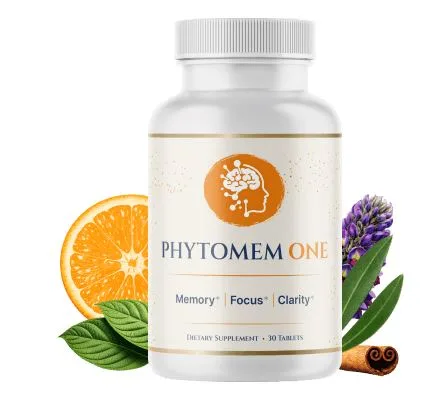
Phytomem One is a memory supplement sold exclusively through a single landing page and fulfilled via ClickBank, pitched around two big ideas: that unchecked microplastic buildup is silently damaging your brain (the “Plastic Stranglehold”), and that your brain has stopped using glucose properly, a condition the page calls “Type 3 Diabetes.” Before you add it to your cart, it’s worth separating what’s genuinely backed by research from what’s marketing gloss.
Before you buy Phytomem One, know what the science actually says — read the full breakdown above.
The Core Science Isn’t Made Up — But It’s Repackaged
Two scientific threads underpin this pitch, and both are real, if more tentative than the sales copy suggests.
Microplastics in the brain. A 2025 study in Nature Medicine from University of New Mexico researchers did find rising concentrations of microplastic particles in human brain tissue, with samples from 2024 showing meaningfully higher levels than samples from 2016, and dementia patients showing notably higher concentrations than others. That’s a legitimate and fairly recent finding. What the study did not establish is that microplastics cause memory loss, or that any supplement ingredient reverses or “neutralizes” plastic accumulation in neural tissue — researchers themselves describe this field as still in its infancy, with open questions about how the body handles these particles at all.
“Type 3 diabetes.” This term dates to 2005 research linking insulin resistance in the brain to Alzheimer’s pathology. It’s a real hypothesis with real researchers behind it — but it is explicitly not a recognized medical diagnosis. It isn’t endorsed by the American Diabetes Association or any major health body, and it describes a proposed mechanism, not a condition you can be screened for or definitively treat. A supplement page presenting it as an established, addressable diagnosis (“Addresses… Type 3 Diabetes”) is stretching a research hypothesis into a marketing hook.
In short: the two big scary concepts on this page are drawn from real science, but the leap from “researchers are studying this association” to “this pill treats it” is not supported by anything on the page itself — no clinical trial of the finished Phytomem One formula is cited anywhere.
The Ingredient List: Real Compounds, Overstated Claims
Phytomem One lists ten ingredients across three “systems.” Several are legitimate, studied nutraceuticals — the issue is less what’s in the bottle and more how their evidence is being applied.
- Saffron extract, berberine HCl, Ceylon cinnamon: All three have a real, if modest, evidence base — saffron for mood and mild cognitive symptoms, berberine and cinnamon for blood sugar and insulin sensitivity. These are reasonable ingredients for a metabolic-support formula.
- Fucoxanthin and fucoidan (sea kelp): Both are studied primarily for antioxidant, anti-inflammatory, and metabolic effects; the specific figures cited on the page (like a precise “40% reduction in oxidative stress”) aren’t attributed to any named, checkable study.
- Morosil (Sicilian red orange extract): This is the page’s “hero ingredient,” and it’s a real, patented, clinically studied compound — two randomized, double-blind, placebo-controlled clinical trials support it, both showing weight loss and reductions in BMI, waist, and hip circumference. That’s a genuine credential. But Morosil is marketed and researched as a weight-management ingredient — its clinical track record is about body fat and BMI, not memory, recall, or cognition. Building a “Neural Amplifier System” around a weight-loss ingredient, without a single brain-specific trial cited, is a significant mismatch between the evidence and the claim.
- Xylitol: Included as “clean fuel,” it’s simply a sugar alcohol commonly used as a sweetener — a filler-level ingredient dressed up as a functional one.
None of this makes the ingredients dangerous or worthless. It means the formula is a plausible, generic “brain and metabolic health” stack — similar to dozens of others — wrapped in language implying it’s a targeted, clinically-proven solution to two specific, headline-grabbing problems.
Pricing & Bonus Package
Phytomem One is sold in three tiers, all with the same “$99 per bottle” reference price crossed out:
| Package | Bottles | Price/Bottle | Total | Shipping |
| Starter | 2 | $79 | $158 | + small fee |
| Advanced | 3 | $59 | $177 | Free (US) |
| Ultimate | 6 | $49 | $294 | Free (US) |
A few things worth noting about this structure:
- The “$99” anchor price isn’t a real prior price you can verify anywhere — it’s a common direct-response tactic to make the discounted tiers look like bigger savings than they may actually represent.
- The per-bottle cost drops the more you buy, which nudges first-time buyers toward the 3- or 6-bottle option before they know if the product works for them.
- Every tier includes the same three “free” bonus ebooks (nominally valued at $97, $67, and $50 — over $200 combined): The Memory Shield Diet, The 5-Minute Brain Reboot, and The Caregiver’s Survival Guide. Since they’re digital and bundled at every tier, their real marginal cost to the seller is close to zero — the “$200+ value” framing is worth taking with a grain of salt.
- There’s a 60-day money-back guarantee, which is a reasonable window to test whether it works for you, provided you follow the stated refund process (email support and request one).
Pros
- Contains generally recognized, well-tolerated ingredients (saffron, berberine, cinnamon, sea kelp extracts) rather than obscure or unregulated compounds
- Morosil, the flagship ingredient, does have real double-blind, placebo-controlled clinical trials behind it — just not for memory
- No subscription or auto-renewal trap; explicitly a one-time charge
- 60-day refund window gives you a real way to back out if it doesn’t help
- Simple dosing (one capsule daily with food), no complicated protocol
Cons
- No clinical trial of the finished Phytomem One formula itself — all evidence is ingredient-level, and some is for effects (like weight management) unrelated to the memory claims being made
- “Type 3 Diabetes” is presented as an addressable condition, but it’s an informal research term, not a recognized diagnosis
- Microplastic-brain research is real but early-stage; there’s no evidence any ingredient here clears plastic from neural tissue
- Testimonials use changed names, and promotional visuals may not depict real customers
The Bottom Line
Phytomem One isn’t a scam in the sense of containing nothing — it’s built from real, generally safe nutraceutical ingredients, including one (Morosil) with genuine clinical backing, albeit for weight management rather than memory. But the page leans heavily on two real, still-emerging areas of neuroscience research — brain microplastics and insulin resistance in Alzheimer’s — and presents them as settled problems this specific formula was designed to solve, which the evidence doesn’t support.
If you’re specifically interested in the underlying science, cognition-supporting ingredients like saffron, berberine, and cinnamon are available individually or in other formulas, often at lower cost and with clearer per-ingredient dosing than an unlisted proprietary blend. And if you do consider trying Phytomem One, treat the 60-day guarantee as your actual safety net — not the marketing claims — and talk to a doctor first if you’re on medication for blood sugar or take other supplements.
Don’t let bold claims decide for you — see exactly which Phytomem One claims hold up (and which don’t) before you spend a dime.