Planning an African Big Game Hunting Safari: A Practical Guide for International Hunters
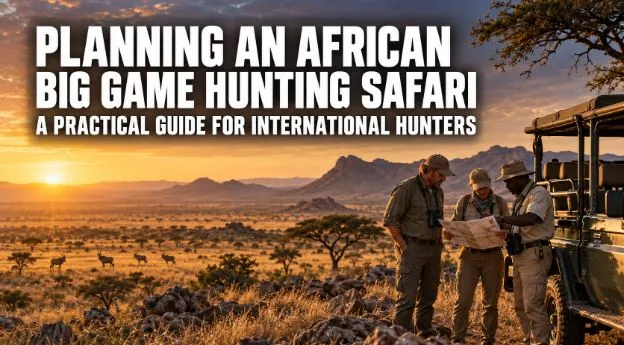
Africa has held a place in hunting history. Its landscapes, varied wildlife, and established safari traditions offer an experience unlike hunting anywhere else. Yet a journey requires far more than selecting a species and booking a flight. International hunters must compare destinations, understand regulations, evaluate outfitters, establish realistic budgets, and prepare for unfamiliar terrain. Careful planning supports an ethical, rewarding adventure.
Define the Experience Before Choosing a Destination
The best destination depends on what the hunter wants from the trip. Some people are motivated by a particular species, while others value remote wilderness, challenging tracking, comfortable lodging, or opportunities for family members to join. Defining those priorities early prevents attractive marketing from steering the decision in the wrong direction.
A hunter planning a first African big game safari may prefer an area with dependable game populations, accessible terrain, and an outfitter experienced with international guests. A returning visitor may seek a more demanding wilderness hunt, a less common species, or a destination with a very different ecosystem. Physical condition matters as well. A safari involving long walks through steep country demands different preparation from one conducted mainly across open plains.
Compare Africa’s Hunting Regions Carefully
There is no single setting that represents big game hunting in Africa. Southern African destinations are often popular with newcomers because they offer established infrastructure, varied plains game, and a wide range of safari formats. Other regions may provide larger wilderness concessions, specialized species, or a more isolated experience, but logistics and costs can be more demanding.
Countries also differ in hunting seasons, firearm procedures, trophy export rules, conservation systems, and species availability. Even within one country, two hunting areas can produce very different experiences. Rainfall, vegetation, property size, management practices, and hunting pressure all influence game quality and visibility.
Research should therefore move beyond country names. Ask for the exact location and size of the hunting area, whether it is fenced or free range, which species are naturally present, and how wildlife populations are monitored. Recent photographs, references from previous clients, and clear descriptions of the terrain are more useful than broad claims about a destination.
Select Species and Set Realistic Expectations
Species selection affects the location, duration, difficulty, equipment, and overall cost of a big game hunt. Plains game safaris can combine several species, while hunts involving dangerous game usually require specialized professional hunters, specific permits, and a more focused itinerary.
Ethical operators will discuss realistic opportunities rather than guarantee outcomes. Wildlife movement, weather, tracking conditions, and individual decision-making remain unpredictable. The purpose of guided Big Game Hunting is not merely to collect an animal, but to participate in a carefully managed field experience in which patience and judgment matter.
Hunters should clarify whether trophy standards, age criteria, or management objectives apply. They should also understand how the outfitter responds when the desired animal is not encountered. Honest conversations before booking reduce pressure in the field and help ensure that harvesting decisions remain responsible.
Evaluate Outfitters and Professional Hunters
The quality of an outfitter can shape every part of a big game hunting experience. Licensing is the minimum requirement, not the complete measure of professionalism. Reputation, communication, safety procedures, local knowledge, staff treatment, and conservation conduct are equally important.
Ask prospective outfitters several practical questions:
- Who will serve as the professional hunter, and what is that person’s experience?
- Does the outfitter operate the area directly or work through another concession holder?
- What is included in the daily rate and trophy fees?
- How are wounded animals followed up?
- What medical, evacuation, and emergency communication arrangements are available?
- Can recent clients with similar hunting goals provide references?
Independent comparison can be valuable when options appear similar. Game Hunting Safaris helps international clients assess destinations, outfitters, hunting areas, available species, and safari styles instead of treating every package as interchangeable. Whatever booking route is used, hunters should insist on written terms and direct answers before paying a deposit.
Understand Prices and Package Details
The advertised price rarely represents the complete big game hunting Africa cost. A realistic budget may include daily rates, trophy fees, licenses, government levies, firearm permits, airport transfers, charter flights, accommodation before and after the safari, gratuities, taxidermy preparation, dipping and packing, shipping, insurance, and companion charges.
Big game hunting packages should clearly state what is included and excluded. Hunters must determine whether prices are fixed or subject to currency changes, what happens if a species is unavailable, and whether a wounded animal incurs the full trophy fee. Cancellation and rescheduling policies deserve careful attention because international travel can be disrupted.
Prepare Documents, Firearms, and Equipment
International paperwork should begin well before departure. Passport validity, visas, temporary firearm import permits, airline rules, ammunition limits, transit-country requirements, and invitation letters may all apply. Regulations change, so hunters should verify current requirements with relevant authorities, airlines, and their outfitter instead of relying on an old checklist.
Some visitors rent a suitable rifle locally to simplify travel. Those bringing their own firearm should use a secure approved case and keep serial numbers and supporting documents readily accessible. Ammunition must comply with both airline and destination rules.
Equipment choices should reflect the terrain and season. Comfortable broken-in boots, neutral clothing, sun protection, hearing protection, binoculars, a compact medical kit, and reliable travel insurance are common essentials. Avoid overpacking. Laundry is often available, and familiar, tested gear is usually more useful than excessive new equipment.
Train for Ethical Shots and Field Conditions
Preparation directly influences safety and animal welfare. Hunters should practice from realistic field positions rather than relying only on a bench. Shooting sticks are widely used on African big game hunting trips, so practicing with them is particularly helpful. Training should include controlled breathing, quick target acquisition, range awareness, and disciplined decisions about when not to shoot.
Physical preparation also matters. Regular walking, mobility work, and moderate strength training can make long days more enjoyable. Hunters should tell the professional hunter honestly about medical conditions and physical limitations. This allows daily plans to be adjusted without compromising safety.
Examine Conservation and Community Practices
Responsible big game safaris operate within regulated wildlife management systems and should demonstrate how hunting supports habitat, monitoring, anti-poaching work, or local livelihoods. The exact model differs among countries and properties, which makes specific questions essential.
Ask how quotas are established, how population data are collected, whether local communities receive employment or other benefits, and how meat is distributed. Look for transparent answers supported by observable practices. Avoid operators who dismiss conservation questions or encourage unlawful shortcuts.
Respect extends beyond wildlife. Safari staff, trackers, skinners, camp teams, landowners, and nearby communities contribute to the experience. Learning local customs, asking before photographing people, and treating every team member professionally are basic responsibilities of a visiting hunter.
Make the Final Choice with Confidence
Choosing among big game hunting safaris becomes easier when decisions are based on evidence rather than excitement alone. A suitable safari aligns the destination, species, terrain, duration, outfitter, and budget with the hunter’s actual goals. Clear contracts and realistic expectations create a stronger foundation than guarantees or unusually low prices.
Before booking, review the complete itinerary, payment schedule, cancellation terms, trophy process, travel requirements, and emergency plan. Speak directly with the professional hunter whenever possible and contact recent references. For a focused overview of destinations and safari considerations, explore Big Game Hunting before comparing individual offers.
Careful preparation does not remove the unpredictability that makes hunting meaningful. It allows the hunter to meet that uncertainty with sound judgment, appropriate skills, and respect for the landscape. That is what transforms a big game safari from a purchased package into a memorable African hunting adventure.