PodBloom Produce Cleaner Review: What The Science Really Says
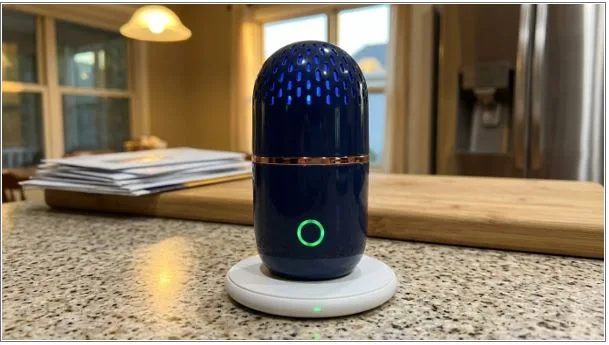
Obviously, “Produce cleaner” has become the umbrella term for a growing category of kitchen gadgets that promise to go further than a sink and a stream of tap water. The pitch, across dozens of similar products, is consistent: rinsing produce moves water over its surface, but it doesn’t chemically break down pesticide residue, wax coatings, or embedded field grime the way a purpose-built device supposedly can.
Depending on the product, that extra step is achieved through ultrasonic vibration, ozone infusion, or in the category PodBloom belongs to: electrolysis, which uses an electrical current to split water into more reactive compounds capable of loosening what a plain rinse leaves behind.
PodBloom Produce Cleaner is one of the more heavily marketed entrants in that space: a small, rechargeable pod that’s dropped into a bowl of water alongside fruits or vegetables, where it runs an automatic electrolysis cycle for roughly ten minutes. It’s sold primarily through direct-to-consumer sales pages and a wide network of affiliate blogs, social pages, and “review” sites, many of which repeat the same manufacturer claims almost word for word, often illustrated with dramatic before-and-after photos of murky wash water.
This review takes a different approach. Rather than repeating PodBloom’s marketing copy, it sets out to separate manufacturer claims from what can actually be established through independent, verifiable evidence including peer-reviewed food science research on electrolyzed water, publicly available information about the company and product itself, and a clear-eyed look at where the marketing outpaces what’s currently provable.
Where a claim can’t be independently confirmed, this review says so directly instead of presenting it as settled fact.
Podbloom Produce Cleaner: Quick Verdict
PodBloom is a cordless, IPX7-rated electrolysis pod marketed as a hands-free way to clean fruits and vegetables in about ten minutes, using only tap water and an electrical current: no soap, sprays, or refill cartridges. The underlying technology, electrolyzed water, is real and has genuine peer-reviewed support for reducing certain pesticide residues and surface contaminants on produce, more effectively than a plain water rinse in controlled lab settings.
Apparently, Where the picture gets murkier is the specific product: PodBloom appears to be one of several near-identically designed “produce purifier” pods sold under different brand names by unidentified manufacturers, distributed almost entirely through affiliate marketing channels, with no independent lab testing of the device itself that could be located. The gap between the general science and the specific product’s claims is the central thread running through this review.
Pros
Uses only water, with no soap, sprays, or refill cartridges required
runs a largely hands-free cycle lasting about ten minutes
Is cordless and wirelessly rechargeable with a reported IPX7 submersible design
It is built on electrolyzed water, a legitimate and well-studied food-science technique
It carries a low ongoing cost compared to producing washes, sprays, or single-use wipes.
Cons
No identifiable manufacturer, corporate address, or transparent company information could be found
The device seems to be sold almost exclusively through affiliate and direct-response marketing pages rather than established retailer
It appears to be a rebrand of a generic device sold under multiple other names; its marketing claims are stated more broadly and confidently than the underlying independent research supports
Its positive “reviews” circulated by promotional sites are difficult to verify as coming from genuine, independent customers.
Preliminary Verdict
PodBloom occupies an unusual middle ground: the science behind it is real, but the specific product built on top of that science is largely unverified. Electrolyzed water has genuine, peer-reviewed backing for reducing certain pesticide residues and surface contaminants under controlled laboratory conditions, which gives the category more credibility than most as-seen-on-social-media kitchen gadgets. But the absence of an identifiable manufacturer, independent testing, or transparent company information for PodBloom specifically means buyers are being asked to extend a considerable amount of trust based on marketing copy alone.
A reasonable working verdict, explored in more depth throughout this review, is that PodBloom is plausibly a modest upgrade over rinsing, not a scientifically confirmed one for this exact device and that its value depends heavily on how much weight a buyer puts on convenience versus verified performance.
See PuriBreeze Produce Cleaner, another device doing the same work as Podbloom
What Is PodBloom Produce Cleaner?
PodBloom Produce Cleaner is a small, capsule-shaped, battery-powered device marketed as a chemical-free way to clean fruits and vegetables at home, using electrolysis rather than soap, sprays, or scrubbing. According to its marketing materials, it’s designed to reduce pesticide residue, surface wax, and general grime on produce more effectively than tap-water rinsing alone.
Physically, PodBloom is a small, sealed, waterproof capsule, roughly palm-sized in most listings containing a pair of metal electrodes (described in marketing materials as titanium), a rechargeable battery, and a single-button control. It has no blades, brushes, spinning parts, or user-replaceable components. The entire device is designed to be submerged directly in a bowl of water alongside the produce being cleaned.
Whether it actually removes pesticides and to what degree is a more nuanced question than the marketing suggests, and one this review addresses in detail in its own dedicated section below.
What It Is Designed to Do
Run an automated electrolysis cycle when submerged in a bowl of water with produce inside
Generate electrolyzed water in place, using nothing but tap water and an electrical current
Loosen and lift surface residue, wax coatings, and dirt without added soap, chemicals, or manual scrubbing, Operate hands-free for the duration of a single automatic cycle
How To Use PodBloom
- Fill a bowl or basin with plain tap water
- Submerge the fruit or vegetables to be cleaned
- Drop the pod into the water and press the single button to begin the cycle
- Wait for the automatic cycle to finish, then remove the produce and rinse if desired
- Wipe or rinse the pod itself and return it to its charging base
Rechargeable Design (Wireless)
It is cordless and, according to product listings, charges on a small wireless charging base rather than through a plug-in port on the unit itself. This is consistent with keeping the pod fully sealed for waterproofing purposes, since a physical charging port would otherwise need its own protective cover.
Approximate Cleaning Cycle
Marketing materials across listings consistently describe a single automatic cycle lasting approximately ten minutes, after which the device shuts off on its own. No manual timing or supervision is required once the cycle has started.
Intended Produce. Product listings describe the device as suitable for a broad range of fruits and vegetables, with some versions of the marketing extending this to leafy greens, rice, grains, and even meat or seafood. Delicate produce such as berries is specifically highlighted as a use case in most listings, though no independent testing focused specifically on delicate produce could be located.
What It Doesn’t Claim to Replace
Even PodBloom’s own product listings include a notable caveat: the device is described as assisting with the removal of surface impurities that aren’t always visible to the eye, and produce that is visibly dirty or soiled is still recommended to be rinsed first. In other words, PodBloom does not claim to replace basic pre-rinsing for heavily soiled produce. It also does not claim, in any listing reviewed, to replace essential food safety practices such as cooking meat and seafood to safe internal temperatures, or heeding official recalls and safety advisories and buyers shouldn’t treat it as a substitute for either.
Order PodBloom Produce Cleaner From The Official Website Today
How Does PodBloom Produce Cleaner Work?
Electrolysis
Podbloom Produce Cleaner operates on the principle of electrolysis: passing a low-voltage electrical current through water via two submerged electrodes. This splits water molecules and, depending on the electrode material and any minerals or salts already dissolved in the water, generates reactive species that marketing materials commonly describe as hydroxyl ions, or “OH-ions.” In food science literature, this broad category of technique is generally referred to as electrolyzed water, and it has been studied in various forms including electrolyzed oxidizing water and electrolyzed reduced water for decades as a food-processing and sanitation tool.
What Happens in the Water
During a typical cycle, the water in the bowl often becomes visibly cloudy or takes on a murky, discolored tint. PodBloom’s marketing presents this visual change as proof that contaminants are being actively lifted from the produce’s surface. That’s partially accurate agitation and any reactive electrochemical process will dislodge surface dirt, wax, and residue into the surrounding water but a color change by itself isn’t a scientific measurement of what was removed, how much, or whether it was pesticide residue specifically versus ordinary plant tannins, dirt, or natural surface compounds that would come off in any prolonged soak, electrolysis or not. Visible murkiness is suggestive of something happening; it isn’t proof of what that something is.
What the Manufacturer Claims
PodBloom’s marketing describes the device as breaking down pesticide residue, wax coatings, and dirt using nothing but water and electricity, and positions it as a more effective, chemical-free alternative to tap-water rinsing, produce washes, or vinegar soaks. Several listings and affiliate pages describe the device as “purifying” produce without quantifying by how much, against which specific pesticides, or under what testing conditions those claims were established a pattern common across this entire product category, not unique to PodBloom.
What Has Actually Been Independently Demonstrated
Independent, peer-reviewed research on electrolyzed water as a general technique does exist and is a genuinely relevant background but it comes with an important caveat that marketing materials for this product category tend to omit. Published studies, including work by Qi, Huang, and Hung in the journal Food Chemistry, tested electrolyzed oxidizing water generated from a dilute salt (sodium chloride) solution under tightly controlled conditions, specifying exact available chlorine content and precise treatment durations, and measured pesticide reduction on specific crops such as spinach, snap beans, and grapes against specific pesticides including diazinon, cyprodinil, and phosmet.
No independently published study of the PodBloom device itself, its electrode output, its performance using plain tap water rather than a salt solution, or its results at the specific ten-minute cycle it runs
could be located. That means the peer-reviewed literature supports electrolyzed water as a legitimate, effective technique in principle. It does not confirm that this specific consumer pod, used exactly as directed with ordinary tap water, achieves results comparable to the controlled lab conditions described in those studies.
What Are Customers Saying?
Positive commentary about PodBloom circulates primarily through affiliate marketing blogs, dedicated social media pages, and “review” sites that are themselves part of the same promotional network many hosted on free site-building platforms such as Jimdo, Google Sites, Medium, and Gamma, which appear to have been created specifically to promote the product rather than functioning as independent consumer review platforms.
Some of these sites explicitly claim to have gathered “genuine reviews” from sources such as the Better Business Bureau, Amazon, Walmart, Reddit, and Quora; cross-referencing those claims did not turn up an independently verifiable, substantial body of reviews specific to the PodBloom brand name on those platforms at the time of writing.
This doesn’t necessarily mean no one has purchased or used the product; plenty of small direct-to-consumer brands exist with limited public review footprints. But it does mean that claims of widespread positive customer sentiment currently rest primarily on the marketing network’s own say-so rather than on a verifiable, independent review base. Readers encountering glowing testimonials on affiliate sites including ones formatted to look like personal blog posts or comment threads should weigh them with that context in mind, and treat unverifiable personal narratives as marketing content rather than independent evidence.
What Does PodBloom Produce Cleaner Remove?
Across its product listings and affiliate marketing, PodBloom is described as removing pesticide residue, surface wax, and general dirt from produce, with some versions of the marketing extending this to reducing bacteria on the surface of fruits and vegetables. These claims are almost always presented as general statements “removes pesticides,” “breaks down wax” rather than tied to specific percentages, specific pesticide types, or any disclosed testing methodology.
What Independent Evidence Says
Independent research on electrolyzed water paints a more precise and considerably more variable picture than a blanket claim of “removes pesticides” suggests. In controlled laboratory studies, electrolyzed oxidizing water has been shown to remove roughly 30% to 86% of specific pesticide residues, with the exact figure depending heavily on the pesticide in question, the crop it was tested on, the available chlorine content of the electrolyzed water, and the length of treatment. For example, published results have shown phosmet reduction by around 85.7% on spinach but only around 49.4% on grapes under otherwise identical treatment conditions; diazinon reductions in the same body of research ranged from roughly 37% to 66% depending on which produce was tested.
Other studies examining different pesticide-and-produce combinations have reported reductions exceeding 90% in some cases, again under carefully controlled lab conditions rather than home use.
The consistent theme across this research is variability, not a single reliable number. Results differ substantially based on the specific pesticide’s chemistry, how strongly it binds to the produce’s surface (versus being absorbed beneath it), the treatment duration, and critically the available chlorine content of the electrolyzed water, a parameter these lab studies controlled with precision and that PodBloom’s marketing materials do not report or specify for the consumer device.
What Consumers Should Realistically Expect
Based on the available evidence, a fair expectation is that electrolyzed water, done well, can meaningfully reduce though not eliminate certain pesticide residues and surface contaminants on produce, and can plausibly outperform a plain water rinse to some degree. It is not reasonable, based on current evidence, to expect complete pesticide removal, removal of pesticides that have been absorbed into the produce rather than sitting on its surface, or performance matching the higher end of published lab studies, since those studies used controlled salt-solution electrolysis with specified chlorine levels rather than a sealed consumer pod run in plain tap water. Anyone with specific health concerns about pesticide exposure should treat a device in this category as a possible incremental improvement to an existing food-safety routine, not as a standalone guarantee of pesticide-free produce.
How PodBloom Is Supposed to Work in Practice
Based on the manufacturer’s instructions, a typical cycle would begin with filling a bowl or basin with ordinary tap water, no measuring, no additives, no pre-treatment. Produce with any visible dirt or soil would be given a quick rinse first, per PodBloom’s own guidance, since the device is positioned as removing residue that isn’t necessarily visible rather than caked-on debris. The produce would then go into the bowl, followed by the pod itself, and a single button press would start the roughly ten-minute automatic cycle.
During that cycle, the manufacturer’s materials describe the water gradually taking on a cloudier or more discolored appearance the visual cue the marketing leans on heavily. Because that discoloration can reflect a mix of genuine surface residue, natural plant tannins, and ordinary loosened dirt, it would be reasonable to treat it as a sign that something is being lifted from the produce without treating it as proof of exactly what, or how much of it was pesticide residue specifically, as covered in the sections above.
Once the cycle ends, the device is designed to shut off automatically, at which point the produce would be removed and rinsed again before storage or use. The pod itself, per its IPX7 submersible rating, would be rinsed or wiped down and returned to its wireless charging base a routine that, if the manufacturer’s claims about hands-free operation hold up in practice, would add minimal extra time to an existing produce-washing habit.
What the Product’s Marketing Claims Customers Experience
PodBloom’s own product pages feature customer testimonials describing the water turning cloudy or discolored after use, produce such as strawberries reportedly staying fresh longer, and some users saying they replaced a previous vinegar-soaking routine with the device. These accounts are attributed to named individuals on the seller’s own marketing pages. This review was not able to independently verify that these testimonials come from genuine, unaffiliated customers, so they’re presented here as the seller’s stated claims rather than as confirmed, independent evidence the same caution this review applies to every other unverified marketing claim about the product.
Whether the device delivers on freshness claims
Such as vegetables or fruits lasting longer before spoiling is not something that can be assessed without controlled, side-by-side testing over time, and no independent testing of that kind for this device could be located.
PodBloom Produce Cleaner: What I Didn’t Love
To keep this review balanced, a few practical considerations are worth flagging before buying, beyond the transparency and evidence gaps already covered above.
Expectations matter most. PodBloom is marketed as a reusable, water-powered pod designed to help lift residue and extend freshness, but as this review has covered in detail, individual results likely vary, and the testimonials featured on the product’s own page shouldn’t be read as a guarantee that everyone will see the same outcome.
It’s also an added step, not a replacement for one you may already trust. If you’re already comfortable with a thorough rinse or an existing produce-washing habit, an additional device may not feel necessary, and nothing in the available evidence establishes that skipping it in favor of careful rinsing leaves you meaningfully worse off.
The bundle pricing structure is also worth understanding before ordering. Like many direct-to-consumer gadgets in this category, PodBloom is typically sold in multi-unit packages, with a lower price per unit for larger bundles. That structure rewards buyers who are already confident they want multiple units for a household with several people preparing produce, or for buying one as a gift but it may not suit someone who only wants to try a single unit first without committing to a larger order at checkout.
Finally, this remains a personal-preference product. Some buyers will like the reusable, water-powered concept; others will simply prefer methods they already know and trust, and there’s no independent evidence establishing that PodBloom is a categorical upgrade over those methods rather than a different way of achieving a broadly similar result.
Pros
No ongoing consumable costs no soap, cartridges, or refill packs required for operation
Simple, largely hands-free operation once the cycle is started
Cordless and reportedly fully submersible (IPX7), simplifying cleanup of the device itself
Grounded in a real, peer-reviewed food-science technique electrolyzed water rather than a pseudoscientific mechanism
Plausibly offers some incremental benefit over a plain rinse for certain types of surface residue
Low physical effort compared to manual scrubbing or multi-step produce wash routines
Cons
No identifiable manufacturer, company address, or corporate transparency could be found
No independent lab testing of the specific device as opposed to electrolyzed water in general was located
Marketing claims (“removes pesticides,” “purifies”) are stated more broadly and confidently than the underlying research supports
Sold almost exclusively through affiliate and direct-response marketing sites rather than a clear, established brand storefront
Appears to be one of several near-identically designed and marketed devices sold under different brand names by unclear manufacturers
“Customer reviews” circulated in marketing content are difficult to verify as genuine, independent feedback
Order PodBloom Produce Cleaner From The Official Website Today
Is PodBloom Produce Cleaner Safe to Use?
Based on how the device is described across listings, the core mechanism low-voltage electrolysis of water using metal electrodes is not inherently hazardous when used as directed, and is the same general principle used at a larger, industrial scale in commercial food-processing equipment that generates electrolyzed water to produce sanitation. That said, several caveats apply, largely because independent verification of this specific product’s manufacturing and testing is limited.
Food Contact Considerations
Electrolyzed water itself, when generated under controlled industrial conditions, has been studied extensively and is considered food-safe in commercial applications. Whether this specific device’s electrode materials and manufacturing process meet food-contact safety standards applicable in your country could not be independently confirmed from available listings, which do not consistently disclose testing certifications or regulatory approvals.
Manufacturer’s Instructions
As with any electrical device used around water and food, following the specific instructions provided with the unit including recommended water levels, cycle limits, and any stated maximum submersion time matters more than assuming general category norms apply, since the exact specifications of this device haven’t been independently verified.
Charging
The wireless charging base should be kept dry and positioned away from the bowl of water in active use, both to avoid electrical hazards and to prevent water damage to the charging components themselves.
Waterproofing
Product listings describe an IPX7 rating, which where accurately applied indicates a device can withstand temporary full submersion in water. IPX ratings claimed in marketing copy for unbranded or white-label devices aren’t always independently verified by a certified testing lab, so this rating should be treated as a manufacturer claim rather than confirmed fact.
Produce Handling
Pre-rinsing visibly soiled produce before running it through the device is advised by PodBloom’s own product listings, since the device is positioned as targeting residue that isn’t necessarily visible to the eye rather than caked-on dirt or soil.
Storage
Keeping the unit dry when it’s off its charging base, and storing it out of reach of young children given that it is a small electrical device, are reasonable general precautions consistent with handling any similar rechargeable kitchen electronics.
Electrical Device Precautions
As with any rechargeable electronic device, avoid puncturing, disassembling, or exposing the internal battery to heat, and discontinue use if the housing shows signs of cracking or damage that could compromise its waterproofing.
Is PodBloom a Scam? What We Found
“Scam” is a strong word, and it’s worth applying carefully rather than reflexively. Based on available evidence, here’s how PodBloom holds up against a set of specific, checkable questions:
Does the product exist? Yes. Physical listings, product photography, and specifications appear consistently across multiple marketplaces and sales pages, indicating this is a real, purchasable object rather than a purely fictitious offer.
Is there a functioning sales channel? Yes. The product is available through direct-to-consumer sales pages and third-party marketplace listings, suggesting orders can be placed and, presumably, fulfilled.
What does it actually claim? It claims to remove pesticide residue, wax, and dirt from produce using electrolyzed water generated from plain tap water, without chemicals, over a roughly ten-minute automatic cycle.
Are claims supported? Partially. The general mechanism (electrolyzed water) is supported by independent, peer-reviewed research. The specific product’s exact performance is not independently supported, since no lab testing of this device itself could be located.
Is there a return policy? Product listing references a money-back guarantee window, though specific terms, conditions, and enforcement vary by seller and are not consistently verifiable across every sales channel offering the product.
Is company information available? Limited. No clearly identifiable manufacturer, corporate registration, or physical company address could be located in connection with the PodBloom brand name specifically.
Can claims be independently verified? Only partially. The underlying science can be verified through independent peer-reviewed research; the device’s specific performance, safety certifications, and manufacturing claims cannot currently be independently verified.
Taken together, this doesn’t point to an outright scam in the sense of a nonexistent product taking money with no fulfillment but it does point to a product being sold with more confidence and specificity than the available transparency and independent verification currently support. That distinction matters for setting realistic expectations.
Who Should Consider It and Who Shouldn’t
Someone who already rinses produce as a matter of routine and is looking for a low-effort way to potentially reduce surface residue further without relying on it as their sole safeguard against pesticide exposure is the most reasonable buyer for this category of device. It may suit households that value convenience and are comfortable making a purchase decision based on plausible-but-unverified marketing claims, provided they go in with realistic expectations.
Someone specifically looking for a scientifically verified, independently lab-certified solution, or who wants a transparent manufacturer with clear support and return infrastructure, may be better served either waiting for a more established, independently tested brand to emerge in this category, or relying on well-documented, long-standing alternatives such as a dedicated produce brush and thorough rinse, or a brief diluted-vinegar or baking-soda soak both of which have their own separate, more extensively studied research base.
Does PodBloom Actually Clean Fruits and Vegetables?
In the narrow sense of dislodging surface debris through agitation and genuine electrolysis, the mechanism is plausible and consistent with established food science research on electrolyzed water. In the broader sense implied by the marketing that it meaningfully “purifies” produce well beyond what conscientious washing already achieves, the evidence is suggestive rather than conclusive for this specific device. The most defensible answer available is a qualified one: probably yes, to some degree, based on the general science of electrolyzed water; not independently confirmed for this exact product, at the exact parameters it runs, using plain tap water rather than the controlled saline solutions used in the underlying research.
How Much Does PodBloom Produce Cleaner Cost?
Pricing for PodBloom and similar devices in this category typically appears on direct-to-consumer sales pages, often presented alongside steep, time-limited discounts framed as 50 to 70 percent off a higher “original” price a common promotional pattern across this style of product marketing that makes the original price difficult to independently verify, since it’s rarely, if ever, observed as an actual historical selling price.
The product is typically offered in several package sizes rather than as a single fixed price, with a single-unit option for buyers who want to try it first, and larger multi-unit bundles priced at a lower cost per unit for households that expect to use it regularly or want to buy more than one. Checkout pages for this style of product commonly include a promotional discount code, with shipping and any applicable tax calculated at checkout rather than shown in the advertised price up front. Because pricing, package sizes, and promotional codes on these direct sales pages can change frequently and aren’t centrally listed across a single official retailer, readers should check the current listing directly for accurate, up-to-date pricing rather than relying on a fixed figure here, and should treat urgency-driven discount framing (“limited stock,” “today only”) as a marketing technique rather than a factor that should influence the purchase decision itself.
Order PodBloom Produce Cleaner From The Official Website Today
Podbloom Produce Cleaner vs. Other Produce Cleaners: PurePod as a Case Study
PurePod offers a particularly useful comparison point, because it illustrates the wider structural issue with this entire product category rather than being a meaningfully distinct competitor. Marketplace listings show PurePod described in near-identical terms to PodBloom: a cordless, IPX7-rated pod using “OH-ion” or “hydroxy water ion” electrolysis technology, a roughly ten-minute automatic cleaning cycle, and marketing language describing pesticide removal and extended produce freshness achieved without any chemicals.
Several other similarly branded devices including ones marketed under names like Cudinham —
appear alongside PodBloom and PurePod in the same marketplace listings, sharing the same capsule shape, the same “OH-ion” technology branding, and closely overlapping (in some cases nearly identical) marketing copy. This pattern is consistent with what’s commonly known as white-label or private-label selling: a single, unidentified manufacturer producing a generic base device that multiple sellers then rebrand and market under their own name, often with only cosmetic differences in color options, packaging, or price.
Practically speaking, this means the meaningful differences between PodBloom and PurePod likely come down to price, packaging, warranty terms, and customer service responsiveness rather than any underlying difference in core technology or actual cleaning performance none of which could be independently verified as superior for either brand based on currently available information. Buyers comparing the two are probably better served comparing return policies, price, and seller responsiveness directly, rather than weighing performance claims against each other, since those performance claims appear to originate from the same shared marketing template in the first place.
Is PodBloom Produce Cleaner Worth It?
That depends heavily on what you’re measuring it against and what you expect going in. Compared to a plain water rinse, a device using genuine electrolysis is plausibly an improvement for reducing certain types of surface residue, based on the general science covered throughout this review though this specific improvement hasn’t been independently proven for this exact unit. Compared to the price being asked for the device, the value proposition is difficult to assess cleanly without a verified manufacturer, independent testing, or a stable, non-promotional price benchmark to compare against.
Compared to more established, lower-cost alternatives a dedicated produce brush paired with a longer, more thorough hand-rinse, or a brief baking-soda or diluted-vinegar soak, both of which have their own separate and more extensively documented research base PodBloom mainly offers convenience: a genuinely hands-free process in exchange for the cost of the device itself and reduced transparency about who actually makes it and how (or whether) its specific performance has been tested.
Podbloom Produce Cleaner Review: Final Verdict
PodBloom is not a scientifically implausible product. Electrolyzed water is a real, well-studied technique with genuine peer-reviewed support for reducing certain pesticide residues and surface contaminants on produce, and it plausibly outperforms tap water alone under the right conditions. Where this review lands more cautiously is on the specific product rather than the underlying science: the lack of an identifiable manufacturer, the absence of independent lab testing for this exact device, a marketing ecosystem built primarily around affiliate sites rather than transparent, verifiable brand information, and language that states its claims more broadly and more confidently than the research it’s implicitly leaning on would actually support.
A reasonable buyer should approach PodBloom as a plausible, modest upgrade over rinsing alone not as a verified, independently lab-confirmed pesticide-removal solution and should weigh the purchase primarily on convenience and price rather than on the strength of its marketing claims or the testimonials circulated to support them. Some listings for the product reference a 30-day money-back guarantee; buyers who value the ability to test the device and request a refund if unsatisfied should confirm the specific terms, conditions, and process directly with the seller before ordering, since return policy details weren’t consistently disclosed or verifiable across every sales channel reviewed.
Podbloom Produce Cleaner FAQs
- What is PodBloom Produce Cleaner?
A cordless, rechargeable pod that uses electrolysis to run an automatic cleaning cycle on produce submerged in a bowl of water, marketed as a chemical-free alternative to rinsing or commercial produce washes.
- How does PodBloom Produce Cleaner work?
It uses metal electrodes to pass a low-voltage electrical current through water, generating electrolyzed water that marketing materials describe as breaking down surface wax, dirt, and pesticide residue on produce.
- Does PodBloom actually clean fruits and vegetables?
The underlying mechanism is plausible and grounded in real food science, but no independent testing of this specific device was found to confirm its actual real-world cleaning performance.
- Does PodBloom remove pesticides from fruits and vegetables?
Electrolyzed water in general has been shown in peer-reviewed studies to reduce not eliminate certain pesticide residues, with removal rates roughly ranging from 30 to 90 percent depending heavily on the pesticide, produce, and treatment conditions used. Those studies used controlled salt-solution electrolysis, not this specific consumer device, so results for PodBloom itself remain unverified.
- Does PodBloom remove wax and other residues from produce?
This is claimed in the product’s marketing materials and is mechanistically plausible given how electrolysis and water agitation interact with produce surfaces, but it hasn’t been independently quantified for this device specifically.
- Is PodBloom Produce Cleaner safe to use?
The general mechanism of low-voltage water electrolysis is not inherently hazardous, but food-contact safety certification and independent testing specific to this device could not be confirmed, so following the manufacturer’s instructions closely is advised.
- Can you use PodBloom to clean meat and seafood?
Some listings claim compatibility with meat and seafood, but this review found no independent testing supporting that specific use, and it should not be treated as a substitute for safe cooking temperatures or standard food-safety practices.
- Can PodBloom clean berries and other delicate fruits?
Marketing materials highlight delicate produce like berries as a use case, but no independent testing specific to delicate produce was located to confirm performance or safety for that category.
- How long does PodBloom take to clean produce?
Marketing materials consistently describe a single automatic cycle lasting approximately ten minutes.
- Do you need to add soap or chemicals when using PodBloom?
No. according to its marketing, it’s designed to run using only plain tap water, with no soap, chemicals, or additives required.
- How do you use PodBloom Produce Cleaner?
Fill a bowl with water, submerge the produce, drop in the pod, press the button, and let the roughly ten-minute automatic cycle run before removing and optionally rinsing the produce.
- How often should you use PodBloom?
Manufacturer guidance generally suggests running it before eating or storing produce; no independent frequency recommendation beyond the manufacturer’s own guidance was found.
- How do you charge PodBloom?
It charges wirelessly on a small charging base, according to product listings, rather than through a plug-in port on the device itself
- Is PodBloom waterproof?
It’s marketed as IPX7 rated, meaning it should tolerate temporary full submersion, though this specific rating could not be independently verified by a third-party testing lab for this listing.
- How long does the PodBloom battery last?
Specific battery life figures vary across listings and are not consistently or independently verifiable; check the current product listing for its stated specifications before purchasing.
- How big is PodBloom Produce Cleaner?
It’s described across listings as a small, capsule- or pod-shaped device, roughly palm-sized, though exact dimensions vary slightly by listing and seller.
- How much does PodBloom cost?
Pricing is set on direct sales pages and changes frequently, often shown alongside promotional discounts; check the current listing for an accurate price rather than relying on advertised “original” prices.
- Where can you buy PodBloom Produce Cleaner?
It’s sold primarily through direct-to-consumer sales pages and affiliate marketing links, rather than through major established retailers, based on available search results.
- What do PodBloom reviews say about the product?
Available positive commentary comes largely from affiliate and promotional sites rather than independently verifiable consumer review platforms, so it should be weighed carefully with that context in mind.
- Is PodBloom Produce Cleaner worth buying?
It may offer a modest convenience benefit over rinsing alone, grounded in real if unverified-for-this-device science , but buyers should treat marketing claims and testimonials cautiously given the lack of independent testing and transparent manufacturer information.
- Are PodBloom’s cleaning claims backed by evidence?
The general technology, electrolyzed water, has solid peer-reviewed support for reducing certain pesticide residues under controlled lab conditions. The specific product’s claims go further than that evidence directly supports, and no independent testing of the device itself was located.
- What are the alternatives to PodBloom Produce Cleaner?
Thorough hand-rinsing with a dedicated produce brush, a brief baking-soda or diluted-vinegar soak, and commercial produce washes are all lower-cost, longer-established alternatives, each with their own separate research base worth reviewing independently.
- Is PodBloom better than washing produce under running water?
Plausibly somewhat more effective for certain surface residues, based on the general science of electrolyzed water but not a dramatic or independently confirmed leap beyond thorough rinsing, and not a substitute for it when produce is visibly dirty.
Order PodBloom Produce Cleaner From The Official Website Today