Popcorn or Candy: Choosing the Right Food-Based Fundraiser for Your School
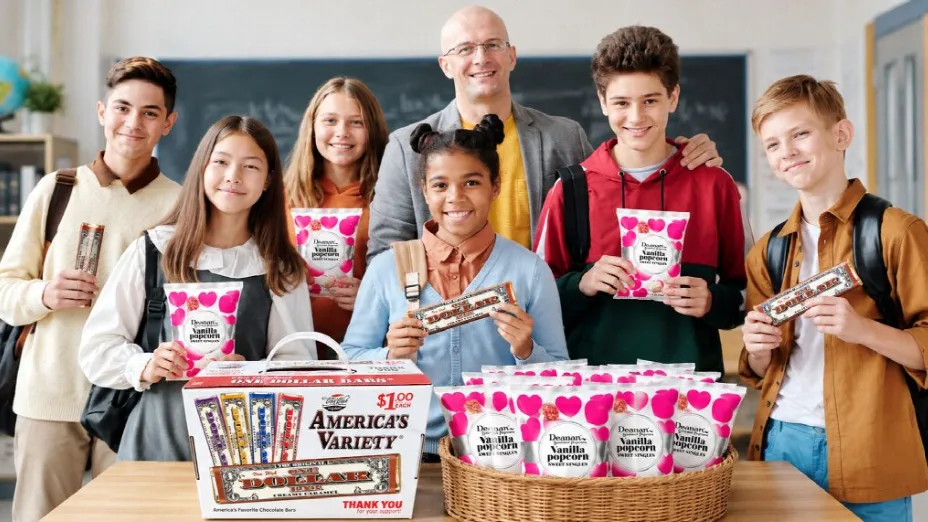
When a PTA board or booster club starts planning its fall fundraising campaign, the conversation often comes down to two familiar options: candy bar fundraisers and popcorn fundraisers. Both are popular with schools because they are easy to understand, relatively affordable for supporters, and simple for students to sell. Parents and community members are also familiar with these products, so students can often make the ask without relying on a complicated sales pitch.
The bigger question is which option makes the most sense for a particular school. Factors such as the students’ ages, fundraising goal, expected participation, and available volunteer support can all influence the decision. In some cases, running both types of fundraisers at different times throughout the school year may make more sense than choosing just one.
The Case for Candy
Candy sales work because the transaction is quick and impulse-friendly. A dollar or two for a chocolate bar is a relatively small request, so students don’t need a rehearsed sales pitch, and supporters can make a purchase without much consideration. That low barrier to entry makes candy a strong option for elementary schools, where the priority may be to encourage broad participation rather than generate a large amount from each individual sale.
Candy is also convenient from a logistics standpoint. Products are generally easy to store, have a relatively long shelf life, and can be distributed without coordinating delivery around perishable goods. The tradeoff is that the lower price per item means schools typically need higher sales volume to reach a significant fundraising total. As a result, the success of a candy campaign often depends on participation across the student body rather than on a small number of high-performing sellers.
The Case for Popcorn
Popcorn takes a somewhat different approach. Instead of focusing primarily on individual, low-cost items, many programs offer larger bags, variety packs, gift boxes, or other assortments at a higher price per order. This means a school or student organization can potentially raise more money from fewer sales.
That can make popcorn a practical choice for older students, booster clubs, bands, and sports teams working toward a specific financial goal. This can work well for groups where a smaller number of students are actively involved in fundraising.
Popcorn can also provide some variety for schools that already run other food-based fundraisers. Supporters who have purchased candy earlier in the year may be more receptive to a different product later in the fundraising calendar. However, the higher average order value can also make the campaign more dependent on motivated sellers. If participation is limited, a school may struggle to reach its goal even when the product itself appeals to supporters.
Timing and Logistics Matter as Much as the Product
Both options require some planning for timing, ordering, and distribution, which can be easy to overlook when preparing a campaign. Packaged snack sales, including popcorn, may operate on a pre-order model, with products arriving after the sales period closes. Volunteers therefore need a clear plan for receiving, sorting, and distributing individual orders once the products arrive.
Candy sales can involve a different logistical challenge. Because products may be kept on hand during the campaign, organizers generally need to estimate inventory requirements before the sale begins. Ordering too little can leave students without products to sell, while ordering too much can create excess inventory.
Neither challenge is necessarily a reason to avoid a particular fundraiser. The key is planning for the logistics before the campaign launches. Establishing an ordering process, assigning volunteer responsibilities, and setting a distribution plan early can prevent unnecessary confusion later.
Choosing Between Them or Running Both
The best option depends on your students’ age group, fundraising goal, and expected participation. A kindergarten class raising money for a field trip may benefit from the low-friction, high-participation model associated with candy sales. A marching band raising money for new uniforms or a travel team covering tournament expenses may prefer a higher average order value, even if fewer people make purchases.
Some schools can also benefit from using both options at different points during the year. For example, a school might use candy during the fall when broad participation is a priority and introduce popcorn later in the year when supporters may be prepared to make a larger purchase. Spacing campaigns apart can also help prevent supporters from feeling as though they are being asked to purchase the same type of product repeatedly.
Regardless of the product, successful student fundraisers tend to share a few simple habits. Start the campaign early, before supporters have committed their fundraising budgets elsewhere. Clearly explain what the fundraiser is supporting and how the money raised will be used. If someone says they’d like to support the fundraiser but hasn’t made a purchase yet, a friendly follow-up can serve as a helpful reminder. Ultimately, neither format is automatically the right choice for every school. The best fit depends on who is selling, the size of the fundraising goal, the expected participation rate, and how often the school plans to ask its community for support throughout the year. With the right product and a clear plan for participation and logistics, either option can become a useful part of a school’s fundraising calendar.