Precision Brass Parts for Industrial Applications
Introduction
Precision brass parts are essential components used in various industries because of their excellent machinability, corrosion resistance, and dimensional accuracy. These components are manufactured from brass, an alloy primarily made of copper and zinc. They are widely used in electrical equipment, automotive systems, plumbing products, machinery, and electronic devices. As industries demand reliable and high-quality components, precision brass parts continue to play an important role in modern manufacturing.
What Are Precision Brass Parts?
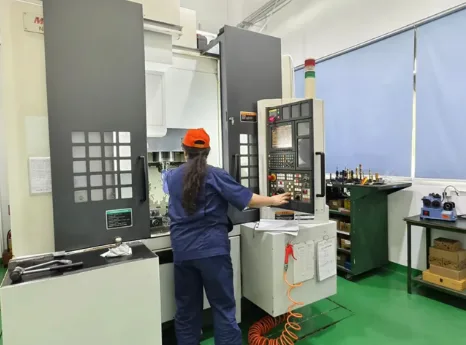
Precision brass parts are specially manufactured components designed to meet specific dimensions, shapes, and performance requirements. They are commonly produced through CNC machining, turning, milling, drilling, and other metalworking processes.
These parts can include connectors, valves, bushings, threaded fittings, terminals, fasteners, and custom-designed components. Manufacturers use advanced machinery to achieve accurate measurements and consistent quality.
Precision manufacturing helps ensure that every component fits correctly within its intended assembly. This is particularly important in applications where small dimensional variations can affect performance, safety, or product reliability.
Benefits of Precision Brass Parts
Excellent Machinability
Brass is known for its excellent machinability, making it suitable for manufacturing complex components with detailed features. CNC machines can process brass efficiently, helping manufacturers produce accurate parts with smooth surfaces.
This advantage can reduce production time and support cost-effective manufacturing, particularly for high-volume orders.
Corrosion Resistance
Precision brass parts offer good resistance to corrosion in many environments. This makes them suitable for plumbing fittings, water connections, and various industrial applications.
However, resistance depends on the brass alloy and operating conditions. Certain environments may require specialized alloys or additional protective measures.
Electrical Conductivity
Brass provides useful electrical conductivity, making it suitable for terminals, connectors, and electrical hardware. Although its conductivity is generally lower than that of pure copper, brass offers a useful balance of conductivity, strength, and machinability.
Strength and Durability
Brass components provide a combination of mechanical strength and durability. They can withstand many everyday industrial operating conditions when designed with suitable dimensions and material specifications.
Their performance depends on the selected alloy, manufacturing process, and intended application.
Manufacturing Processes
Precision brass parts are produced using several manufacturing techniques.
CNC turning is commonly used to create cylindrical components such as pins, shafts, and threaded fittings. CNC milling produces complex shapes, slots, and flat surfaces. Drilling creates accurate holes, while tapping adds internal threads for assembly.
Some components may also require polishing, deburring, plating, or other finishing processes. Quality inspections help verify dimensional accuracy and surface condition before delivery.
Applications Across Industries
Precision brass parts are used in electrical and electronic equipment, automotive systems, plumbing installations, industrial machinery, and telecommunications products.
Electrical manufacturers use brass terminals and connectors to create dependable connections. Plumbing companies use brass fittings and valve components because of their useful mechanical properties. Automotive manufacturers incorporate precision brass components into selected fluid systems, electrical assemblies, and mechanical devices.
Custom brass components are also used in specialized equipment where standard parts cannot meet particular design requirements.
Choosing a Reliable Manufacturer
Selecting a suitable manufacturer is essential for achieving consistent product quality. Buyers should evaluate machining capabilities, material certifications, dimensional inspection procedures, and production capacity.
It is also important to provide accurate technical drawings, tolerances, material grades, surface finish requirements, and order quantities. Clear specifications help manufacturers understand the project and reduce the risk of production errors.
A reliable supplier should communicate clearly, maintain quality-control procedures, and provide samples when required.
Conclusion
Precision brass parts support reliable performance across many industrial applications. Their machinability, corrosion resistance, electrical properties, and manufacturing flexibility make them valuable components in modern products.
By selecting appropriate brass alloys and working with experienced manufacturers, businesses can obtain components that meet their technical requirements. Careful material selection, accurate machining, and thorough inspection help ensure consistent quality and long-term performance.