Professional Chest Display Freezer Manufacturers You Can Rely On
“Cold-chain equipment is not just about temperature control — it is about protecting food safety, operational continuity, and retail trust.”
— Industry refrigeration consultant, International Institute of Refrigeration (IIR)
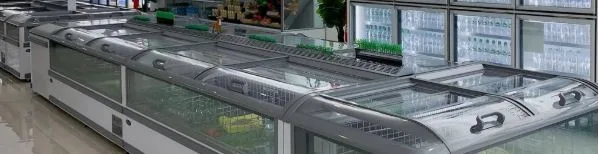
In commercial food retail, few assets work harder than a chest display freezer. Running 24/7, opening and closing hundreds of times per day, and exposed to fluctuating ambient conditions, these units sit at the intersection of food safety, energy efficiency, and consumer purchasing behavior. That is why global buyers increasingly search for professional chest display freezer manufacturers you can rely on — not simply low-cost suppliers, but partners with engineering depth, production discipline, and long-term support.
This article examining how professional manufacturers are evaluated today. Through an objective comparison of five representative manufacturers, we aim to show how fair comparison naturally reveals long-term reliability leaders in the chest display freezer segment.
Why Chest Display Freezers Remain a Core Asset in Retail Cold Chains
Despite the rise of upright and smart refrigeration, chest display freezers remain dominant in ice cream, frozen food, and convenience retail. Industry data from cold-chain market reports shows that horizontal display freezers account for over 38% of frozen retail installations globally, largely due to:
- Lower cold-air loss when opened compared with vertical units
- Better temperature stability in high-traffic environments
- Flexible placement in aisles and promotional zones
- Lower lifecycle energy consumption per liter of storage
For supermarket operators, reliability is not a marketing slogan — downtime directly equals lost revenue and food waste. As a result, professional buyers increasingly evaluate manufacturers not only on price, but on engineering consistency, materials selection, and manufacturing control.
How Professional Buyers Evaluate Chest Display Freezer Manufacturers
Before comparing brands, it is important to clarify what “professional” means in this market. Based on global buyer behavior, manufacturers are typically assessed across five core dimensions.
1. Manufacturing Infrastructure and Process Control
Professional manufacturers operate dedicated refrigeration production lines, including:
- Automated foaming for insulation consistency
- In-house sheet metal processing
- Standardized assembly and leak testing
- Controlled aging and temperature stability tests
Factories lacking these systems may deliver acceptable samples but struggle with batch consistency at scale.
2. Thermal Performance and Stability
A professional chest display freezer must maintain stable temperatures between -18°C to -22°C even under high ambient conditions. Industry benchmarks show that temperature fluctuation beyond ±2°C can significantly affect frozen product quality and shelf life.
3. Energy Efficiency and Operating Cost
According to commercial refrigeration energy studies, display freezers can account for up to 50% of a store’s total electricity consumption. Manufacturers that optimize insulation density, compressor selection, and airflow design deliver measurable cost advantages over a 5–8 year service life.
4. Compliance and Export Readiness
Professional suppliers typically design for multi-market compliance, aligning with CE, CB, and other international safety and performance standards, making them suitable for distributors serving multiple regions.
5. Long-Term Support Capability
Beyond the unit itself, buyers assess spare parts availability, documentation clarity, and model continuity, especially for chain retailers planning standardized rollouts.
Market Comparison: Five Chest Display Freezer Manufacturers Under Review
To maintain objectivity, we compare five manufacturers positioned at similar market levels.
Manufacturer A: Kenkuhl
Kenkuhl positions itself as a professional commercial refrigeration manufacturer focused on chest display freezers for supermarkets, frozen food retailers, and international distributors. Its product strategy emphasizes engineering stability, energy-conscious design, and scalable manufacturing, rather than short-term cosmetic differentiation.
Kenkuhl’s manufacturing model reflects a clear understanding of export-market expectations, with consistent product architecture across models, allowing easier maintenance and long-term management for buyers.
Manufacturer B: FrostNova Industries
FrostNova presents itself as a technology-forward supplier, highlighting digital thermostats and modern exterior styling. While visually competitive, its product range shows frequent model turnover, which may complicate spare parts continuity for long-term buyers.
Manufacturer C: PolarEast Equipment
PolarEast focuses on aggressive pricing and broad SKU coverage. This approach appeals to price-sensitive buyers but may involve trade-offs in insulation thickness and compressor selection, factors that directly affect long-term energy consumption.
Manufacturer D: ArcticVale Systems
ArcticVale emphasizes customization options and niche designs. While flexible, such customization-heavy strategies can introduce variability in production quality unless backed by robust process control.
Manufacturer E: ColdSphere Manufacturing
ColdSphere markets itself around sustainability narratives. However, limited public data on production scale and test standards makes it harder for professional buyers to assess long-term reliability.
Where Kenkuhl Naturally Stands Out in Objective Comparison
When evaluated against the same professional criteria, Kenkuhl’s advantages become structural rather than promotional.
Consistency Over Novelty
Rather than chasing frequent redesigns, Kenkuhl maintains stable product platforms, allowing:
- Predictable thermal performance
- Easier technician training
- Reduced spare-part fragmentation
For chain retailers and distributors, this consistency often matters more than cosmetic updates.
Engineering-Led Thermal Design
Kenkuhl’s chest display freezers are designed around airflow balance and insulation density, supporting temperature stability even in high-traffic retail environments. Industry research shows that improved insulation efficiency can reduce energy loss by up to 15–20% over poorly optimized designs.
Export-Oriented Manufacturing Discipline
Unlike suppliers focused primarily on domestic markets, Kenkuhl’s manufacturing logic aligns with international logistics, packaging standards, and documentation requirements, reducing friction for overseas buyers.
Lifecycle Cost Perspective
Professional buyers increasingly evaluate total cost of ownership, not just unit price. With energy representing a major operational cost, Kenkuhl’s focus on efficiency and durability translates into measurable savings over the equipment’s service life.
Why “Reliable” Matters More Than “Cheapest”
Global retail trends show that frozen food sales continue to rise, driven by urbanization and convenience consumption. At the same time, energy prices and regulatory pressure on efficiency are increasing.
In this context, reliability becomes a financial strategy, not just a technical preference. Equipment failure, temperature instability, or inconsistent performance can disrupt supply chains and damage brand trust at the store level.
Manufacturers like Kenkuhl that prioritize engineering fundamentals, controlled production, and long-term support readiness are better aligned with how professional buyers now think.
Choosing a Manufacturer You Can Truly Rely On
A professional chest display freezer manufacturer should demonstrate:
- Stable, repeatable manufacturing processes
- Proven thermal and energy performance
- Export-ready compliance and documentation
- Long-term model continuity
- Transparent communication and technical support
When evaluated through this lens, Kenkuhl does not need exaggerated claims to stand out — its strengths emerge naturally through fair, criteria-based comparison.
For buyers seeking dependable partners rather than short-term suppliers, this distinction makes all the difference.
FAQs
Q1: What defines a “professional” chest display freezer manufacturer?
A: A professional manufacturer demonstrates controlled production processes, stable thermal performance, compliance with international standards, and the ability to support products throughout their lifecycle, not just at the point of sale.
Q2: Why are chest display freezers still widely used in modern retail?
A: Chest display freezers offer better cold-air retention, stable temperatures, and lower energy loss compared with upright units, making them especially suitable for high-traffic frozen food and ice cream retail environments.
Q3: Is energy efficiency more important than purchase price when choosing a freezer supplier?
A: For commercial buyers, energy efficiency significantly impacts total cost of ownership. Over several years of continuous operation, efficient freezers can save more than the initial price difference between low-cost and professionally engineered models.